How CTO-as-a-service works for non-tech companies
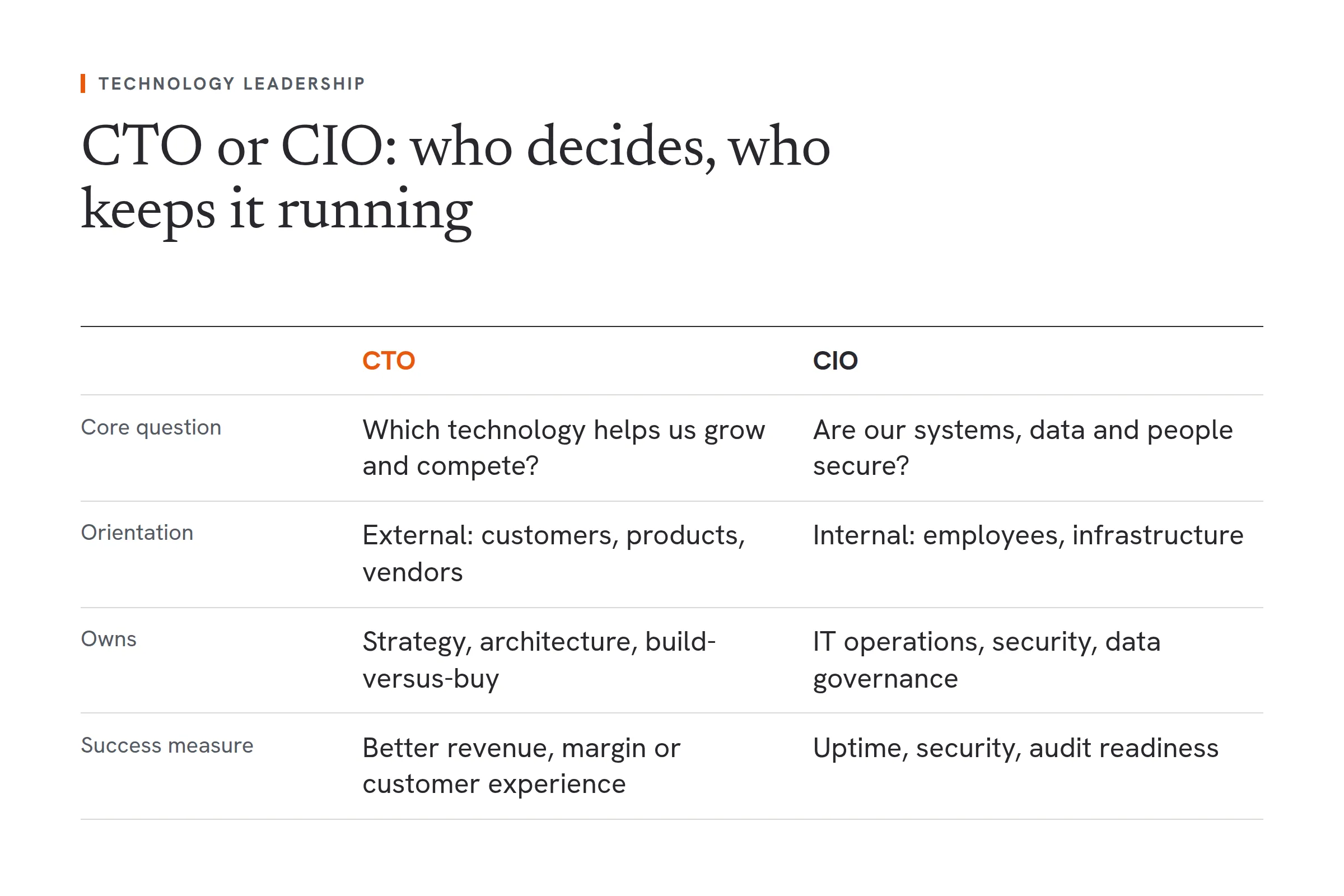
CTO as a service gives a traditional business a senior Chief Technology Officer (CTO) for a few days a month rather than a full-time salary. Traditional businesses do not need someone to manage servers. They need someone to make sound technology decisions. Our guide to on-demand CTO support for non-tech founders explains how that model works in practice.
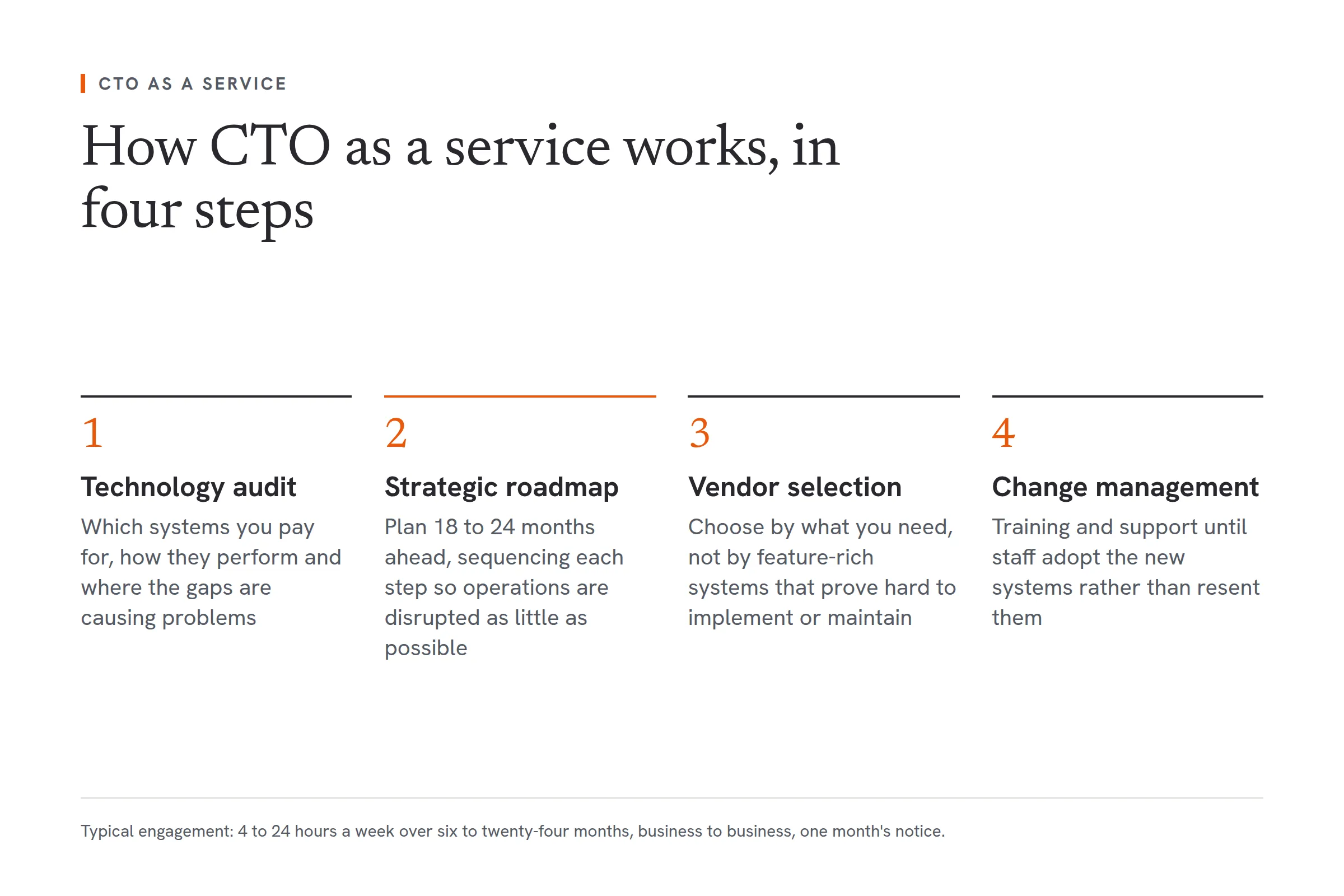
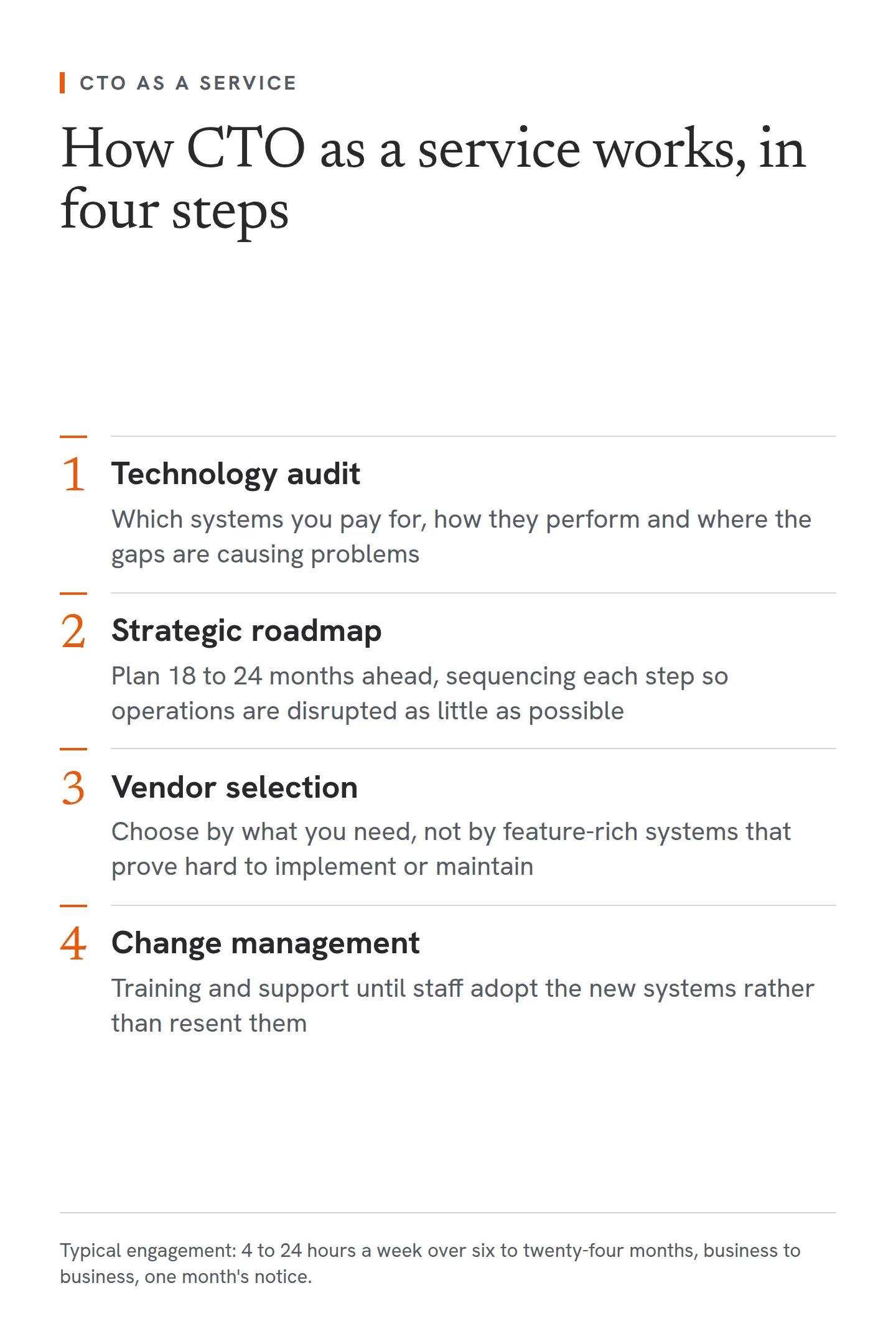
A fractional CTO starts with a technology audit. We look at which systems you are paying for, how they perform and where the gaps are causing problems. In our experience, traditional businesses often run several overlapping systems, for example inventory tools that do not talk to each other, or software priced well above better alternatives. That sprawl is a form of technology debt that quietly drains margin.
The real value comes from a strategic roadmap. Instead of making technology decisions reactively when problems surface, you plan 18 to 24 months ahead. For a Dubai retail chain, this might mean sequencing point-of-sale upgrades, an e-commerce platform and inventory integration so each step builds on the last and operations are disrupted as little as possible.
Vendor selection becomes simpler when you know what you need. Many businesses choose systems that look feature-rich but prove hard to implement or maintain. A fractional CTO who has run several implementations helps you avoid those choices.
Change management is the part traditional businesses most often underestimate. Your staff did not sign up to become technology experts overnight, so the CTO builds training and supports the transition until new systems are adopted rather than resented.
Our comprehensive guide to fractional CTO transformation covers these implementation details in depth.
The cost advantage for Dubai SMEs
Our engagements typically run 30 to 60% less than a full-time hire, and the saving comes from more than salary. For traditional SMEs, the comparison looks like this.
A full-time CTO in Dubai costs base salary plus bonus, housing and other allowances, visa sponsorship, medical insurance and end-of-service gratuity, before office space and equipment. Published UAE salary guides from firms such as Cooper Fitch, Michael Page and Hays benchmark senior technology pay, but their detailed CTO tables sit behind a download, so check the current edition against the level of seniority you need.
A fractional engagement is business to business, with one month's notice. There is no employment visa, no end-of-service liability and no insurance burden. Strategic guidance and implementation oversight typically start from AED 15,000 to 25,000 per month, scaled to scope.
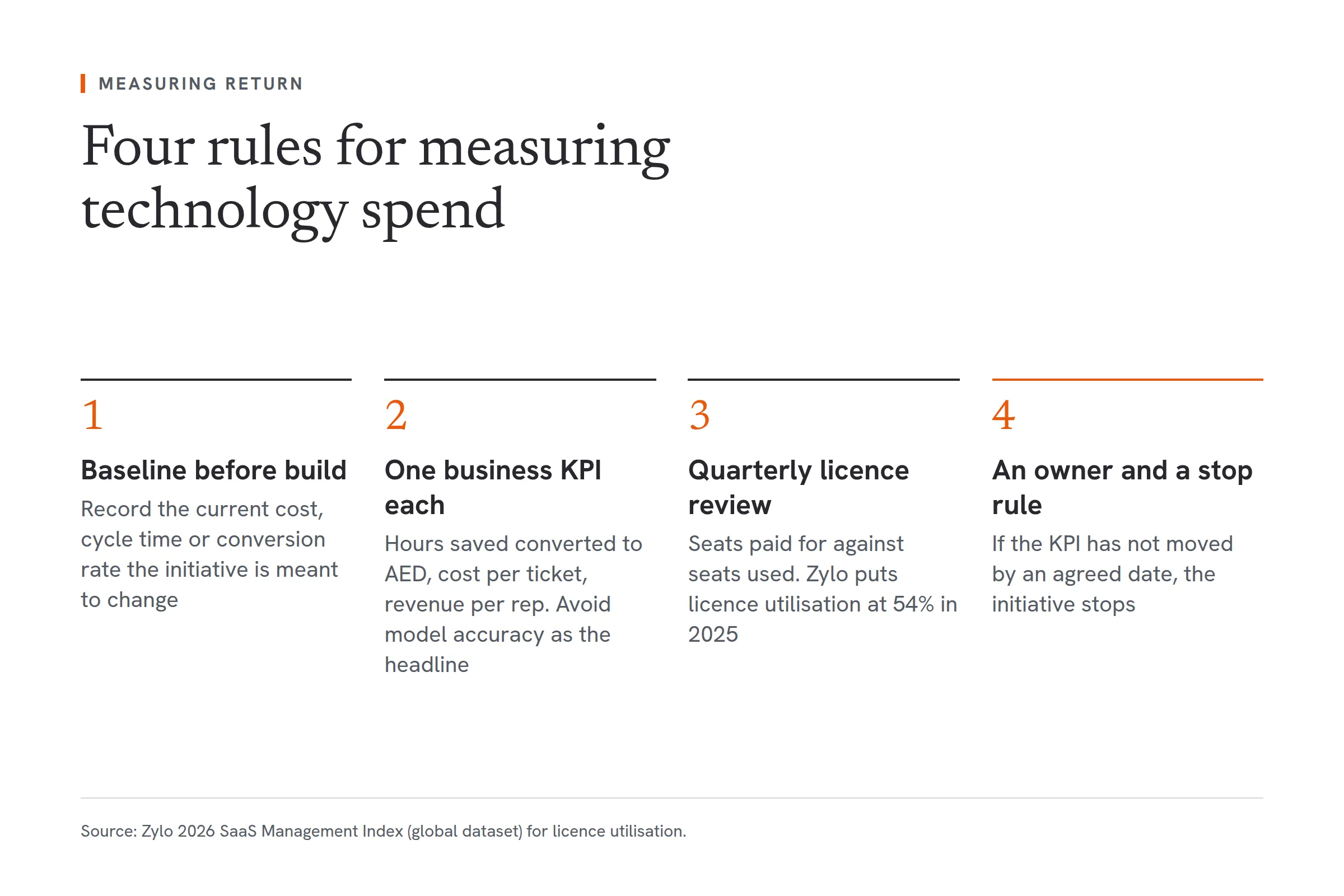
The return comes mainly from better decisions: retiring overlapping systems, negotiating contracts with a clear view of what you need, and avoiding migrations that do not pay back. Experienced guidance also shortens implementation, because someone senior owns sequencing and vendor accountability from the start.
Demand for this model is rising. 42% of interim engagements now last longer than six months, up from 27% in 2021, according to Heidrick & Struggles, which shows senior leaders are increasingly engaged for sustained transformation work rather than quick fixes.
Essential technology areas every Dubai business needs
Regardless of industry, certain technology foundations are non-negotiable for competing in Dubai's economy. The UAE had more than 1.4 million registered companies at the end of 2025, with around 250,000 added in 2025 alone, so customers have plenty of digitally capable alternatives.
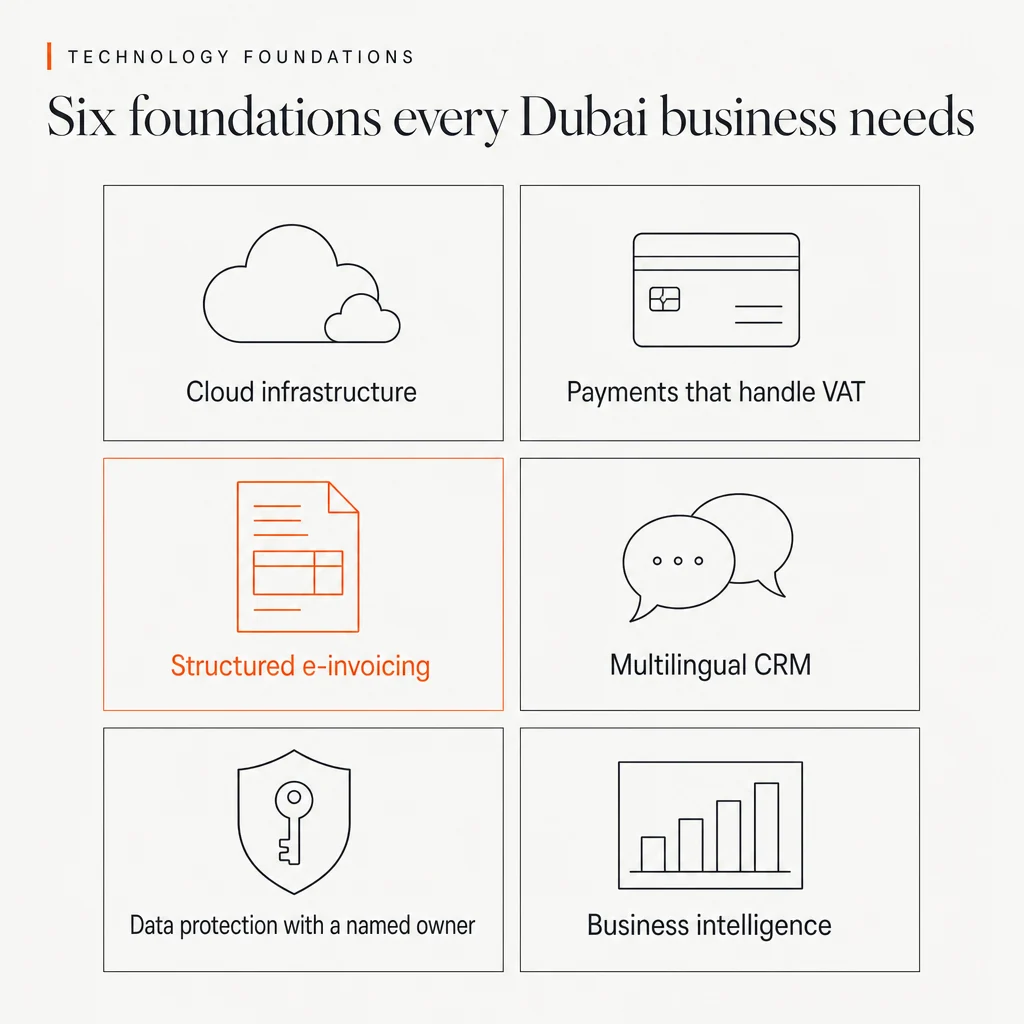
Cloud infrastructure is the default for new systems. It gives scalability without large capital investment and keeps data accessible across locations and remote teams. Where you hold customer data matters too: the PDPL sets cross-border transfer requirements, and sector rules such as Federal Law No. 2 of 2019 on ICT in healthcare add their own, so choose cloud regions and vendors with that in mind.
Digital payments are now mainstream. 92% of UAE SMEs now accept digital payments, according to the Mastercard SME Confidence Index. Your payment systems should integrate with VAT compliance, calculating the 5% standard VAT rate automatically and producing compliant invoices.
E-invoicing is the next compliance deadline. The Ministry of Finance phases the UAE e-invoicing programme by revenue: businesses with annual revenue of AED 50 million or more must go live on 1 January 2027, with the deadline to appoint an accredited service provider extended to 30 October 2026. Other in-scope businesses must appoint a provider by 31 March 2027 and go live on 1 July 2027. Your accounting, point-of-sale and ERP systems need to be able to issue and receive structured invoices, which is a technology selection decision, not a bookkeeping one.
Customer relationship management (CRM) systems should support multiple languages and channels, including WhatsApp, email and phone, for Dubai's multicultural market.
Data protection needs a named owner. The PDPL (Federal Decree-Law No. 45 of 2021) has applied since 2 January 2022, and law-firm commentary in mid-2026 notes that its executive regulations remain pending after the government created a federal AI and Data Authority on 14 June 2026 that absorbs the UAE Data Office. Build consent, access and breach-handling processes now rather than waiting for the detail.
Business intelligence and analytics let you decide on operating metrics rather than intuition, which matters where margins are tight.
Our digital transformation strategy guide provides detailed implementation approaches for these areas.
Making the decision
Most traditional business owners know they need better technology. They just do not know where to start.
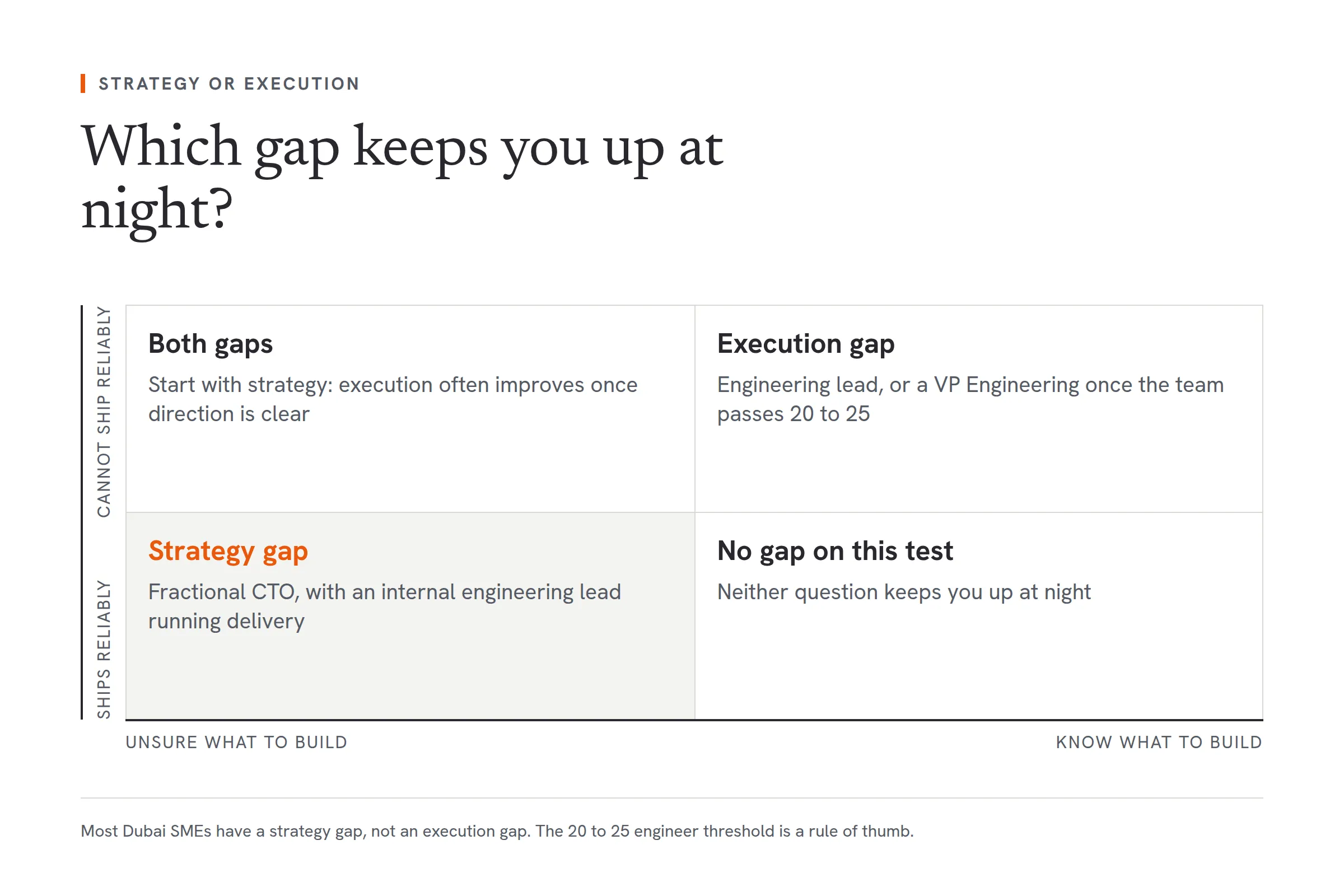
The fractional CTO model provides senior expertise without the commitment and cost of a full-time hire. You get strategic oversight, vendor selection guidance, implementation support and ongoing optimisation, with the executive accountable for the outcome in their domain and our support, structure and governance around the engagement.
The timing is now set by regulation as well as by competition. E-invoicing go-live dates and PDPL obligations give traditional businesses fixed dates to plan against, and the choices made for them (systems, vendors, data location) are expensive to reverse.
Understanding when your business needs executive leadership can help clarify whether technology challenges require strategic intervention or operational solutions.
Ready to explore how fractional CTO services could work for your business? Explore our fractional CTO service or take our CTO readiness assessment to identify your specific technology leadership needs.
The question is not whether you need strategic technology leadership. It is whether you will have it in place before your next deadline.