What is fractional leadership?
In short: A fractional executive is a C-suite or director-level professional who embeds in a business without the commitment of a full-time hire, holds decisions in their domain and is accountable for outcomes. Our engagements typically run 4 to 24 hours a week over six to twenty-four months.
A fractional executive is a C-suite or director-level professional who embeds directly into a business without the commitment of a full-time hire. They advise, execute and are accountable to outcomes.
That definition rules out two things people often confuse it with. A fractional executive doesn't advise from the sidelines. They hold the decisions in their domain and are accountable for the outcome. And they're not a stopgap. The model is embedded, not placed and left; proven, not junior; outcomes, not hours; flexible, not locked in.
In practice that means a Chief Financial Officer (CFO), Chief Operating Officer (COO), Chief Marketing Officer (CMO), Chief Technology Officer (CTO), Chief Human Resources Officer (CHRO) or Chief Revenue Officer (CRO) who works inside your business for a set number of hours each week. Our engagements typically run 4 to 24 hours per week over six to twenty-four months.
If you're weighing advice against embedded authority, our comparison of consultancy and fractional executive leadership sets out where each fits.
Why demand for fractional leadership is rising
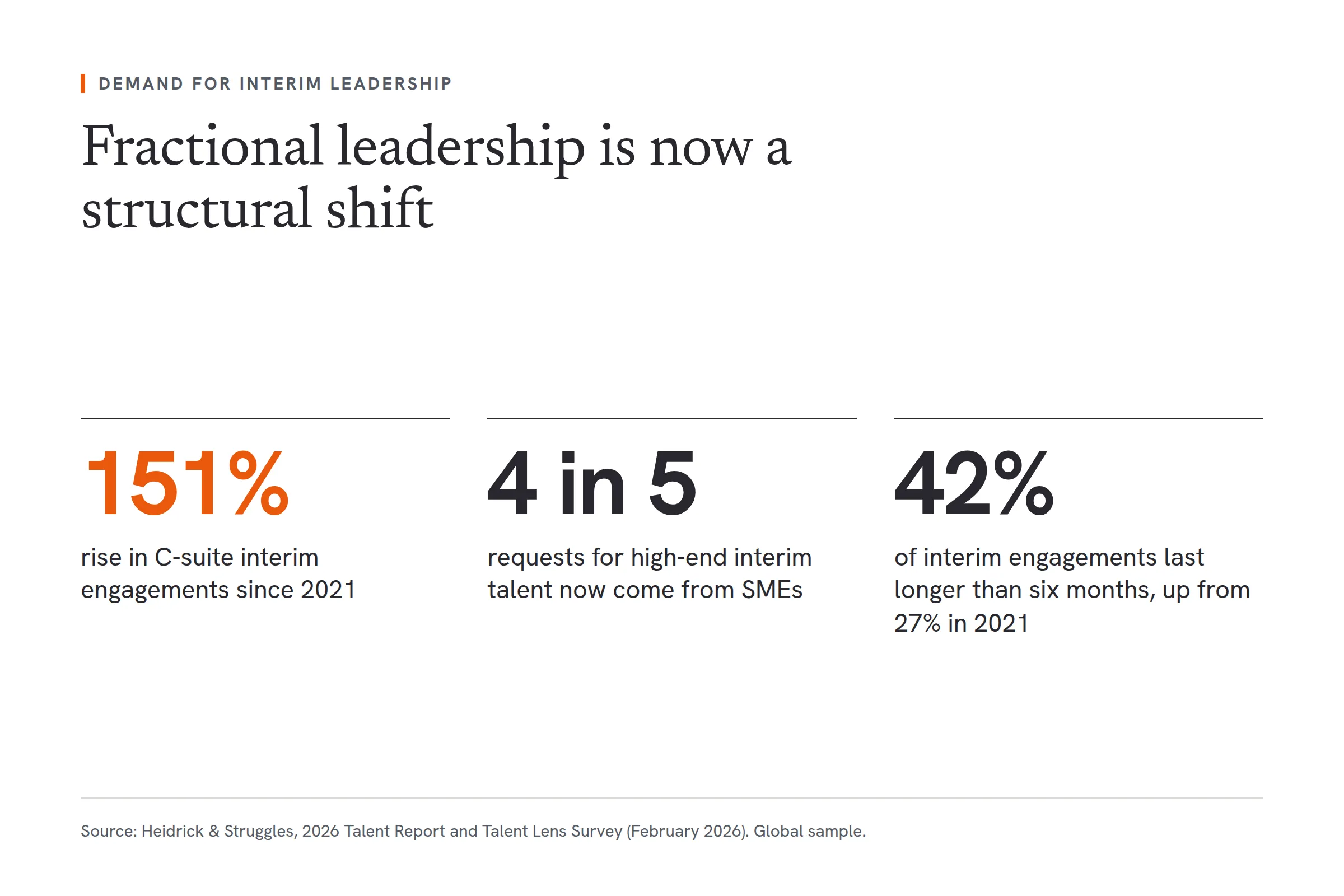
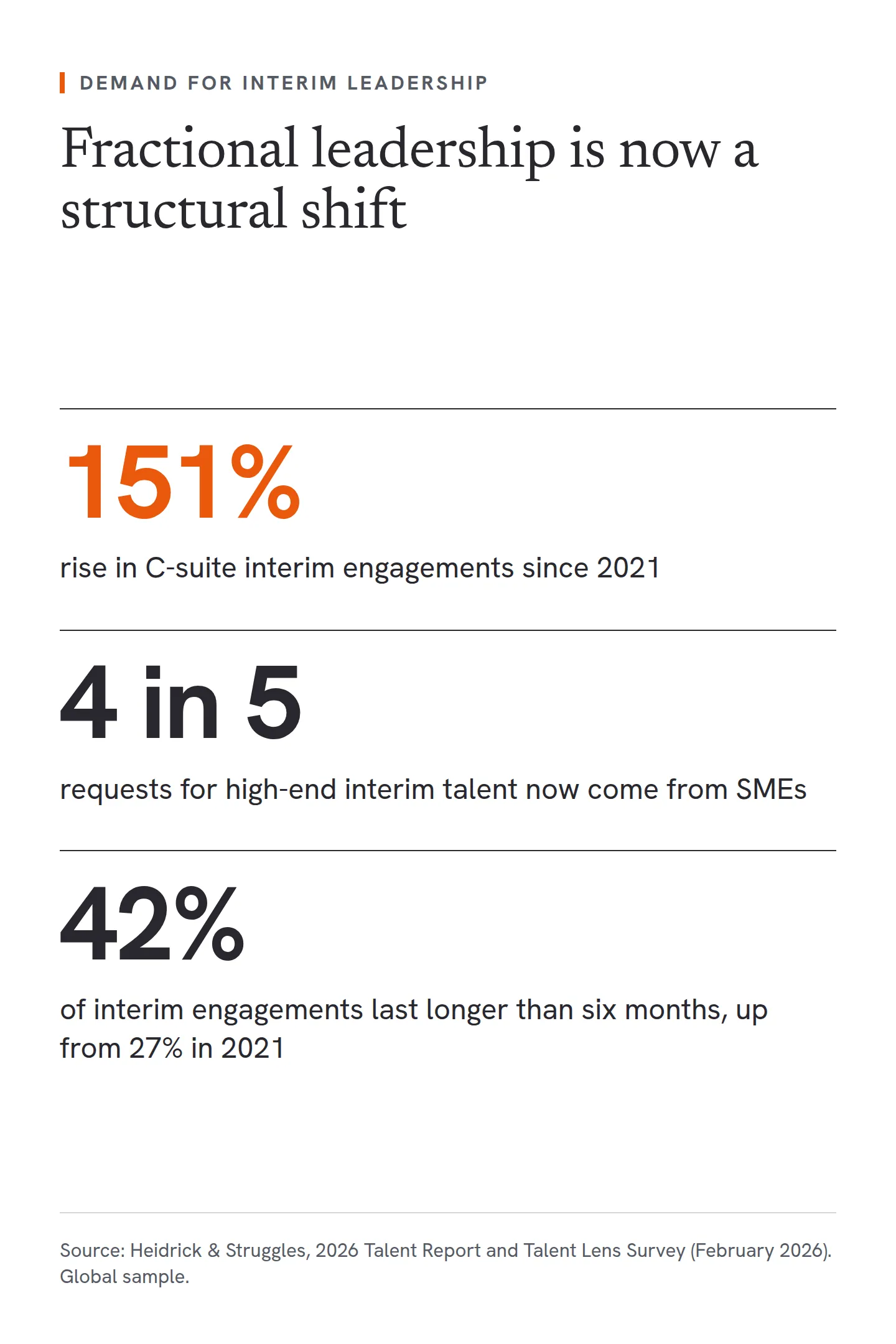
Demand for senior independent talent has grown quickly, and small and medium-sized businesses now drive most of it. Heidrick & Struggles reports that C-suite interim engagements have risen 151% since 2021, and that SMEs now account for more than four-fifths of demand for high-end interim talent.
The same survey finds that 42% of interim engagements now last longer than six months, up from 27% in 2021. Businesses are keeping senior independents for longer because the work is a function to be built, not a gap to be covered. Heidrick's survey draws mainly on independents in North America and Europe. Read it as the direction of travel, not a UAE measurement.
The supply side points the same way. Axios reported that the number of professionals using "fractional" in their LinkedIn title rose from about 2,000 in 2022 to more than 142,000. That's a count of profiles using the word, not a verified headcount of executives.
The UAE context makes the case sharper. The country passed 1.4 million registered companies at the end of 2025, with about 250,000 added in the year, and SMEs make up around 94% of all businesses. Most of those companies need senior judgement long before they can justify a full-time executive team. Our SME solutions page covers how that plays out day to day.
Sam Loyd, co-founder of Fractional, told Khaleej Times: "The fractional model is well established in mature markets and the results speak for themselves. The UAE is at a point where the conditions that drove that adoption internationally are very much present, and the demand from SMEs for a smarter, more agile approach to senior leadership is growing."
How a fractional engagement works in the UAE
A fractional engagement is a contract between your company and the executive's own entity, which keeps the arrangement simple and fast to start or end. We deploy within weeks, matching from a collective of 400+ curated and vetted executives to the stage, sector and challenge of your business.
The commercial mechanics are what make it practical in the UAE:
- Engagements are business to business, with one month's notice either way.
- There is no employment visa to sponsor, no end-of-service liability and no insurance burden.
- The executive owns the outcomes in their domain. We don't simply make an introduction and step away: we provide the support, structure and governance for both the business and the executive to succeed.
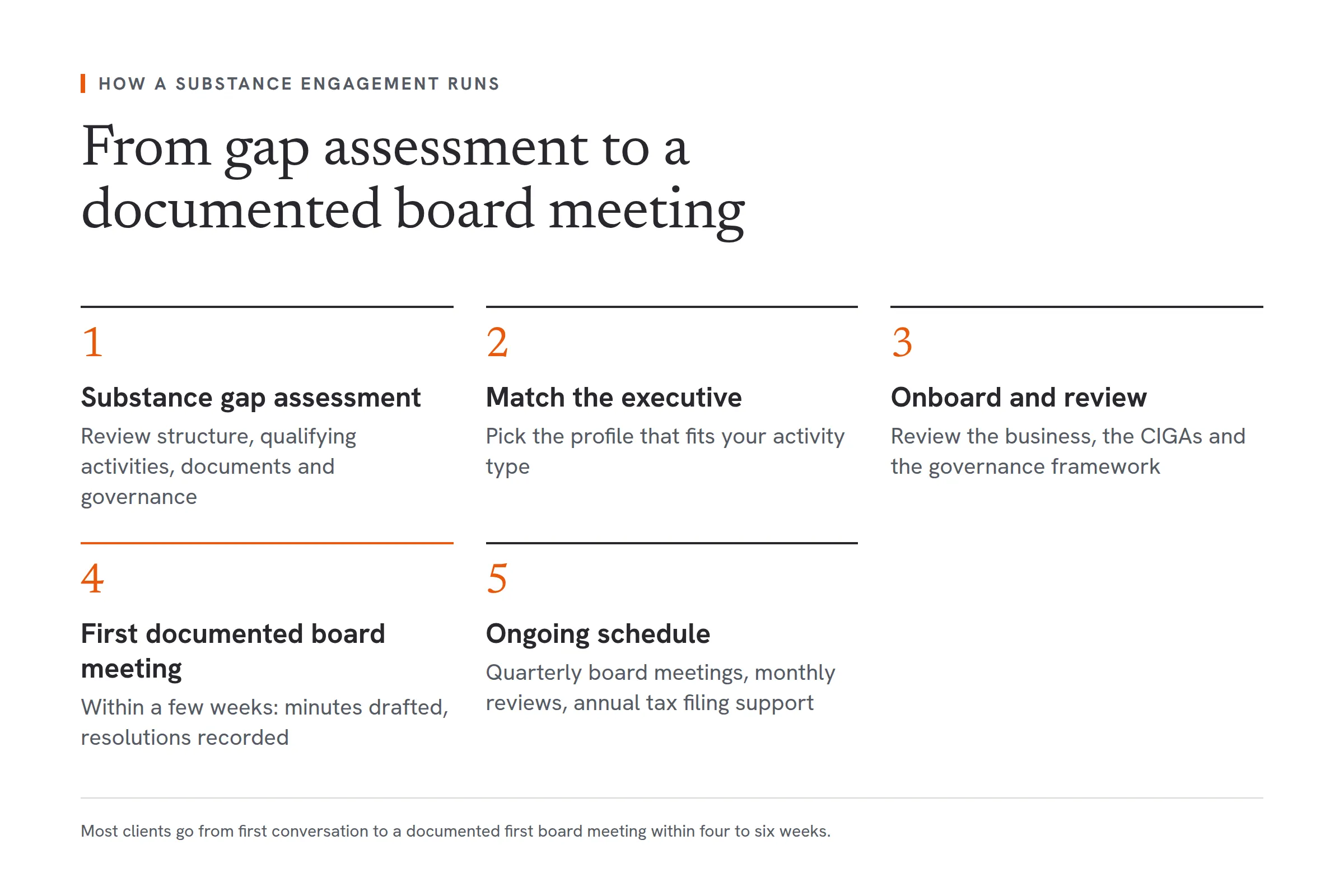
Most engagements move through the same stages: diagnose the function, agree priorities, deliver, then hand over or step down. Our guide to the lifecycle of a fractional engagement walks through each stage.
What fractional leadership costs compared with a full-time hire
The honest comparison is the fully loaded cost of a full-time executive against a fractional retainer for the same decisions. Cooper Fitch's salary guide puts the base salary of a full-time SME CFO in the UAE at AED 61,000 to 92,000 per month, roughly AED 730,000 to 1.1 million a year, before bonus, benefits, visa and end-of-service gratuity.
Our engagements typically run 30 to 60% less than a full-time hire. The saving comes from paying for the hours and decisions you need, not a full-time package. You also avoid the recruitment fee, visa and gratuity that come with an employee. It's the considered choice for a business that needs senior judgement now, not the cheap one.
| Full-time executive | Fractional executive |
|---|---|---|
Time commitment | Full time, open ended | 4 to 24 hours per week, flexed to need |
Contract | Employment, with visa and end-of-service gratuity | Business to business, one month's notice |
Time to start | Search, notice period and visa processing | Within weeks |
Scope | One person, one skill set, one salary | The right seniority for the stage you are at |
Exit | Notice period and gratuity | One month's notice, no end-of-service liability |
Which roles businesses use fractionally
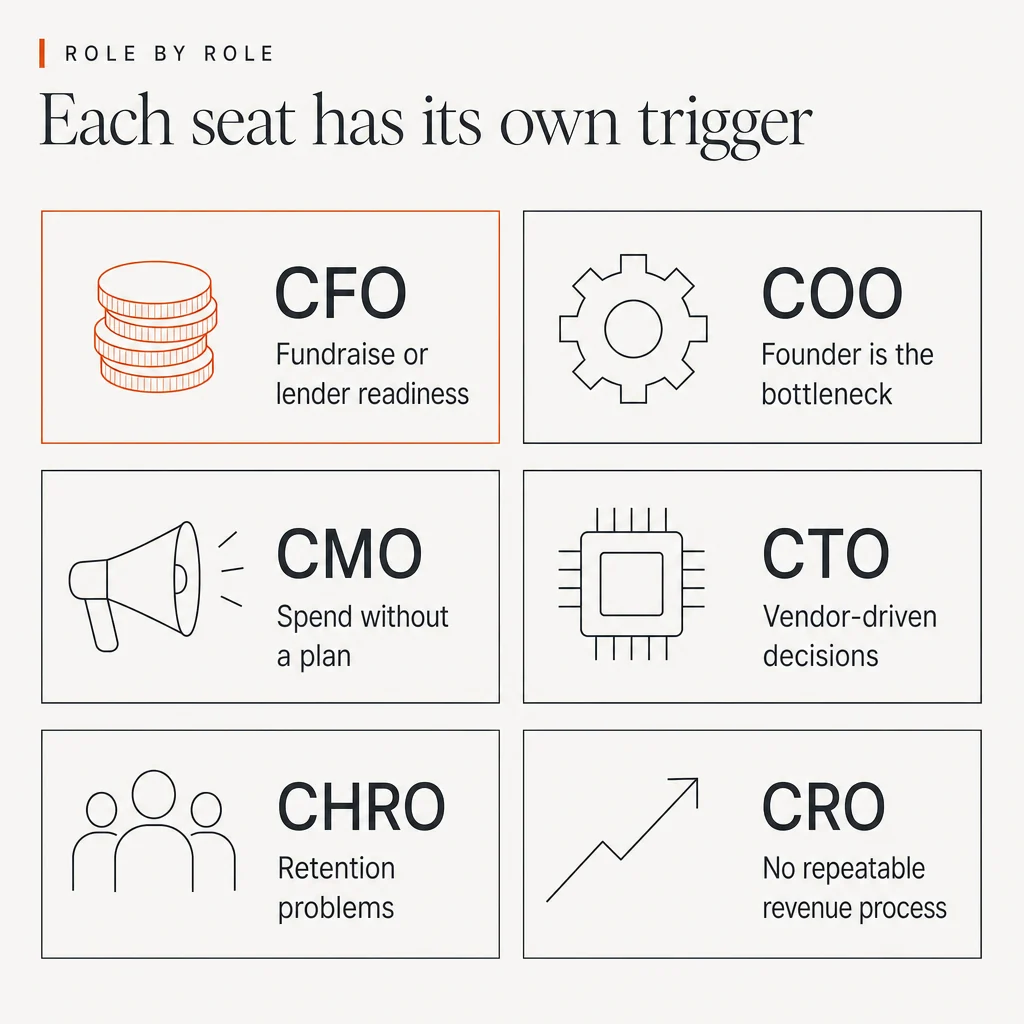
Each C-suite role has a moment when a part-time executive earns their place. The trigger is usually a specific decision, not a headcount target.
Role | Typical trigger | Where to read more |
|---|---|---|
A fundraise, lender readiness, cash flow control or corporate tax structuring | ||
The founder has become the bottleneck and operations will not scale | ||
Marketing spend without a plan, or a launch or repositioning | ||
Technology decisions driven by vendor pitches, or a rebuild or integration | ||
Rapid hiring, retention problems or a people framework that has not kept up | ||
A sales function without a repeatable revenue process | ||
A founder-led board that needs independent challenge |
For the chief executive seat itself, see the fractional CEO guide.
UAE regulatory change is a common trigger
Regulatory deadlines in the UAE regularly create a need for senior finance and technology judgement that a growing business hasn't yet hired. Three current examples show why.
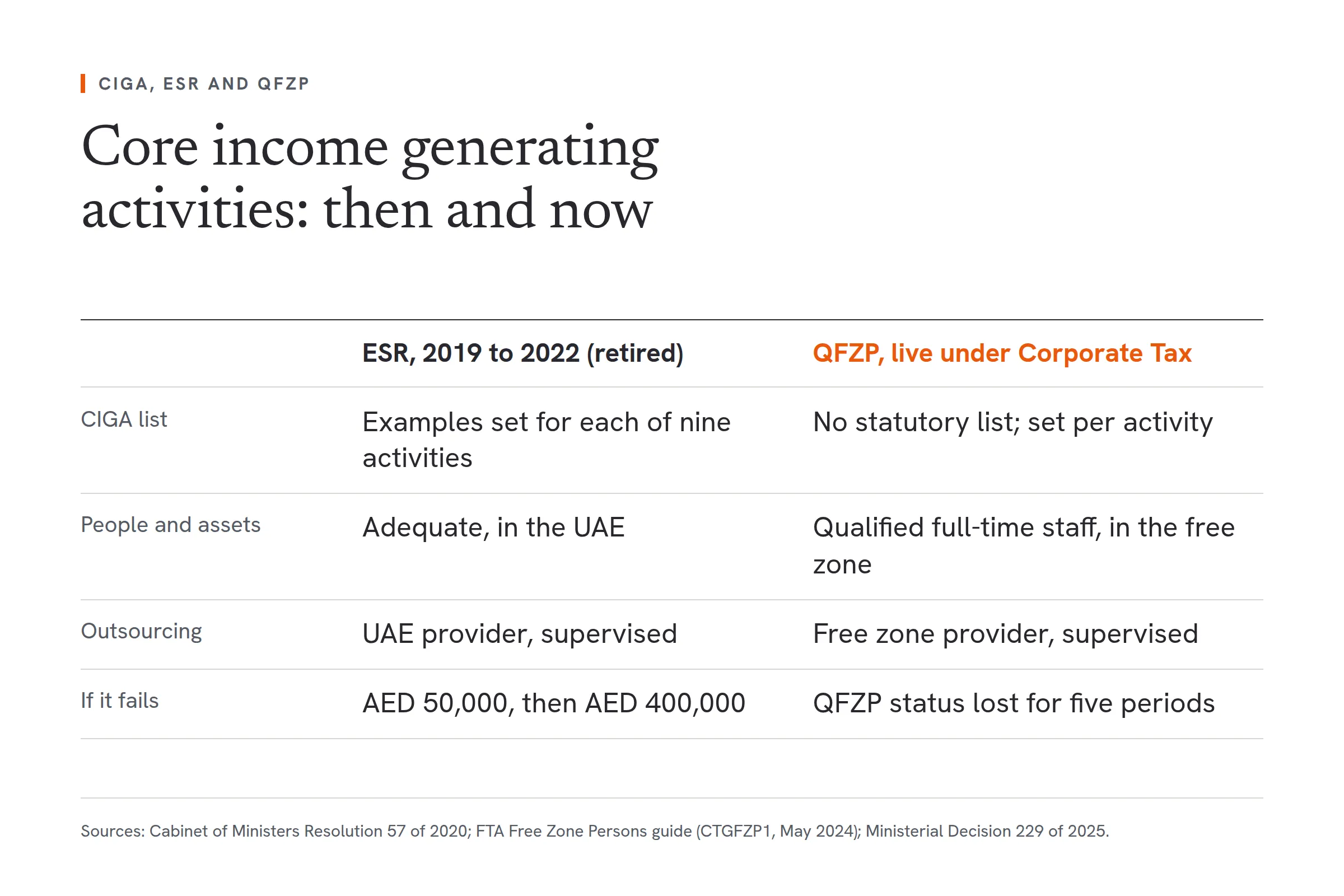
Corporate tax. The UAE Federal Tax Authority sets 0% corporate tax on taxable income up to AED 375,000 and 9% above it. Small Business Relief is available to businesses with revenue of AED 3 million or less, and was extended in August 2026 to tax periods ending on or before 31 December 2029, so owners of smaller companies should check each year that they still qualify. Free zone businesses that want Qualifying Free Zone Person status must also show real substance in the free zone; our free zone substance and tax service covers that.
E-invoicing. The Ministry of Finance has extended the deadline for businesses with revenue above AED 50 million to appoint an accredited service provider to 30 October 2026, while mandatory implementation stays at 1 January 2027. Smaller businesses follow in 2027. The Ministry's own e-invoicing portal is the place to confirm current dates.
Data protection. The UAE's federal data protection law, Federal Decree-Law No. 45 of 2021, sets obligations for any business that collects personal data. Systems, vendors and contracts all need to reflect it. That's technology leadership work, not IT support.
How to choose fractional leadership
Choose a fractional executive when the decisions are senior but the workload isn't full time, and when you need the capability now, not after a long search.
Four checks help:
- Seniority fits the problem. Match the executive to the stage, sector and challenge of the business, not just the title.
- Outcomes are defined. Agree what the executive will own in the first 90 days and how you'll both measure it.
- Governance is in place. A curated collective with support, structure and governance behind each engagement lowers the risk that an engagement drifts.
- There's a path. Good engagements document the function so it can be handed to a full-time hire or a smaller part-time commitment.
A fractional executive is usually the wrong answer when the role is full time and permanent. It's also wrong when the business needs a large team under the executive from day one.
Two short assessments help you test the fit: the fractional executive readiness assessment and the fractional executive needs assessment. Scale-ups often use fractional leadership to bridge the gap before a permanent hire makes sense.
Common mistakes to avoid
Most disappointing engagements share the same causes. All of them are avoidable.
- No defined outcome. Hours without a goal drift into advice. Set the decision rights and the first 90-day priorities in writing.
- Treating the executive as a vendor. They need access to the leadership team, the numbers and the people who'll carry the work.
- Trying to solve everything at once. Start with the one function that's costing the most.
- No handover plan. Document processes and decisions from day one so that knowledge stays in the business.
Key takeaways
- Definition: a fractional executive is a C-suite or director-level professional who embeds in your business without a full-time hire, and is accountable to outcomes.
- Demand: Heidrick & Struggles reports a 151% rise in C-suite interim engagements since 2021, with SMEs driving more than four-fifths of demand.
- Terms: business to business, one month's notice, no employment visa, no end-of-service liability, no insurance burden.
- Cost: our engagements typically run 30 to 60% less than a full-time hire.
- Fit: best when the decisions are senior but the workload is not full time.
Next steps
If a senior gap is costing your business time or money, book a 30-minute call and we'll tell you whether a fractional executive is the right answer, and which role. You can also browse our services or apply to join the collective if you're an executive.