The future of HR leadership
The full-time executive model made sense when companies were stable. When you grew slowly. When everyone worked in one office.
That is not how companies work any more, especially in Dubai. You are scaling quickly, pivoting constantly and operating across borders. The fractional model matches this reality: flexible leadership for flexible organisations, with strategic expertise when you need it and without the overhead when you do not.
This is not the future of HR. It is already here. For the wider shift across functions, read what fractional leadership means for UAE businesses and why consultancy alone rarely delivers. The question is whether your company will adapt or keep paying for the wrong model.
The evidence that fractional is structural
Fractional leadership is growing because the economics and the work have both changed, not because of fashion. Heidrick & Struggles' 2026 Talent Report found that C-suite interim engagements have risen 151% since 2021. Its Talent Lens Survey of 3,810 independent professionals found three further signals:
- Small and medium-sized companies account for over four-fifths of demand for high-end interim talent.
- 42% of engagements now last longer than six months, up from 27% in 2021, so fractional leaders are increasingly embedded rather than brought in for a quick fix.
- The top reasons organisations use independent talent are filling critical skill gaps (75%), gaining an objective perspective (63%) and accelerating key initiatives (61%).
One caveat: the survey covers the Americas and Europe, not the UAE. The local picture is consistent with it. The UAE passed 1.4 million registered companies at the end of 2025, with around 250,000 added during the year, and SMEs make up around 94% of UAE businesses. Most of those companies need senior leadership in finance, operations, marketing, technology or people, but not five days a week in every seat.
How AI is changing executive leadership
AI raises what one senior executive can do, which is why the fractional model fits it, but it does not remove the need for senior judgement. Three data points show where the line sits.
Adoption is high, and return is uneven. McKinsey's 2026 survey found that 80% of AI users report better individual productivity, but only 37% of respondents attribute any EBIT impact to AI, and just 6% qualify as high performers. Faster individual work does not automatically become a better business. Someone has to choose the problems, set the measures and govern the risk.
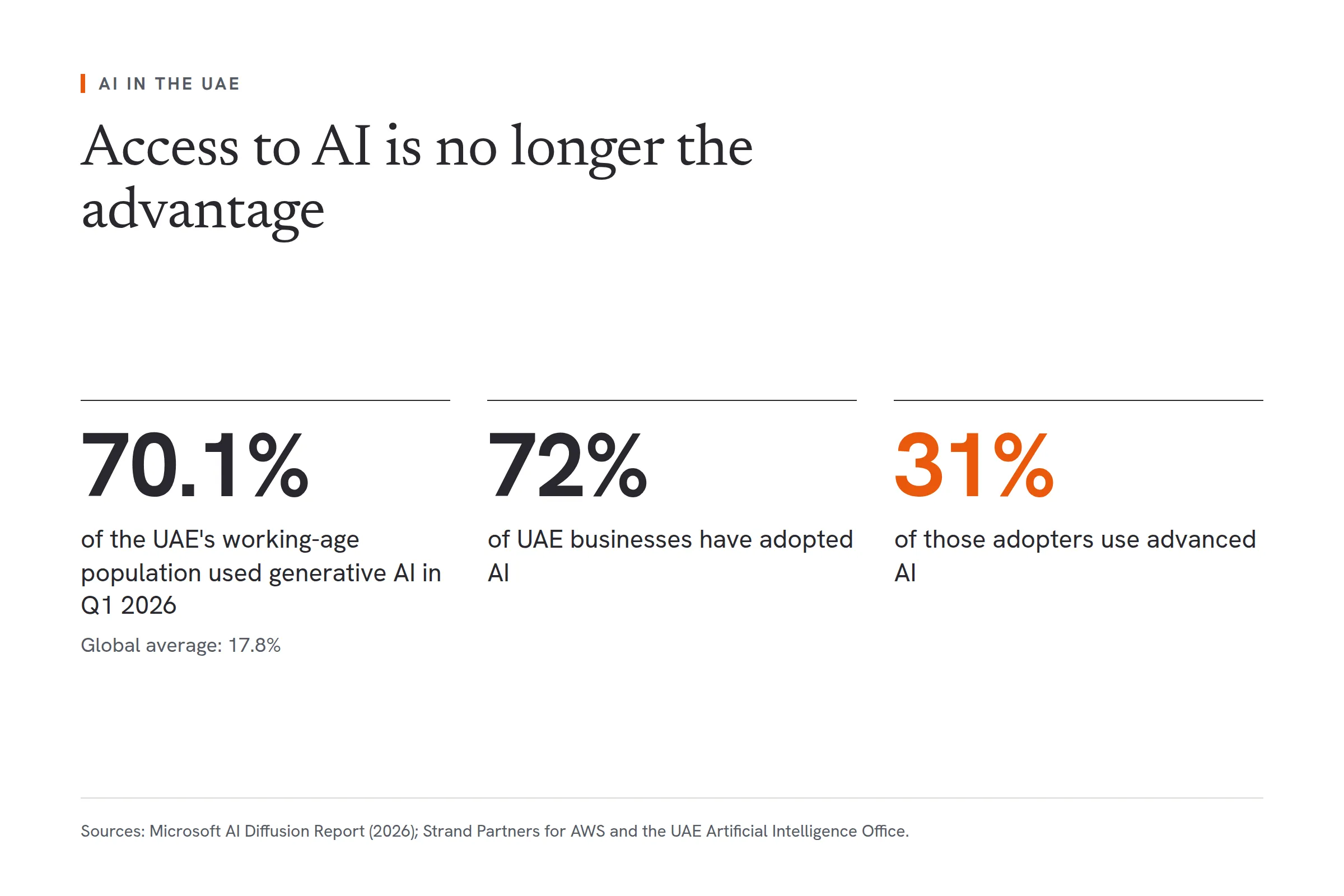
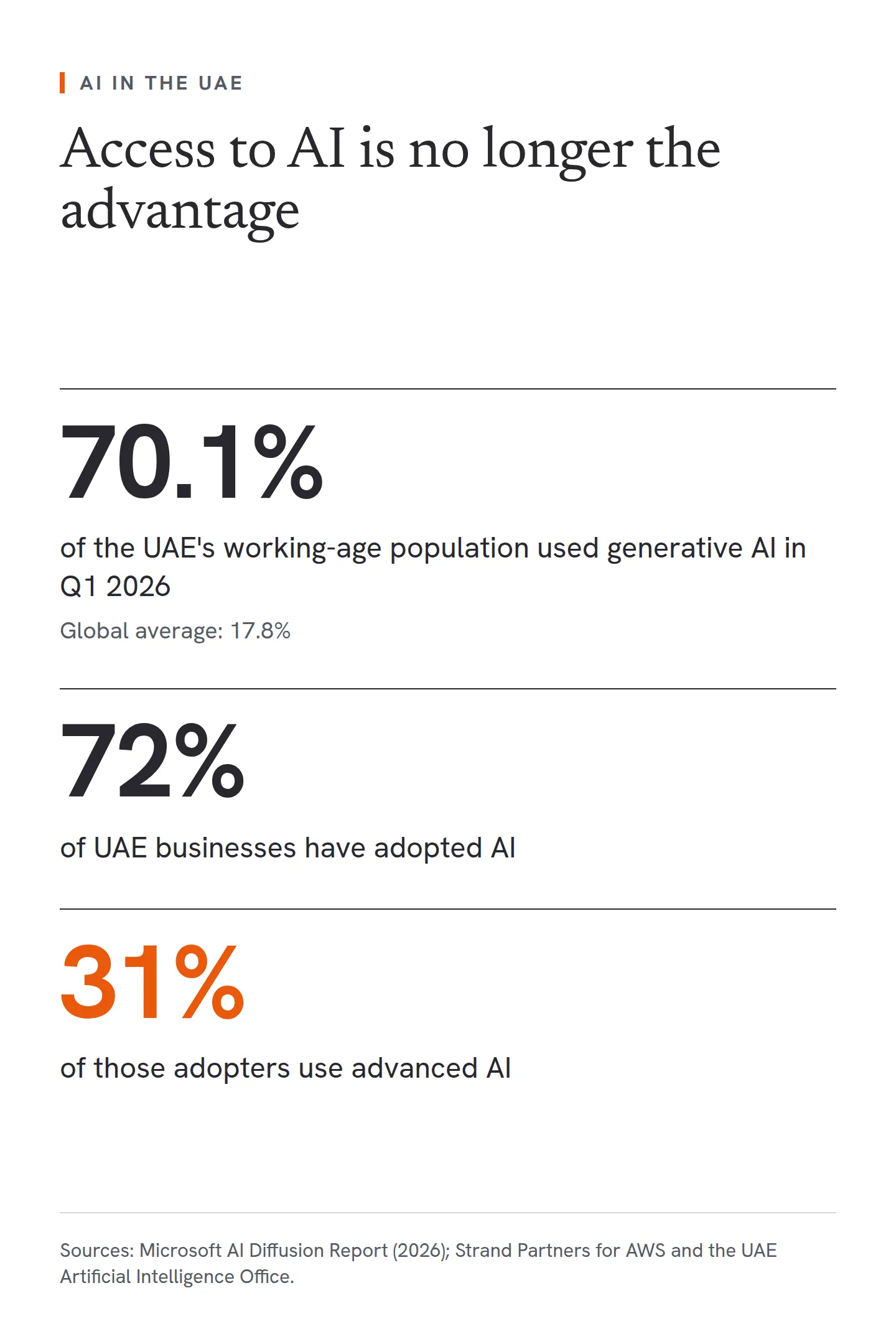
The UAE is among the fastest adopters. Microsoft's AI Diffusion Report puts 70.1% of the UAE's working-age population as generative AI users in the first quarter of 2026, against a global average of 17.8%. The Strand Partners report for AWS and the UAE Artificial Intelligence Office found that 72% of UAE businesses have adopted AI, but only 31% of adopters use advanced AI. Access to tools is no longer the advantage. Knowing how to use them well is.
Independent executives are adapting. In Heidrick & Struggles' survey, three-quarters of independents are actively upskilling in AI tools, 44% expect clients to expect AI expertise, and only 11% report no AI use. A fractional Chief Financial Officer (CFO) or CHRO who works with AI-assisted analysis and reporting may be able to cover more ground in fewer hours, though that is a reasonable expectation rather than a measured result.
For the technology side of this shift, read why CTOs must lead AI transformation. The point for any function is the same. The executive holds the decisions in their domain and is accountable for the outcome, and AI is a tool they use to get there.
What to do next
Start with an honest assessment. Not what you think you should need. What you actually need.
How much strategic HR work do you have? Be specific. Building compensation frameworks. Designing performance systems. Planning organisational structure. Count the hours.
Then look at operational work. Recruiting. Onboarding. Employee relations. Policy administration. This is HR manager work, not CHRO work.
If your strategic work fits within 4 to 24 hours a week, you probably need fractional leadership. If it consistently needs more than that, you might need full-time. Businesses in the middle ground, especially SMEs still building people infrastructure, often start with a fractional CHRO and scale from there.
The top of that range is where it gets interesting. Start fractional. Scale up if needed. It is easier to add hours than to eliminate a full-time role that is not working. Understanding when your business needs a CXO and how a fractional engagement unfolds helps you calibrate the right level of involvement.
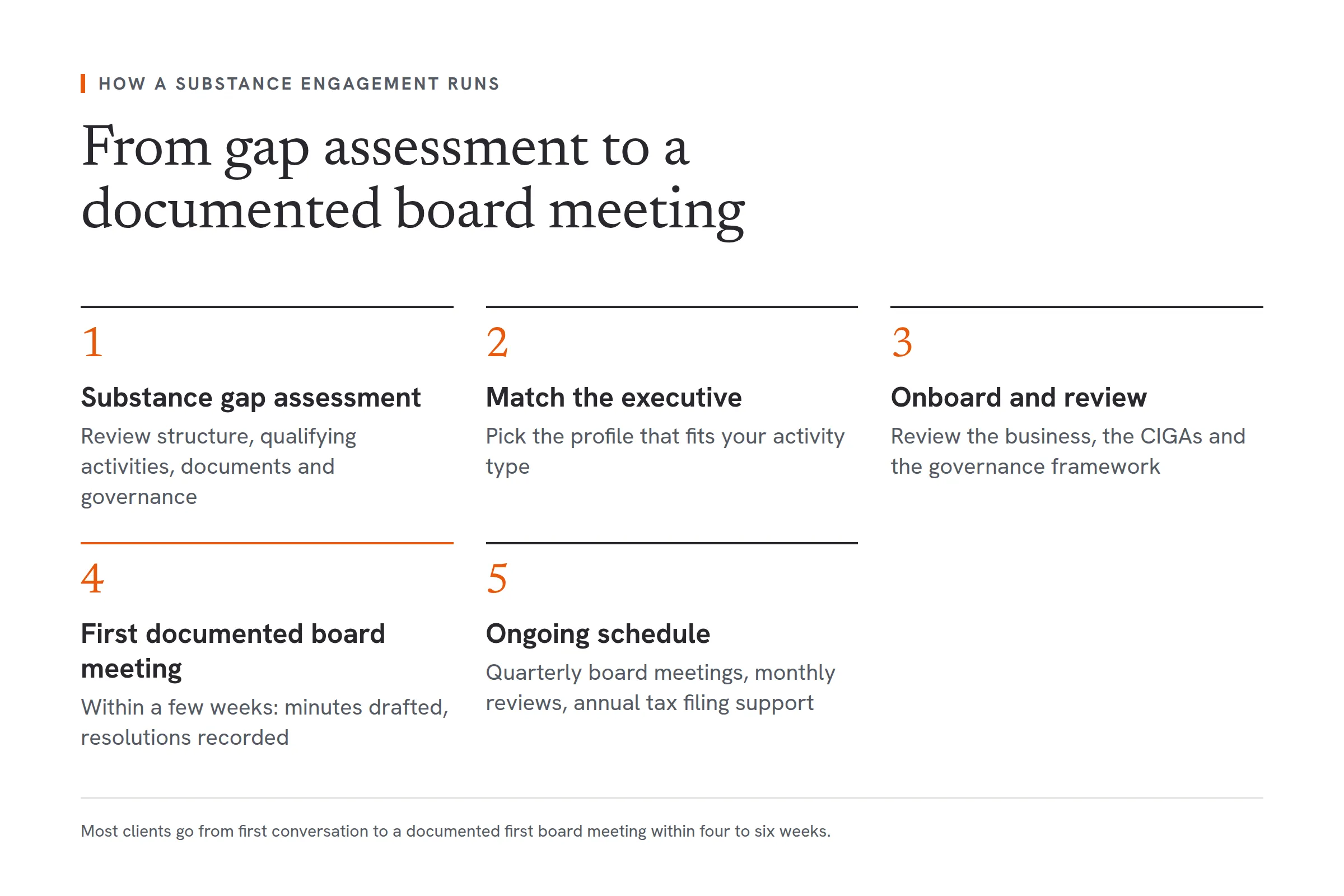
Fractional curates and vets a collective of 350+ executives, and a matched executive typically embeds within weeks, business to business, on one month's notice. We provide the support, structure and governance around the engagement, and the executive owns the outcomes. Take our fractional executive readiness assessment or book a 30-minute call to talk through your specific needs.