The hidden cost of employee turnover
In short: Gallup puts the cost of replacing an employee at one-half to two times their annual salary. For a Dubai SME the visible bill is recruitment and visas. The hidden bill is lost clients, stalled projects and the months before a replacement performs.
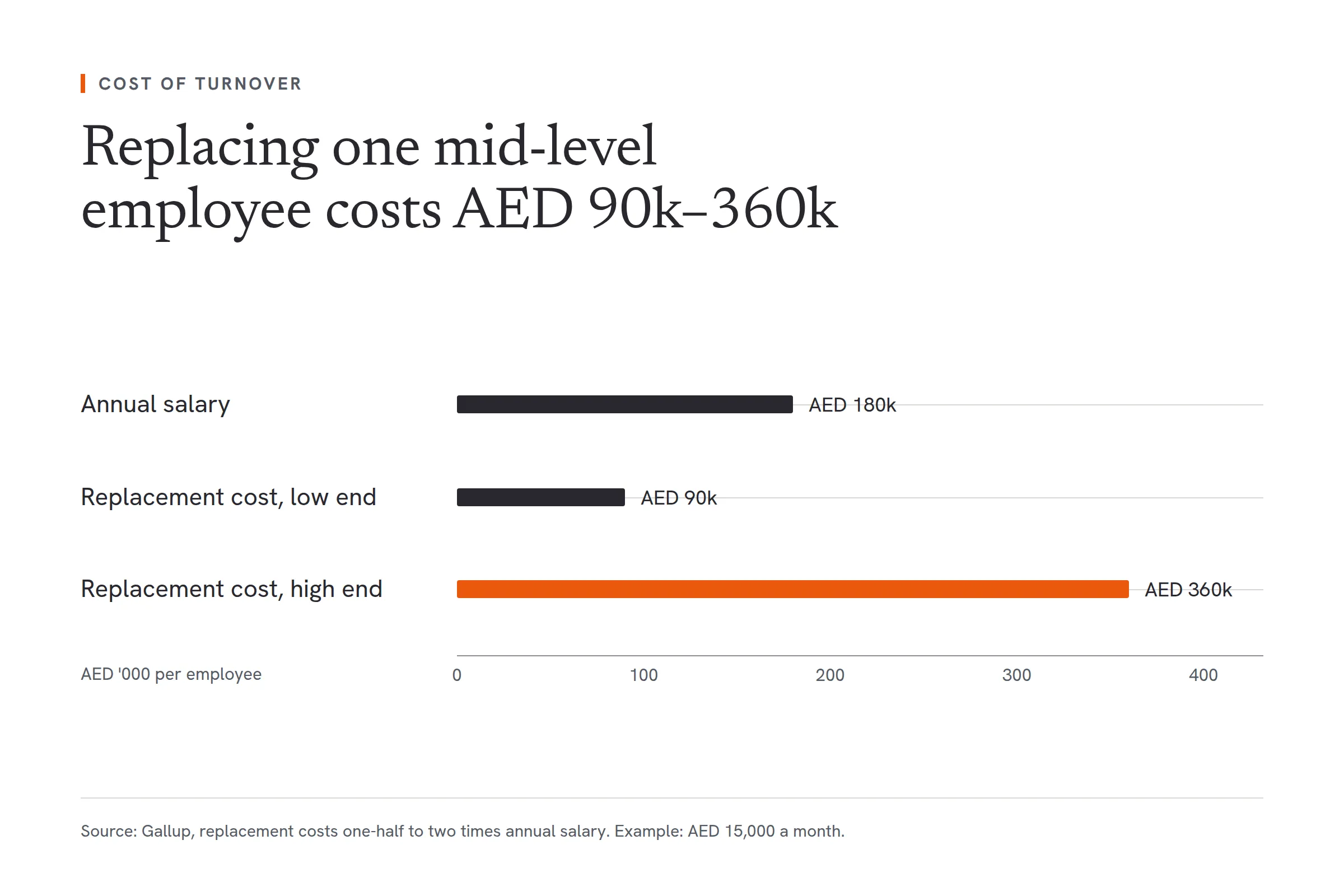
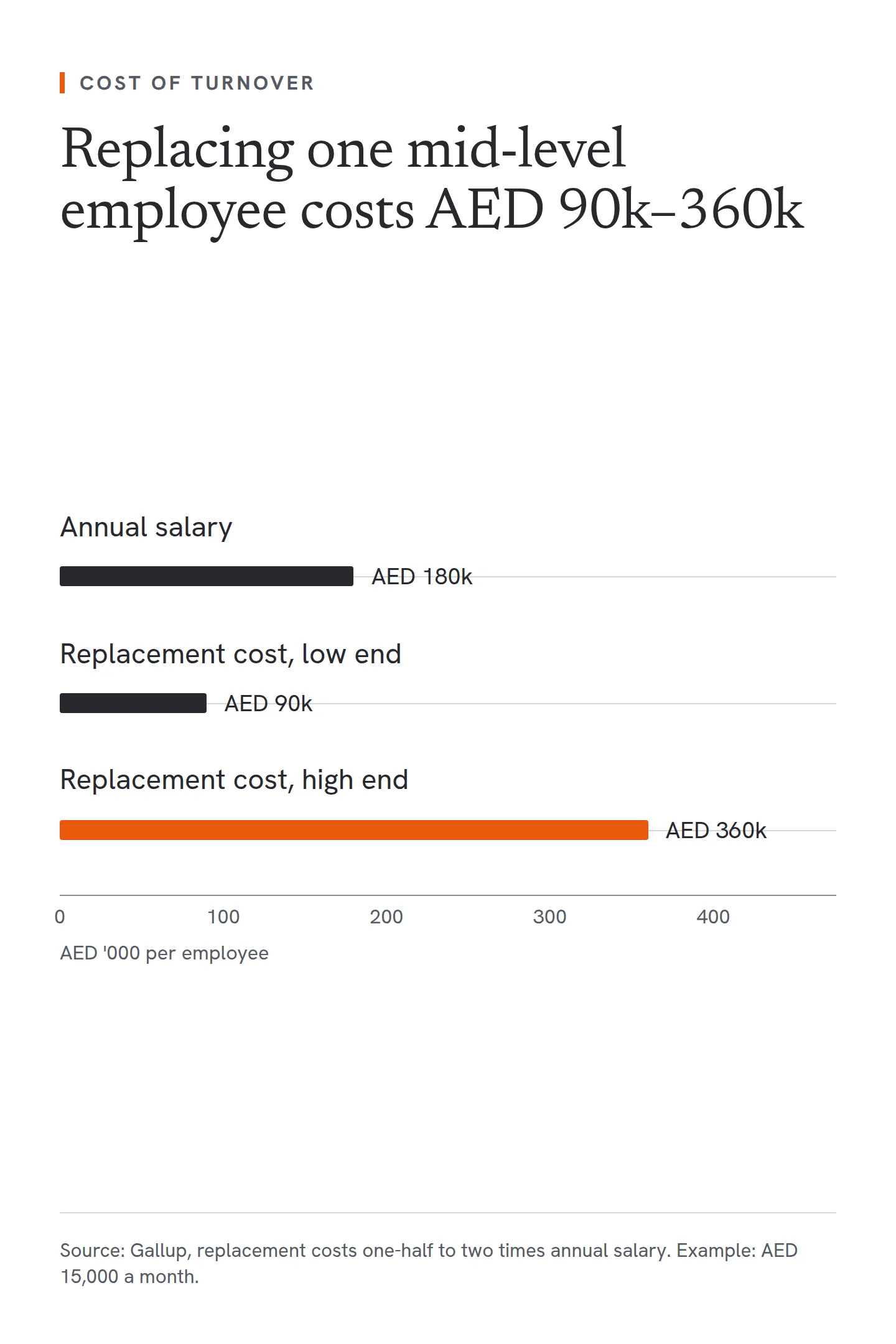
Replacing one employee typically costs a Dubai SME between half and twice that person's annual salary. Gallup puts it plainly: the cost of replacing an individual employee can range from one-half to two times the employee's annual salary.
Most Dubai SMEs we speak to treat turnover as inevitable. "That's just the UAE market." "Everyone moves every two years."
Part of that is true. The UAE workforce is mobile. Visa-linked employment, competitive poaching and expatriate career paths all increase churn. But accepting high turnover as fate is expensive, and most founders underestimate what each departure costs.
The visible bill is recruitment fees and visa processing. The hidden bill is everything else: lost clients, stalled projects, manager distraction and the months before a replacement performs like the person who left.
What turnover actually costs in Dubai
Gallup's range is 50% to 200% of annual salary for a single role. Seniority and client exposure push a role towards the top of it.
For a mid-level employee on AED 15,000 per month (AED 180,000 annually), that's roughly AED 90,000 at the low end and AED 360,000 at the high end. The bill includes:
- Recruitment agency fees, usually a percentage of first-year salary
- Visa cancellation and reissuance, medical tests, Emirates ID and the MoHRE work permit
- Signing bonuses or relocation support to secure a replacement quickly
- Onboarding time for HR, IT and line managers
- Lost productivity during the vacancy and ramp-up period
Senior and client-facing roles sit at the top of that range. The opportunity cost and relationship damage are largest there.
UAE-specific costs that sit on top
Three UAE rules turn each departure into a cash and compliance event.
End-of-service gratuity. A worker with at least one year of continuous service is entitled to 21 days of basic salary for each of the first five years and 30 days for each year after that, capped at two years' wage. The employer must pay it within 14 days of the contract ending. When several people leave in the same quarter, that's a real cash call.
Mandatory unemployment insurance. Private-sector employees must subscribe to the Involuntary Loss of Employment scheme. Premiums are up to AED 5 a month below AED 16,000 basic salary and up to AED 10 above it. Every new hire is another subscription to confirm, and a missed one carries an AED 400 fine.
Emiratisation. Private companies with 50 or more employees must raise the Emirati share of skilled roles by 2% a year, reaching 10% by the end of 2026. MoHRE has announced contributions of AED 10,000 a month (AED 120,000 a year) for each unfilled position from 1 July 2026. Losing an Emirati hire is therefore a compliance risk as well as a replacement cost. Emirati retention deserves its own plan, not a line in the quota report.
The hidden costs founders miss
Institutional knowledge walking out the door
Your best people hold context that isn't in any system. Which clients are sensitive. Which suppliers need careful handling. Why a process exists in its current form. When they leave, decisions get worse for months until someone rebuilds that knowledge.
Team productivity during transition
Remaining staff cover the gap. Quality slips. Overtime rises. Morale drops. High performers watch colleagues leave and start updating their CVs. Turnover is contagious when the root cause is untreated.
Client and revenue impact
In relationship-driven Dubai markets, clients often trust people more than brands. A departure can delay renewals, lose deals in the pipeline or trigger renegotiations you didn't plan for.
Why UAE turnover runs higher
Several factors make the UAE different from many Western markets:
- Expatriate workforce dynamics: many employees are on fixed-term horizons tied to visas and relocation plans
- Competitive talent markets: especially in technology, finance and professional services
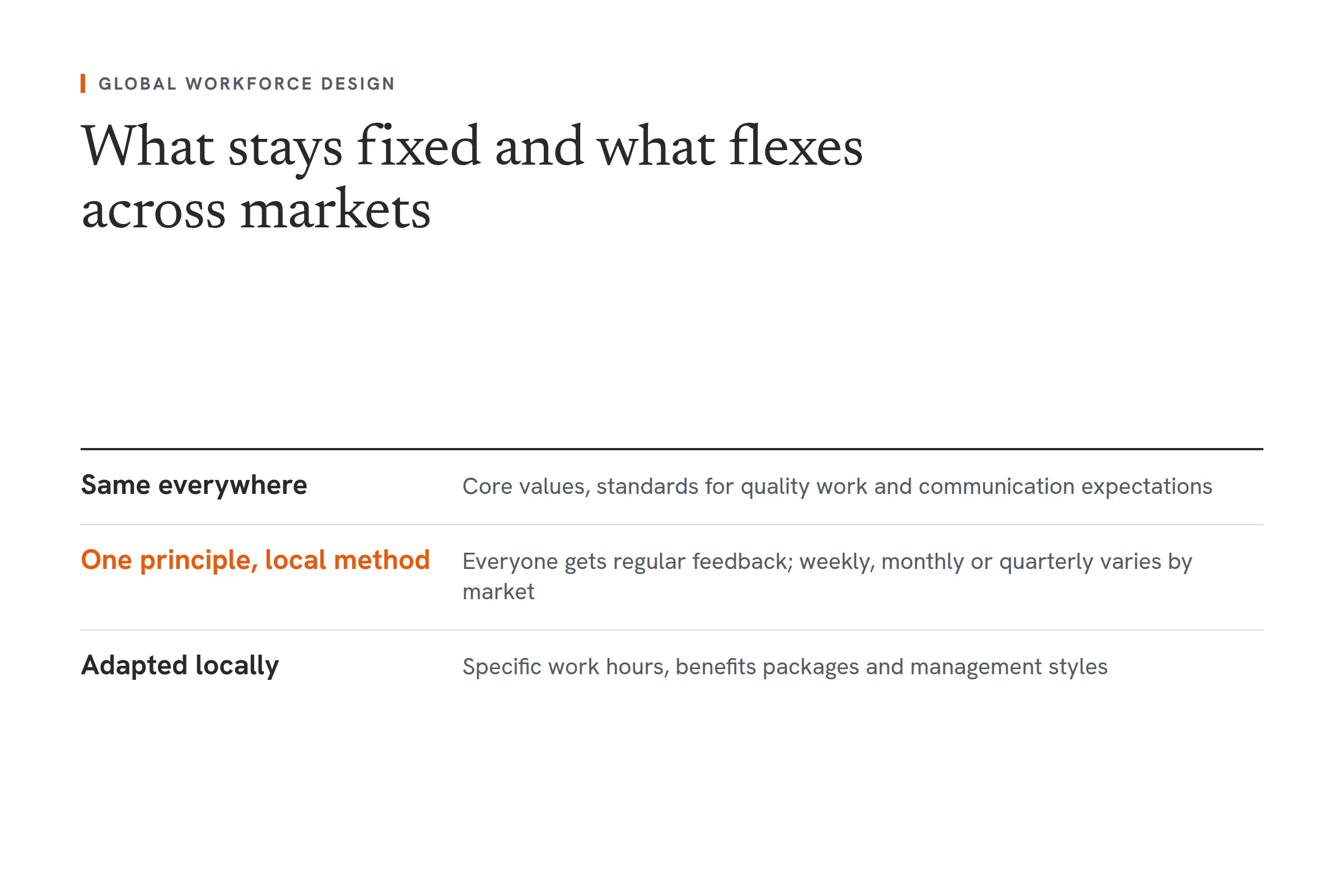
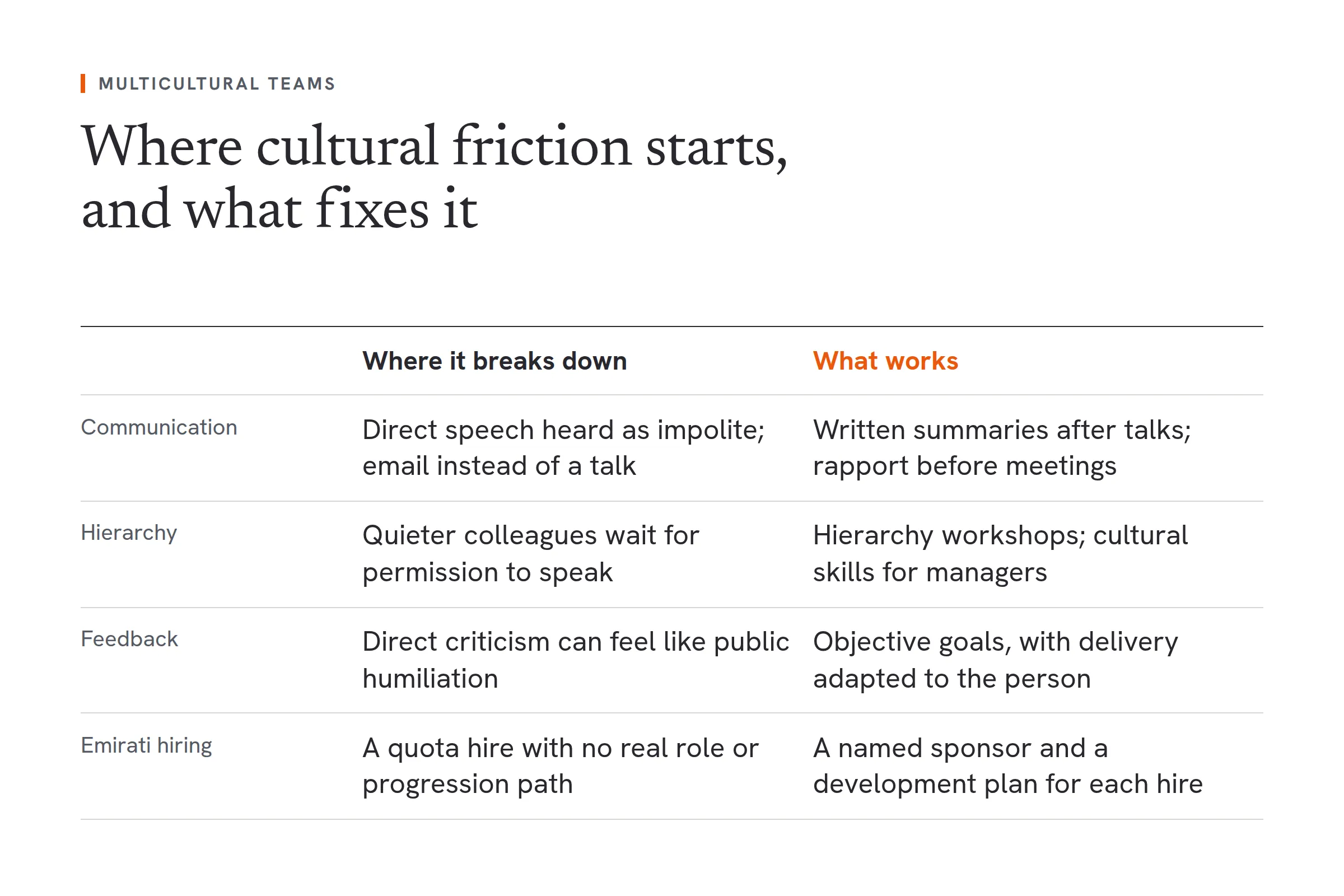
- Multicultural management gaps: multinational teams struggle when managers lack cultural integration systems
High market turnover doesn't mean your turnover has to be high. Gallup's 2024 Q12 meta-analysis of 183,806 business units found that the most engaged units had 21% lower turnover than the least engaged in high-turnover organisations, and 51% lower in low-turnover organisations. Engagement isn't the only lever. It is one you control.
What actually reduces turnover
Total compensation benchmarking
Salary matters, but total package design matters more. Benefits that are valued in Dubai. Clarity on bonus mechanics. Career progression tied to measurable milestones. Reactive counter-offers when someone resigns are a tax on poor planning.
Manager quality
Gallup finds that 52% of voluntarily exiting employees say their manager or organisation could have done something to prevent them leaving. It also finds that managers account for at least 70% of the variance in engagement scores across business units. The 2026 State of the Global Workplace adds that manager engagement fell from 31% in 2022 to 22% in 2025. Investing in first-line leadership, especially in multicultural teams, has a disproportionate effect on retention.
Onboarding that sets up success
Structured 30-60-90 day onboarding reduces early attrition. If new hires feel lost in week three, you're paying twice for the same role within six months.
Stay interviews before exit interviews
Ask valued employees what would make them leave before they resign. Stay and exit interviews reveal the same fixable patterns: compensation bands, role clarity, growth paths or cultural friction.
Cultural integration as infrastructure
Generic diversity training doesn't work. Effective programmes address real workplace tensions: hierarchy expectations, feedback styles and how deadlines are read across cultures.
How a fractional CHRO addresses turnover systematically
Founders often respond to turnover by hiring faster. That treats the symptom.
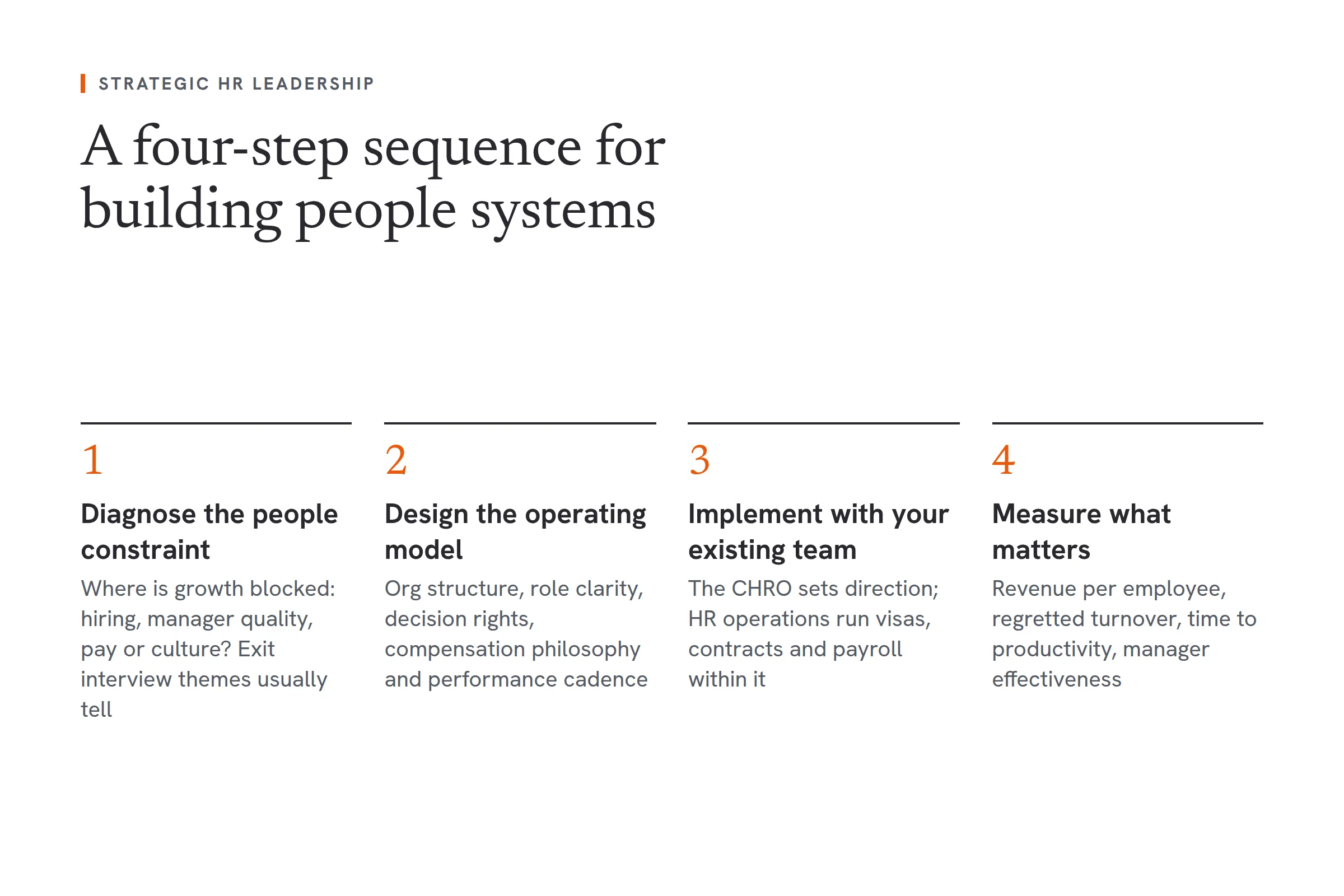
A fractional CHRO typically:
- Analyses turnover data by department, tenure, nationality, manager and compensation band
- Identifies root causes, drawing on patterns across 12 to 24 months rather than anecdotes from one resignation
- Designs retention systems: compensation frameworks, progression paths, manager training and onboarding standards
- Implements with your HR team so improvements persist after the engagement scales down
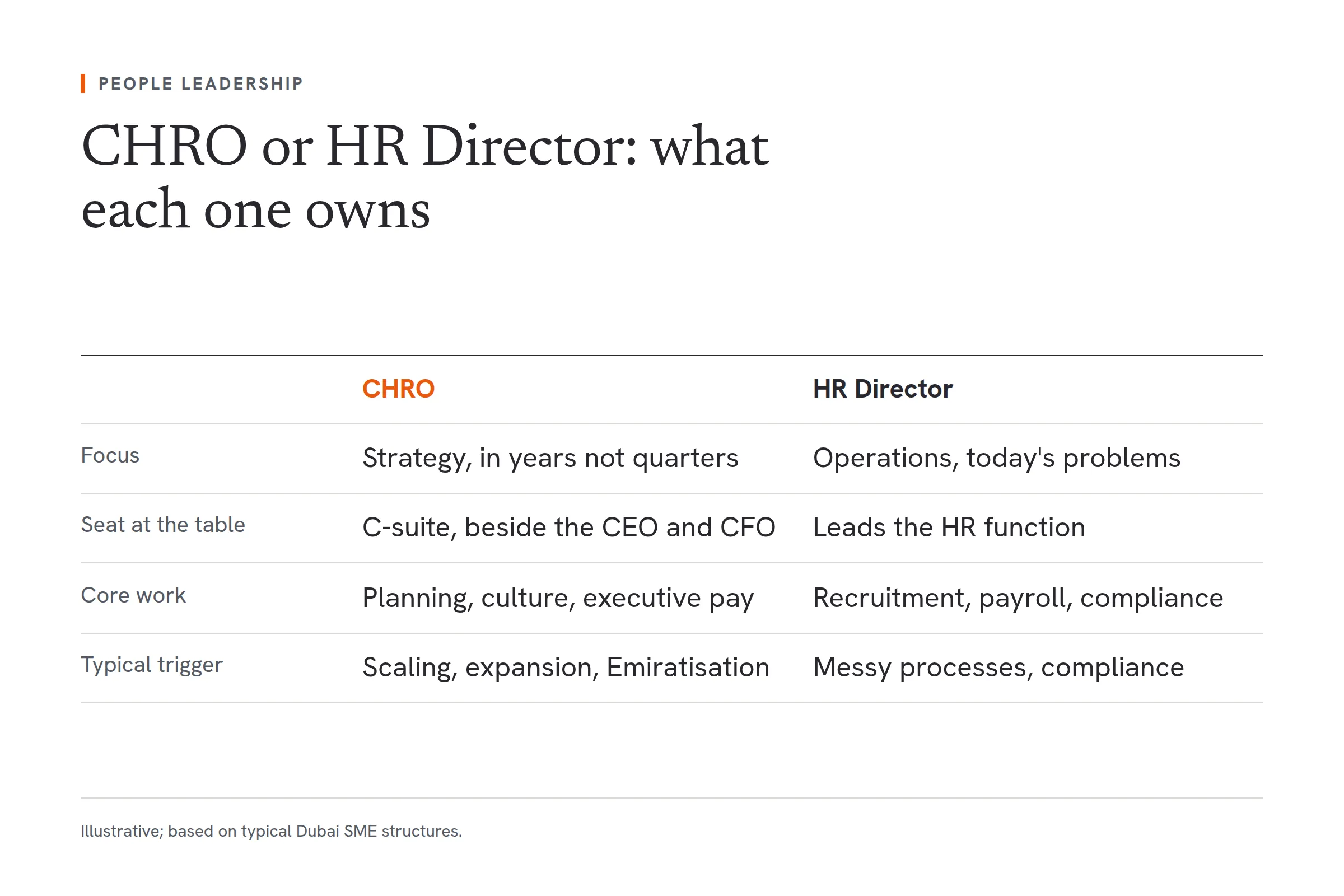
This is strategic HR leadership, not recruitment support. The goal is fewer departures, not faster backfills. A fractional engagement is also business to business, with no end-of-service liability and one month's notice, so it adds no gratuity or visa cost of its own. For the CHRO versus HR Director split when building those systems, see CHRO vs HR Director.
For broader context on strategic people leadership in the UAE, see our HR leadership guide and people strategy ROI framework.
When to act
If you're replacing the same roles repeatedly within 18 months, or losing people from the same manager's team, you have a systems problem.
The fix is rarely "hire a better recruiter." It's building the people infrastructure that makes good employees want to stay: clear growth paths, competent managers, fair compensation and a culture that works across the nationalities you actually employ. Repeated attrition in critical roles often needs fractional CHRO support before another recruitment cycle.
People don't leave Dubai businesses. They leave the way those businesses are run.
Want to diagnose your retention gaps? Take our CHRO Readiness Assessment or speak with us about fractional CHRO support for Dubai SMEs.