Fractional CMO model: strategic marketing leadership on demand
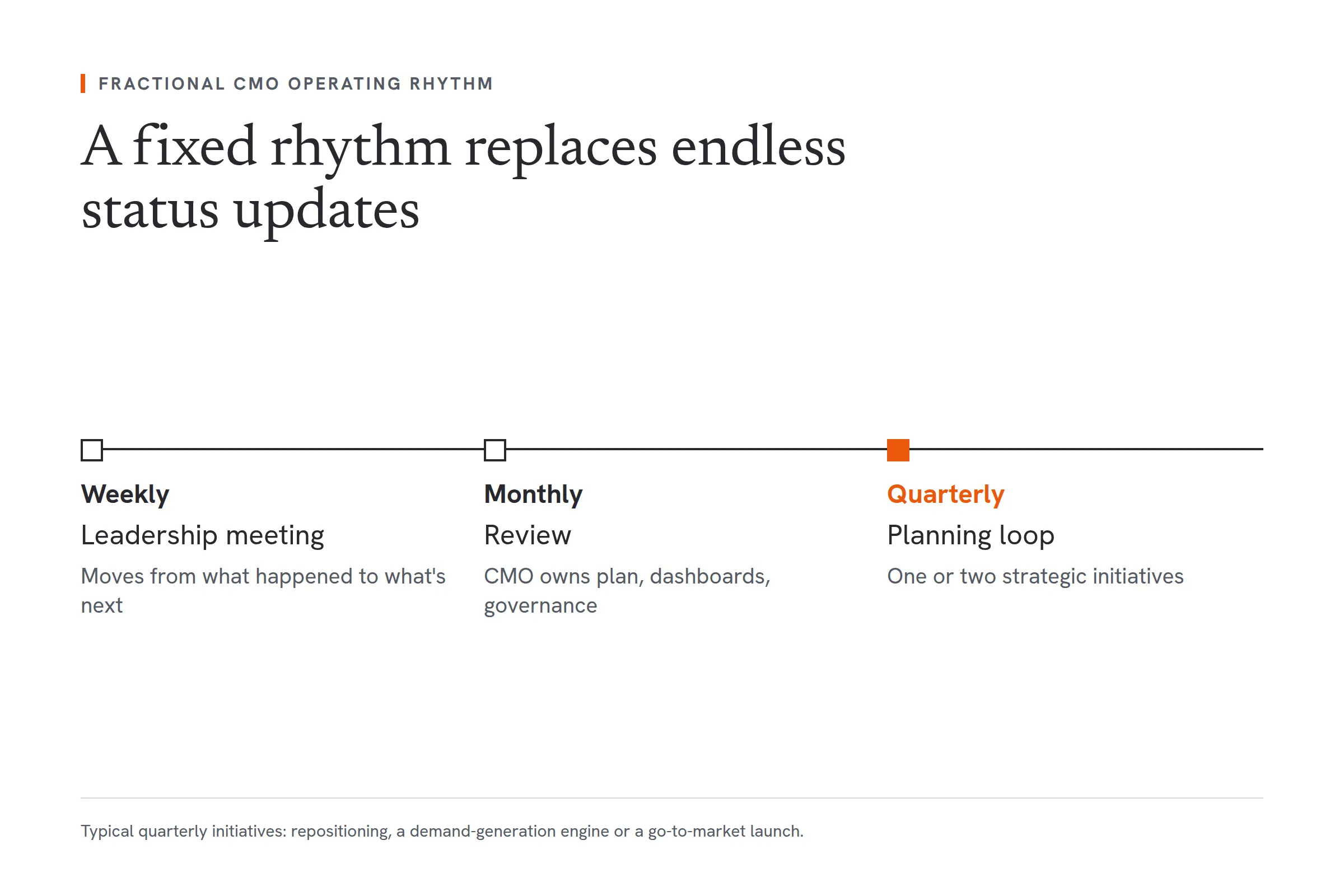
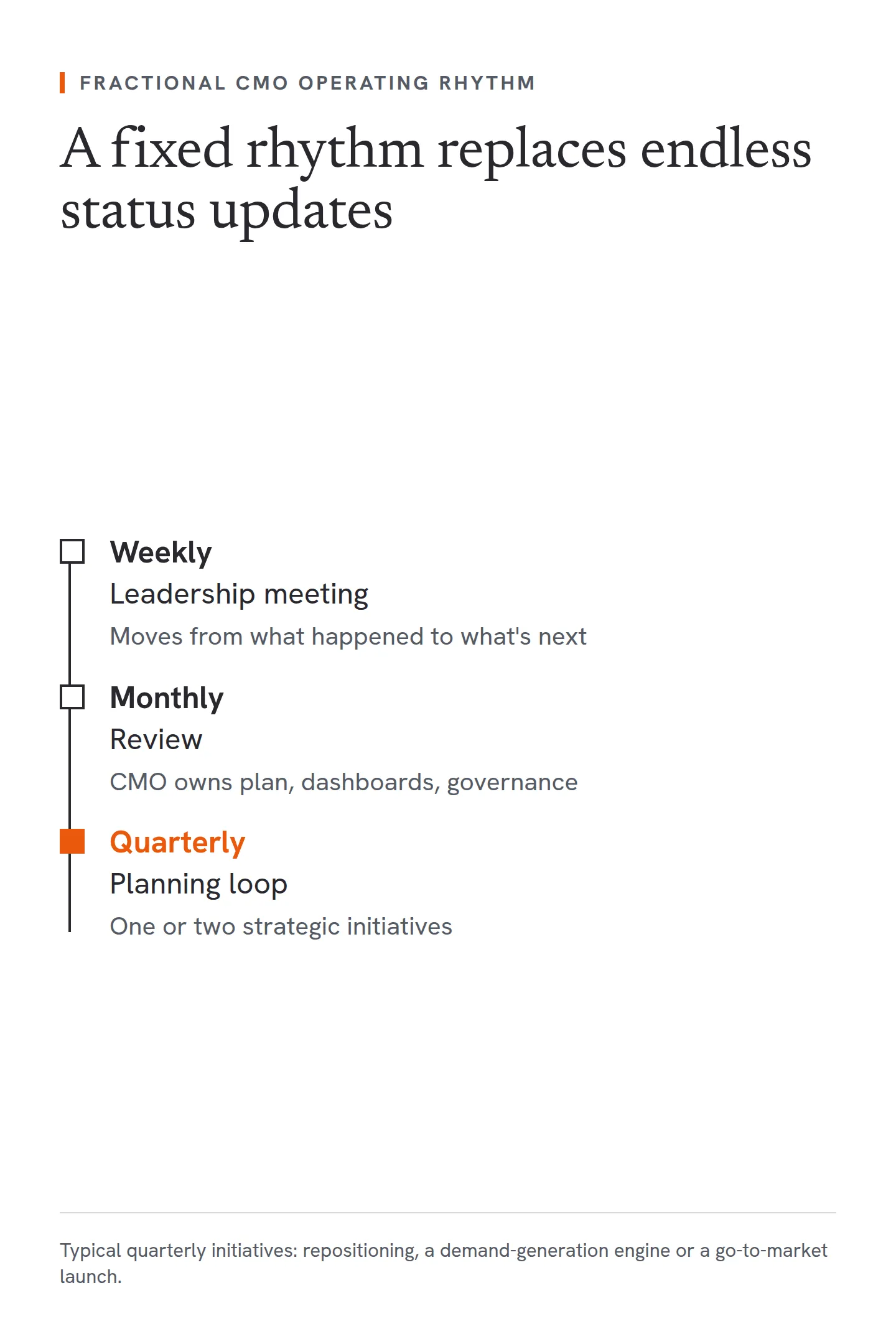
A strategic fractional CMO is a senior marketing executive who runs your marketing through a fixed rhythm: a weekly leadership meeting, a monthly review and a quarterly planning loop. Each quarter has one or two strategic initiatives, such as repositioning, a demand-generation engine or a go-to-market launch. The fractional CMO owns the plan, the dashboards and the governance, and you get decisions instead of endless status updates. If you are new to the model, what fractional leadership means for UAE businesses is a useful starting point.
Within a few weeks, the noise settles. Owners and timelines are visible, meetings shift from "what happened" to "what's next", and pipeline forecasting starts to feel real. The model suits growing companies in particular: Heidrick & Struggles reports that small and medium companies now account for more than four-fifths of demand for high-end interim talent, a figure that covers senior interim leaders across functions. Engagements are business to business with one month's notice, and a CMO can usually start within weeks. When you are ready to formalise it, here is the structure: Fractional CMO services.
Brand strategy development for Dubai's competitive markets
Brand strategy is the promise you make and the proof you bring. In crowded categories such as real estate, B2B services and technology, clarity is a growth lever. A fractional CMO defines the promise buyers in Dubai will pay for, the proof points that earn trust and the tone that sounds like you, then chooses the few channels that genuinely reach your decision-makers and drops the rest.
Channel choice should follow where your audience actually is. DataReportal's 2026 UAE report counts 10.0 million LinkedIn members, 8.37 million YouTube users and 8.05 million Instagram users in a country of 11.4 million people, so reach is rarely the constraint. Attention and relevance are. For a fuller view of multicultural positioning and localisation, see our fractional CMO leadership guide.
Customer acquisition systems that scale with business growth
A customer acquisition system compounds when every step from first touch to signed deal is defined, owned and measured. Scaling is not about chasing more leads. The work starts with tightening your Ideal Customer Profile so your message lands with fewer, better prospects, then sharpening the offer and stacking the proof (case studies, numbers, certifications) so premium pricing makes sense. After that comes a clean path from first touch to signed deal, with conversion points you can track.
Channels follow intent: search and partners for buyers who are ready, LinkedIn demand generation and webinars for those comparing options, and brand-building for the market you are still warming up. Sales enablement closes the loop with battlecards and sensible follow-ups. Where influencers or creators are part of the mix, the UAE Media Council's rules apply: since 1 February 2026, anyone promoting products or services on UAE social media, paid or unpaid, needs an Advertiser Permit, and organisations must verify that advertisers they engage hold one. Build that check into campaign briefs, and confirm with your legal adviser how the rules apply to your own company accounts.
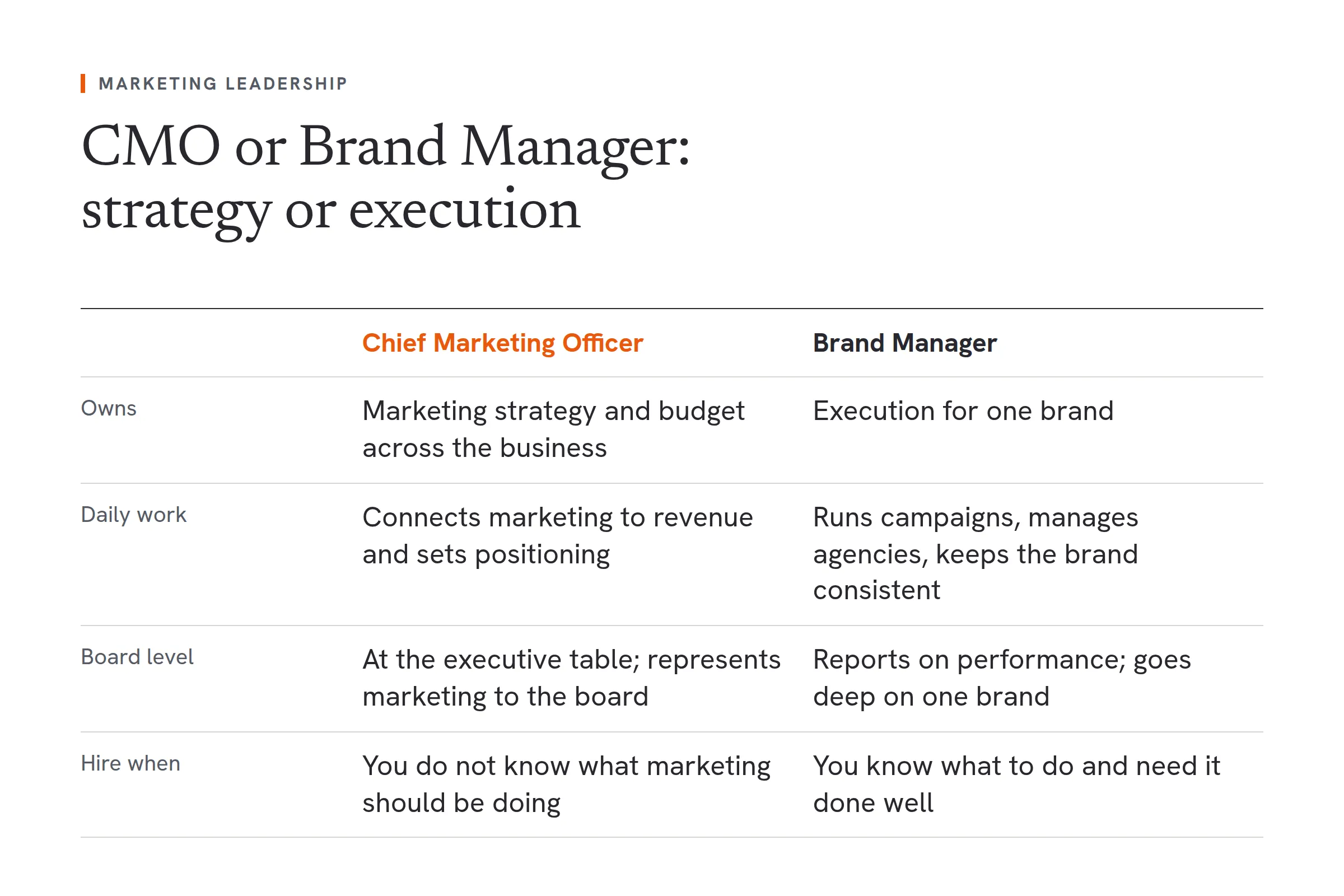
Tech founders navigating GITEX and post-event nurture will find our digital marketing innovation guide useful. If spend and outcomes are not matching, compare CMO vs Brand Manager to confirm whether the gap is strategy or execution.
Marketing technology stack optimisation for growing companies
A good marketing stack removes friction rather than creating it. Keep it lean: reliable tracking (GA4 with clean UTMs and events), a CRM that reflects reality (HubSpot or Salesforce with lifecycle stages that sales actually uses), and one dashboard that finance trusts. Content operations become modular so your team ships faster without reinventing the brand every week. Redundant tools go; governance stays.
Governance now includes personal data. The UAE Personal Data Protection Law (Federal Decree-Law 45 of 2021) has been in force since 2 January 2022, and individuals hold a right to stop processing for direct marketing purposes, including related profiling. Chambers' 2026 practice guide notes that implementing regulations were still awaited and enforcement limited, so the safe course is to treat consent and opt-out as the baseline: record consent at the point of capture, sync suppression lists across tools, and keep a clear owner for data requests. DIFC-based companies work under separate data protection legislation.
AI belongs in the stack only where it earns its place. Gartner's 2026 CMO Spend Survey found that marketing leaders allocate an average of 15.3% of marketing budgets to AI initiatives, but only 30% say their organisations are ready to scale AI capabilities. The sample is mostly large North American and European companies, so read it as a direction of travel. The lesson for an SME is to fix data flow and measurement first, then add automation.
Measuring marketing ROI: metrics that actually matter for business growth
The metrics that matter are the few that decide budget. A fractional CMO tracks pipeline value and velocity by segment and channel; CAC and payback with all costs included; and the conversion rates that sales and marketing own together. They also define "marketing-sourced" and "marketing-influenced" so the conversation moves from politics to performance.
Budget context helps. Gartner's 2026 survey found that marketing budgets average 7.8% of company revenue, against 7.7% in 2025, across 401 marketing leaders at mostly $1 billion-plus companies. That is a large-company reference point, not a target for an SME. Set your own ratio against pipeline goals, review it every quarter and let the dashboard, not habit, decide where the next dirham goes.
If your current dashboard is heavy on reach and light on revenue, reset the strategy with this overview: Fractional CMO leadership in Dubai. When the constraint is organisation design rather than campaigns, compare CMO vs VP Marketing before you hire.
When to bring in a fractional CMO
You are close to needing one if any of these feel familiar: spend is rising but ROI is unclear; there are multiple vendors and no single owner; sales cycles are long and lumpy; founder-led growth has hit a ceiling; a new segment or market needs go-to-market focus; or you are heading into a funding conversation and efficiency must be proven.
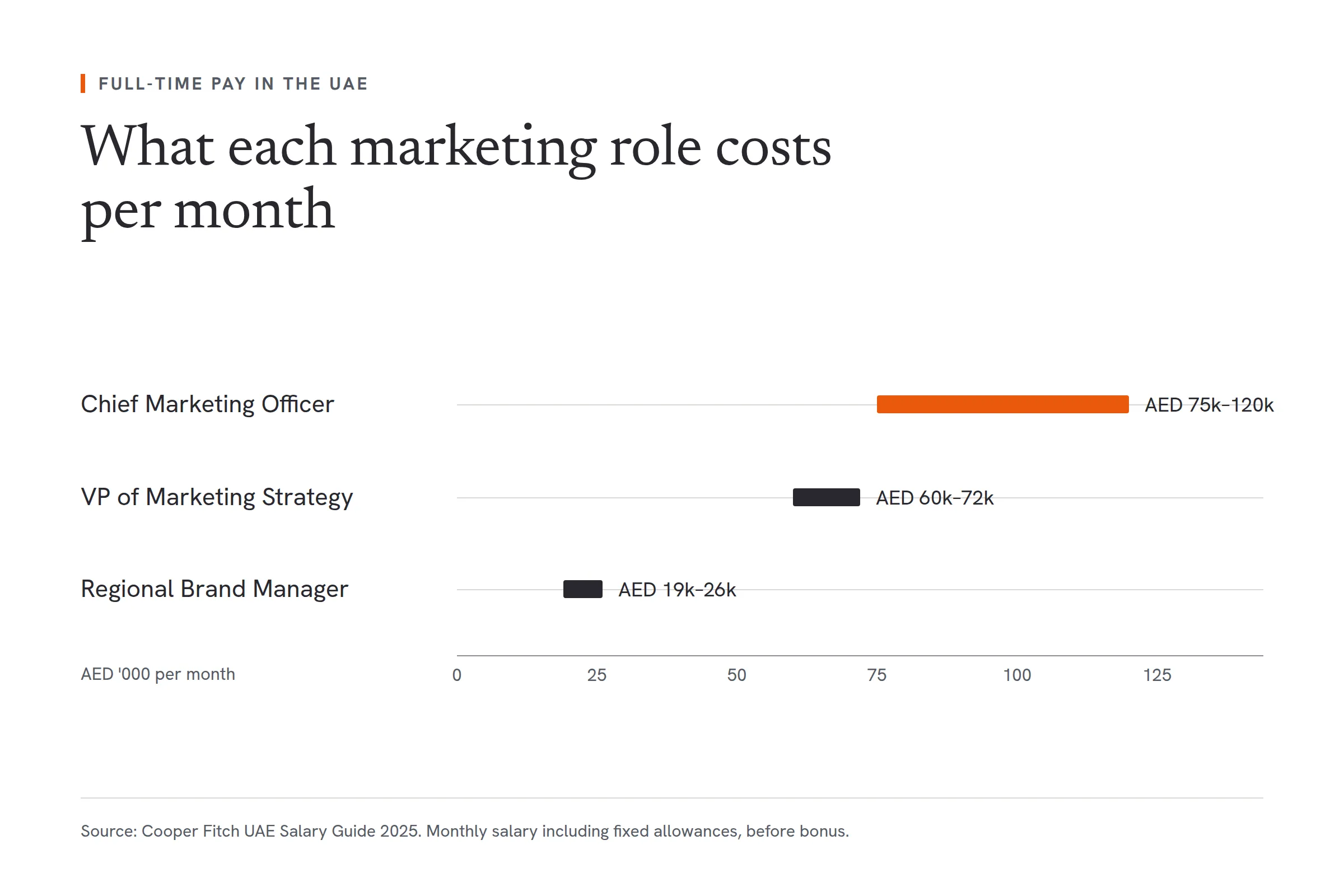
A full-time seat is a bigger commitment than it looks. Spencer Stuart's 2026 study of S&P 500 companies found an average CMO tenure of 4.1 years, with 31% of those companies having no enterprise-level CMO. It is a US large-company sample, but it shows that the role keeps being redefined even where budgets are large. A fractional engagement lets you test the scope first: our engagements typically run 30 to 60% less than a full-time hire, with no employment visa, no end-of-service liability and no insurance burden.
If you want predictability instead of noise, put a strategist in the driver's seat. A fractional CMO gives you executive focus and measurable progress without a full-time seat, which is the model most SMEs choose when marketing spend is rising but no one owns the strategy at board level. To check where you stand, take the Fractional CMO Readiness Assessment. When you are ready, map your first 90 days here: Fractional CMO services or talk to our team.