At some point in the growth of a small or mid-sized business, usually once the team passes a few dozen people in an established SME, the founder stops being the rocket fuel and starts becoming the bottleneck. A fractional Chief Operating Officer (COO) fixes this by installing the roles, metrics and leadership rhythm that let the team decide without waiting for the founder.
The bottleneck is not intentional. It is usually a sign of success up to that point, and a by-product of how much the founder cares.
When every decision, escalation and process runs through the same person, growth stalls. Team energy dips. Execution slows. And the founder ends up doing laps, stuck in the weeds, chasing dropped balls and asking, Why does this still depend on me?
This is the moment where operational leadership becomes critical. For many SMEs the first response is another supporting role to help the founder "do tasks". It rarely lasts. It may relieve some pain for a while, and then you are back where you started. Why your business needs a fractional COO explains the signs in more detail.
So consider a different approach: the fractional one.
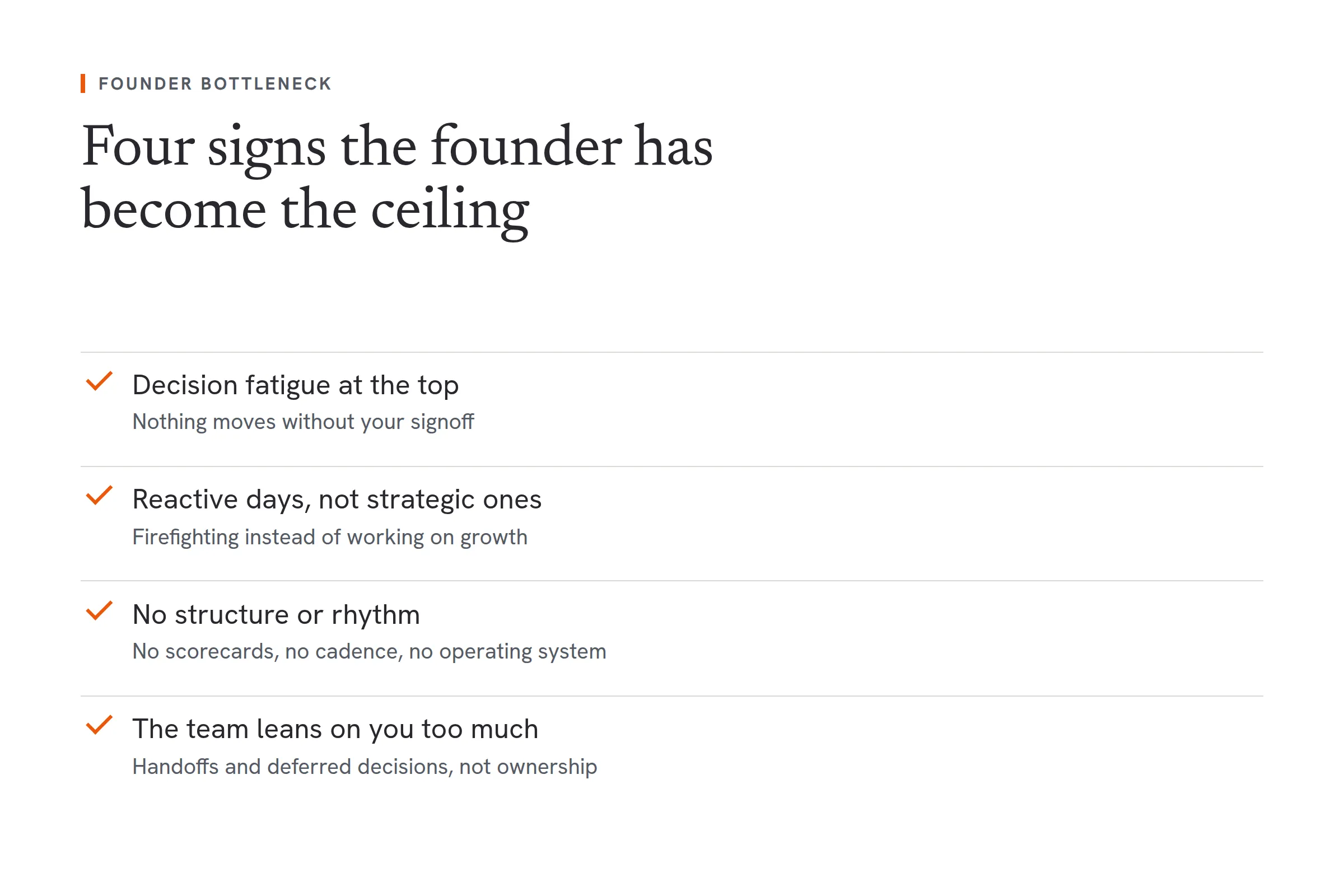
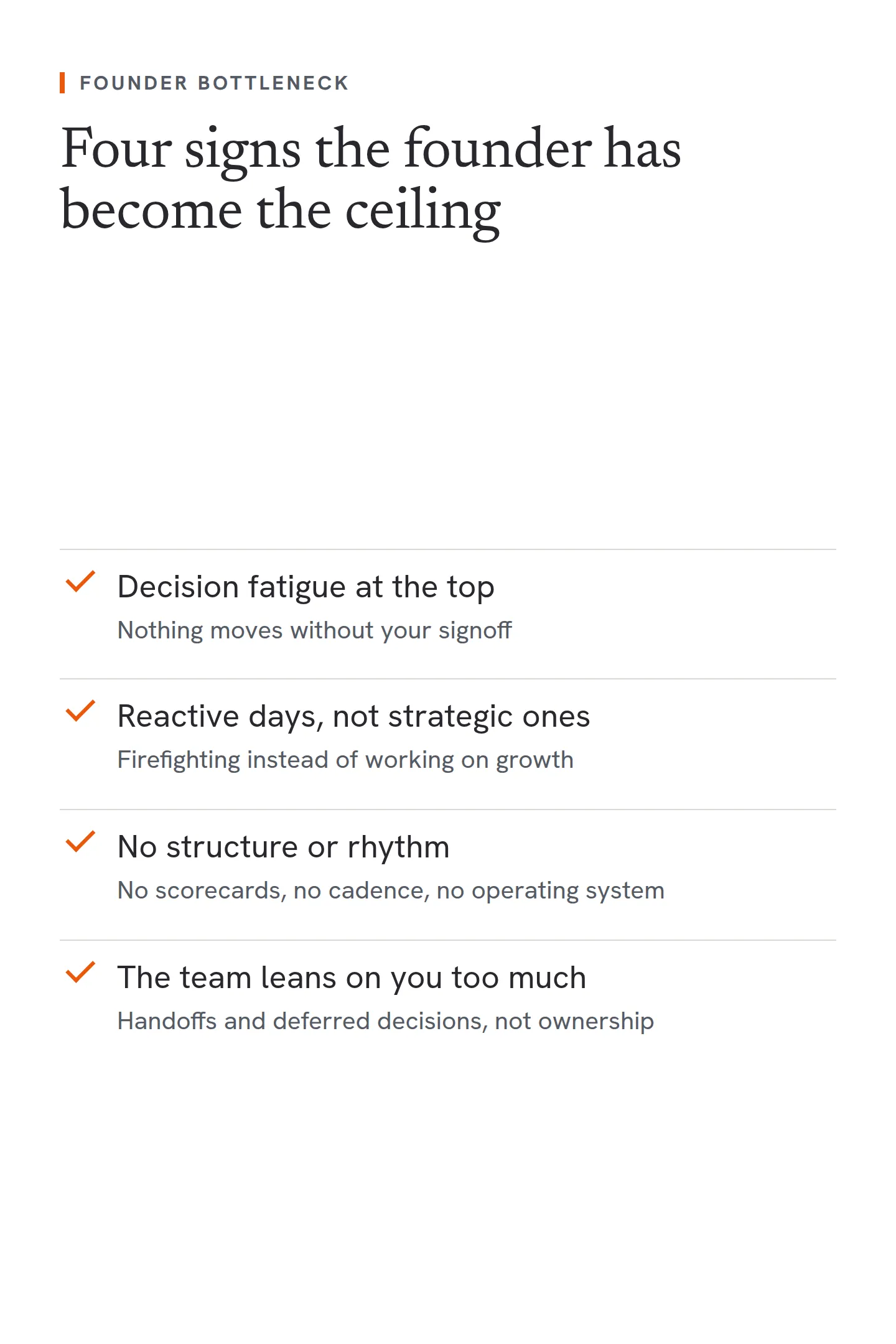
The classic signs of a bottlenecked founder
1. Decision fatigue at the top
If your team cannot move forward without your signoff, you have unknowingly built a system where progress is permission-based. It is flattering at first to feel so needed, until you realise you have become the ceiling.
2. Reactive days, not strategic ones
You are not running the business, you are reacting to it. You spend your days firefighting operational issues instead of working on growth. The calendar is full, but not full of things that move the needle.
3. Lack of structure and rhythm
No clear scorecards. No real leadership cadence. No operating system to run the business without you. Everything relies on gut feel, Slack threads and WhatsApp groups, many of them. And when someone leaves, they take the process with them.
4. The team leans on you too much
Instead of ownership, you get constant handoffs. People defer decisions, dodge accountability or wait for you to clean things up. Not because they are lazy, but because the structure does not exist for them to lead, and they are used to you picking up the slack.
How a fractional COO breaks the pattern
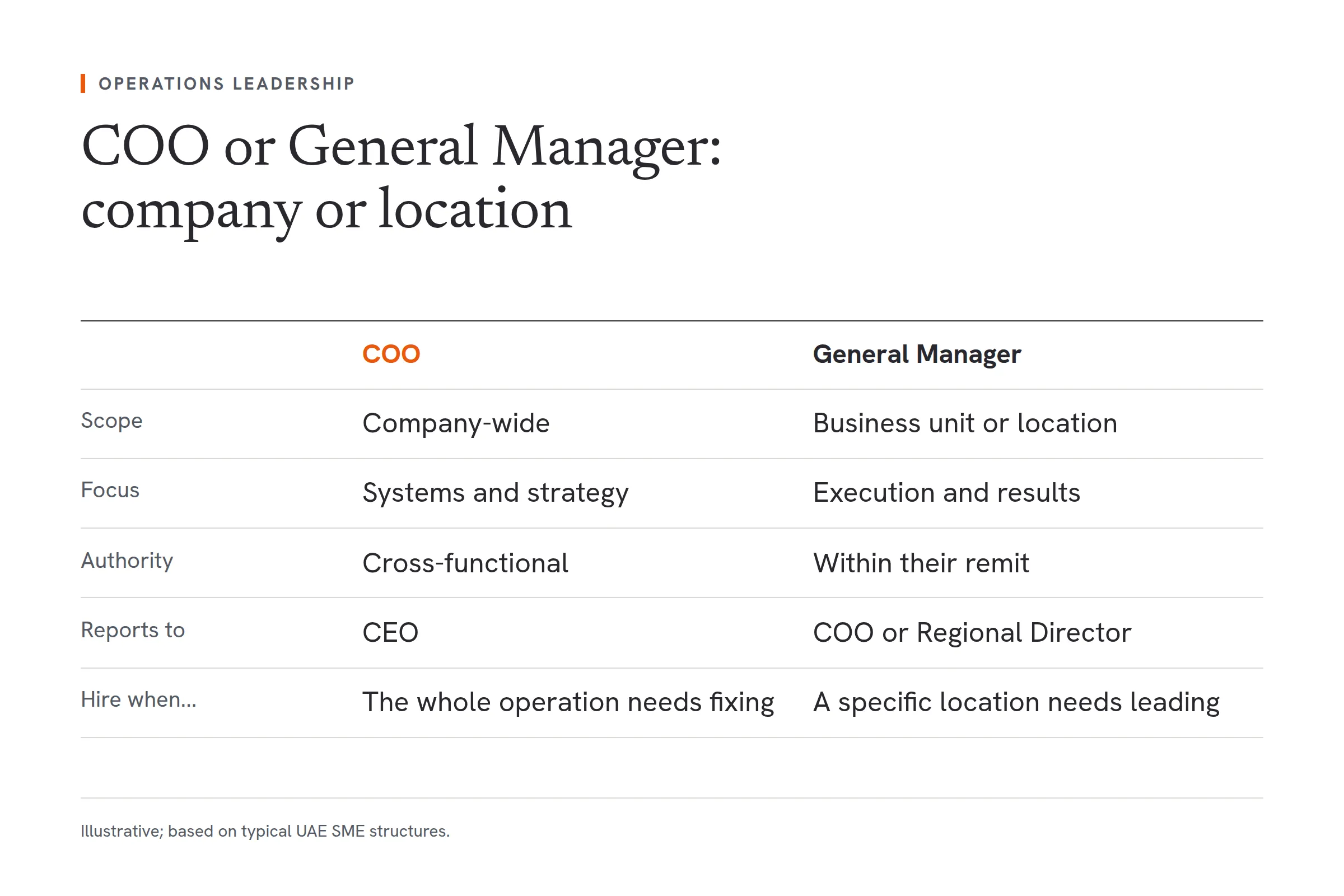
A fractional COO does not come in to build an empire. They come in to build the engine. They create the infrastructure, rhythm and accountability so the founder can stop being the centre of everything. A fractional COO engagement is structured around that mandate, not around filling a calendar with status meetings.
Harvard Business Review's research on the role makes a useful point here: asking what makes a great COO is like asking what makes a great candidate for vice president, because it "all depends on the first name on the ticket". The COO is designed around the founder, which is why the first conversation is about how you work, what you want to keep and what you are ready to hand over.
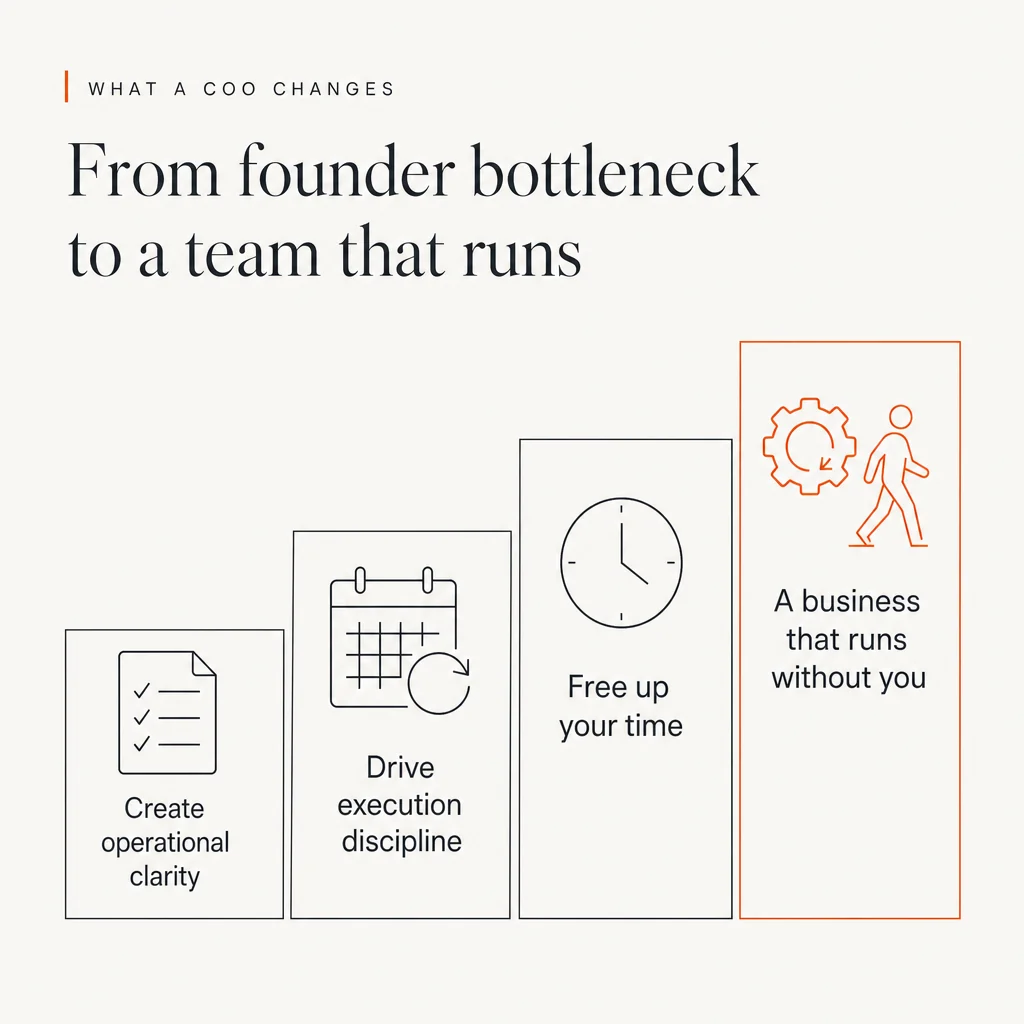
Here is how a fractional COO shifts the dynamic:
1. Create operational clarity
Clear roles. Clear metrics. Clear process. Most founders are running on instinct, and that got them this far. A good fractional COO installs the systems that give structure to growth, starting with decision rights: which decisions the team owns outright, which need a quick consultation and which genuinely stay with you. You go from "fix it when it breaks" to "it is already handled".
2. Drive execution discipline
Rhythm is everything. A fractional COO builds the meeting cadence, leadership check-ins and scorecards that keep everyone rowing in the same direction. You stop chasing your team, because your team is tracking itself.
3. Free up your time and headspace
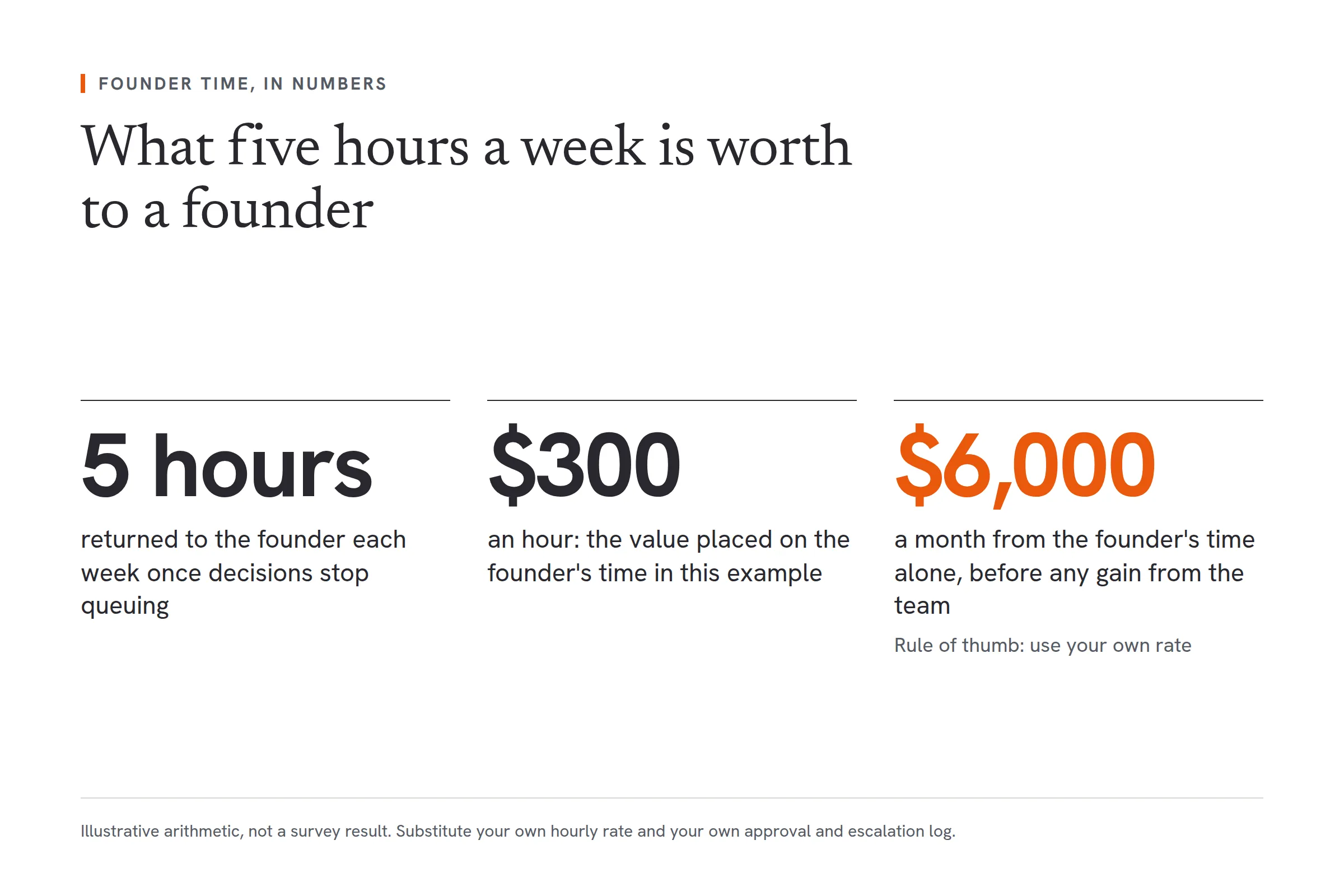
The right fractional COO absorbs the noise. They remove the friction points that keep pulling you back into the weeds, so you can spend your time on customers, partners and strategy.
4. Build a business that runs without you
Most founders dream of freedom: more time, more headspace, maybe even an exit. Exits do not happen in chaos. They happen in businesses with clean operations, documented processes and decision-making that does not rely on one person. The fractional COO is the person who gets you there.
Why more companies are bringing in outside operators
Operations is where growing companies increasingly feel the gap. In its 2026 High-End Independent Talent Report, Heidrick & Struggles found that requests for interim COOs rose 250% year on year, the sharpest increase of any C-suite role, and that demand for interim C-suite leaders is up 151% since 2021.
Read the first figure with its base in mind: interim COOs are still a small share of interim C-suite requests (4%, against 51% for Chief Financial Officers). The direction is the point. Outside operational leadership is becoming an accepted way to run a growing business, not a last resort.
You do not need a full-time executive
You do not need a full-time COO to fix this. You need the right executive with the mandate to drive change, even if it is only a day a week.
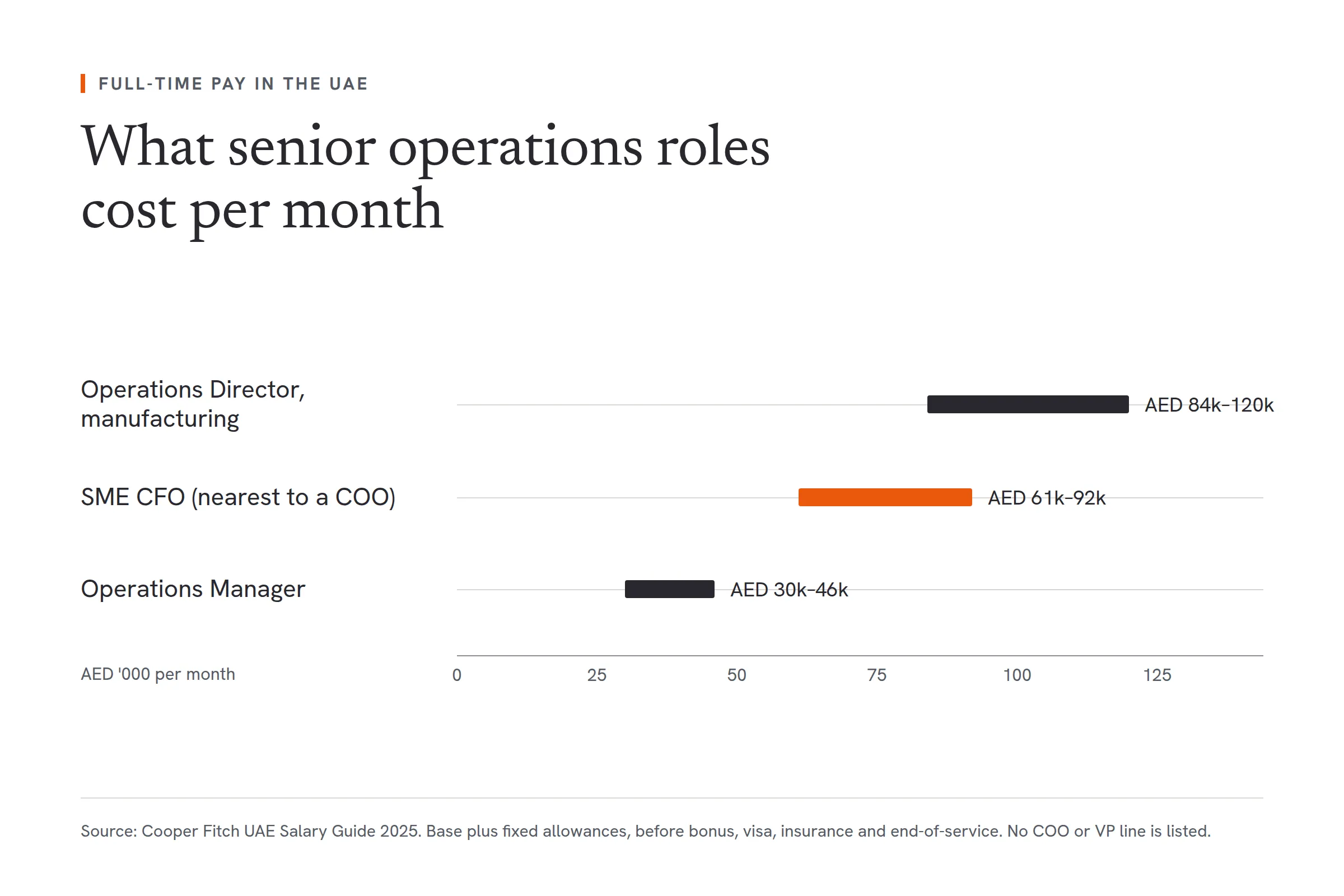
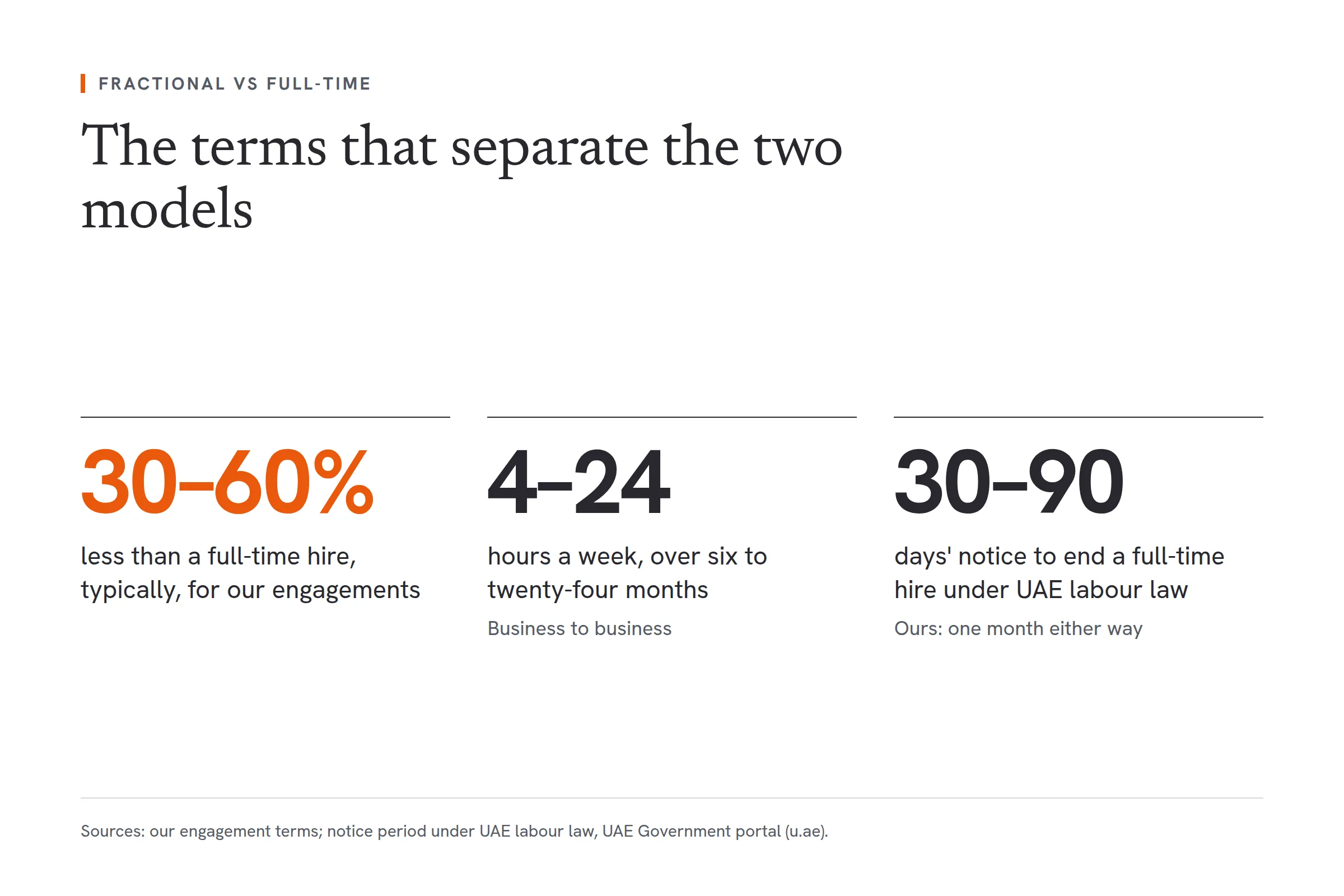
That is why the fractional model works. You get C-suite thinking and execution in doses that match your business's stage, budget and pace: typically 4 to 24 hours per week over six to twenty-four months, business to business, with one month's notice either way. Our engagements typically run 30 to 60% less than a full-time hire, with no employment visa, no end-of-service liability and no insurance burden.
We do not simply make an introduction and step away: we provide the support, structure and governance for both the SME and the executive to succeed. Compare the economics in fractional COO vs full-time COO, or see COO value creation in Dubai SMEs for what founders typically reclaim in time and margin.
Final thought
If you are reading this and nodding along, chances are you already know. You are the bottleneck. Not because you failed, but because you succeeded.
The next level of your business will not be built by working harder. It will be built by working differently, and that shift starts with operational leadership.
When the systems click, when the team runs, when the calendar clears, that is when the real founder work begins. That is where a fractional COO comes in.
Still not sure whether it is the right time? Take our Fractional COO Readiness Assessment, or read our flexible operations leadership guide for how engagements are structured.
Or get in touch to discuss whether a fractional COO fits your situation.