Signs your business needs a fractional COO
A growing business needs a fractional Chief Operating Officer (COO) when the founder is the bottleneck, firefighting has replaced strategy and operational leaks are starting to show in the numbers. These are the most common signs, drawn from real-world businesses:
- You are always firefighting
Daily crises, endless check-ins and decisions grinding through you.
- You are the bottleneck
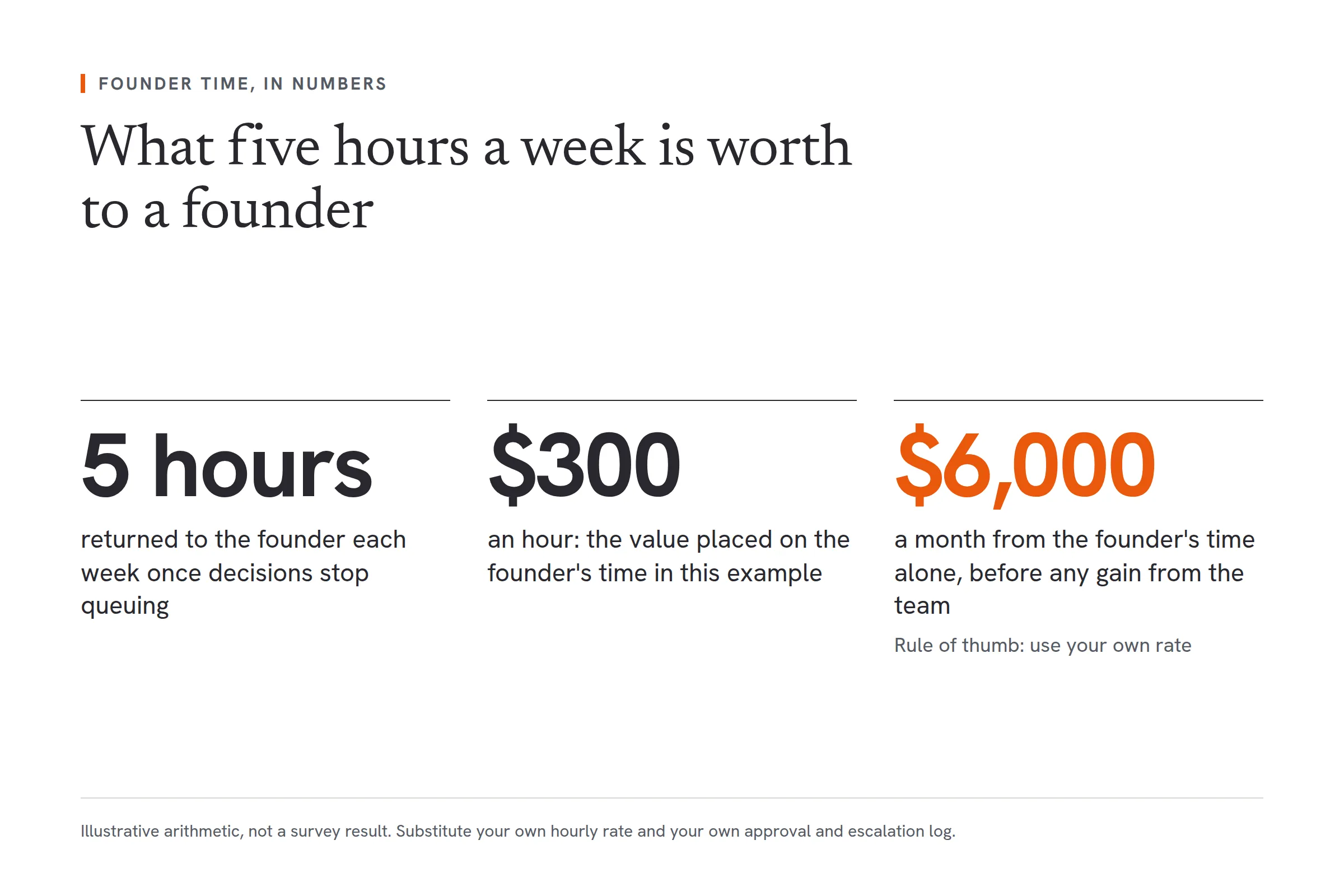
Everything needs your approval; it is draining and limiting. If that sounds familiar, read when the founder becomes the bottleneck for the full pattern.
- Team accountability is patchy
Poor retention, inconsistent delivery, missed deadlines.
- Financial instability
Operational leaks, team leaks: the business is leaking money, and it is starting to show.
Several of these at once usually means the business has outgrown founder-led operations. You do not need to be large for that to happen, and you may not yet be large enough to justify a full-time executive. Our clients typically sit between 2M and 40M USD in revenue, where SME-scale operations are complex enough to need senior leadership and a permanent C-suite seat is often premature.
Outside operational leadership is a growing pattern, not a fringe one. Heidrick & Struggles reports that requests for interim COOs rose 250% year on year in its 2026 High-End Independent Talent Report, the steepest increase of any C-suite role (from a small base: interim COOs are 4% of interim C-suite requests). The same report finds demand for interim C-suite leaders up 151% since 2021.
Why fractional COOs are so powerful
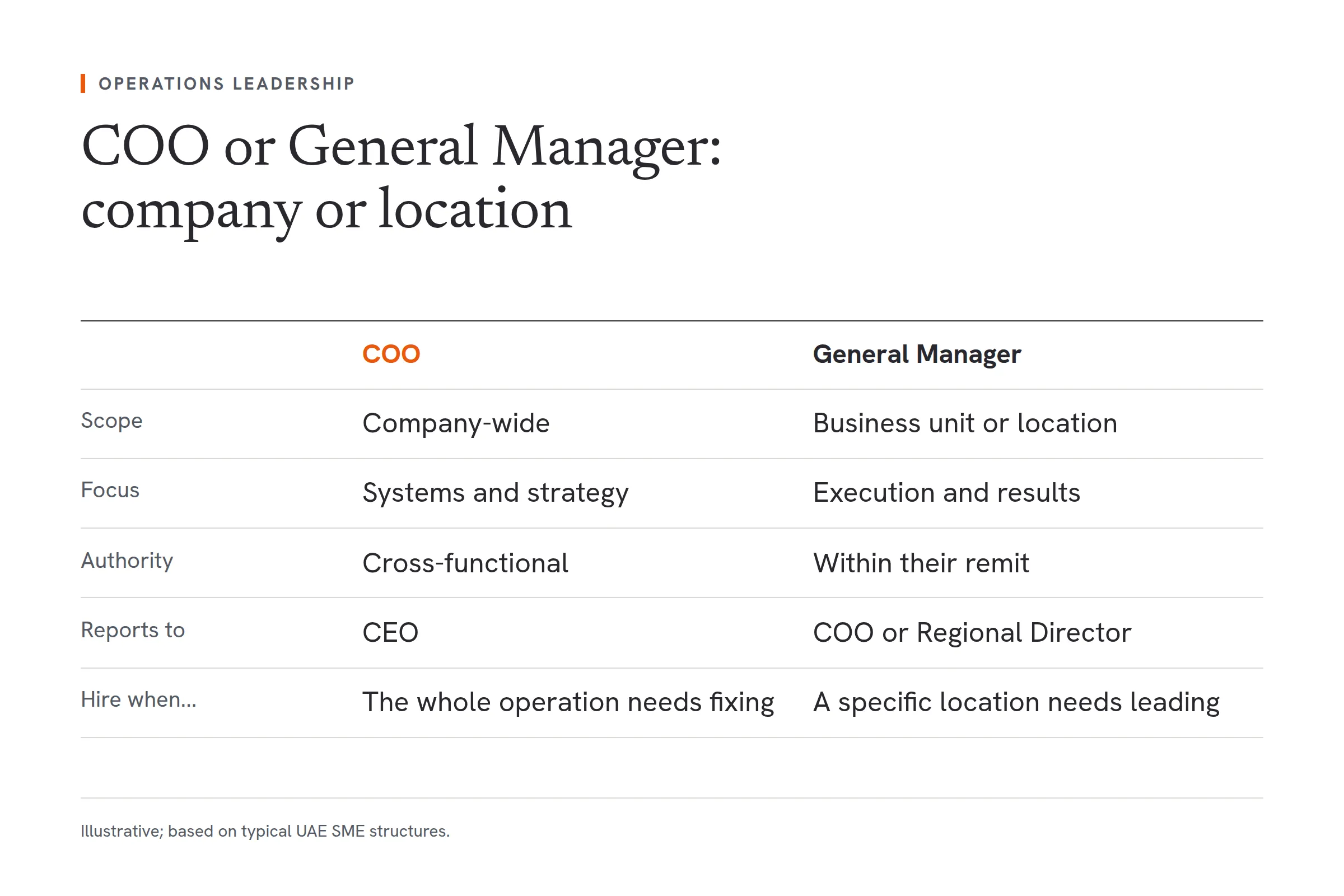
They combine senior execution with flexible support. A fractional COO brings high-level operational leadership without the cost or long-term commitment of a full-time hire. You get someone who already understands growth systems, team management and execution, and who can start delivering within weeks of the match.
The executive does not advise from the sidelines. They hold the decisions in their operational domain and are accountable for the outcome. We do not simply make an introduction and step away: we provide the support, structure and governance for both the SME and the executive to succeed.
What fractional COOs actually do
Here is what an experienced fractional COO typically implements:
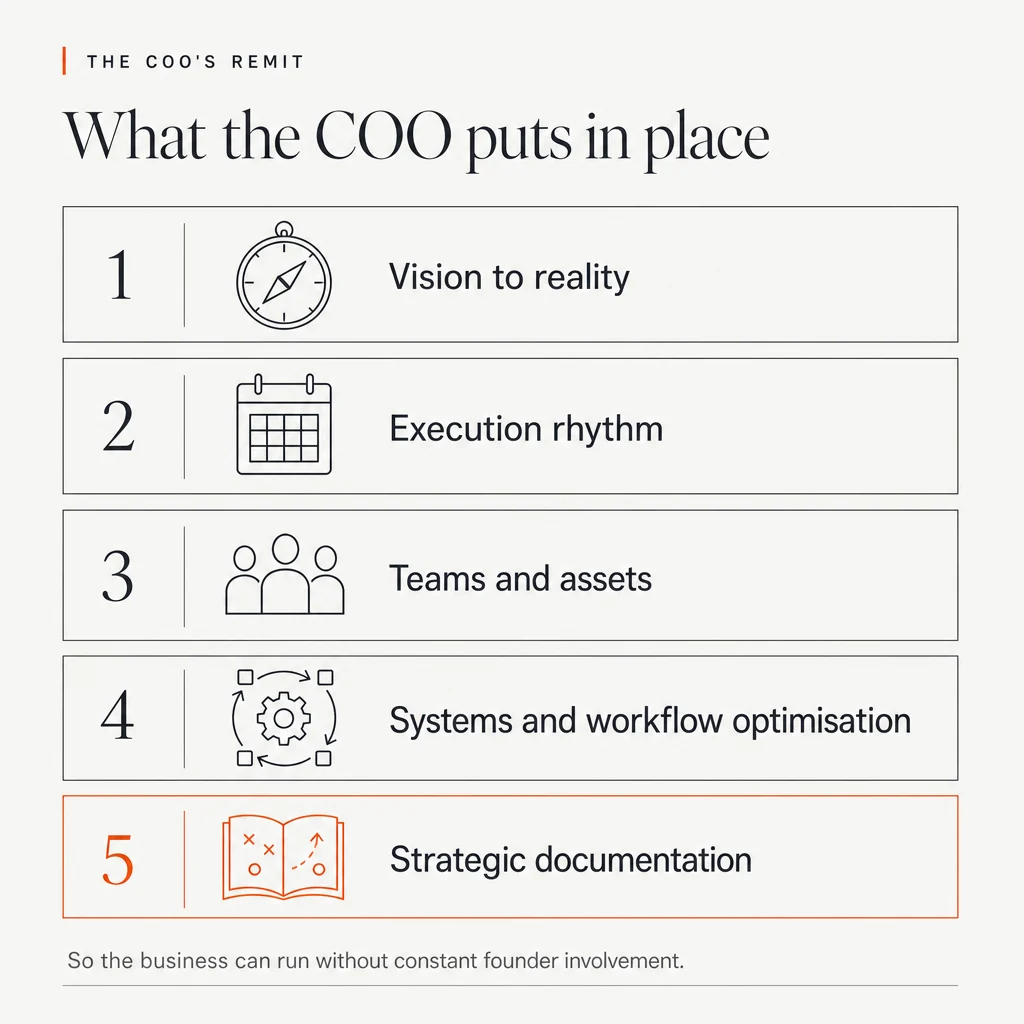
- Vision to reality: They translate your big-picture vision into a clear operational roadmap, aligning people, systems and structure to make it real.
- Execution: They implement a rhythm of execution that includes structured meetings, KPIs, OKRs and a clear layer of accountability across the business. The result is consistent momentum and progress.
- Teams and assets: From evaluating current talent to building capacity, they ensure the right people are in the right seats. This includes setting clear performance metrics and creating pathways for individual and team success.
- Systems and workflow optimisation: They streamline how work gets done by introducing the right systems, workflows, SOPs and internal protocols, removing friction and supporting sustainable growth.
- Strategic documentation: They capture all of the above in a centralised playbook, documenting the operational backbone of your business so it can scale, transfer knowledge and run without constant founder involvement.
What to expect in the first 90 days
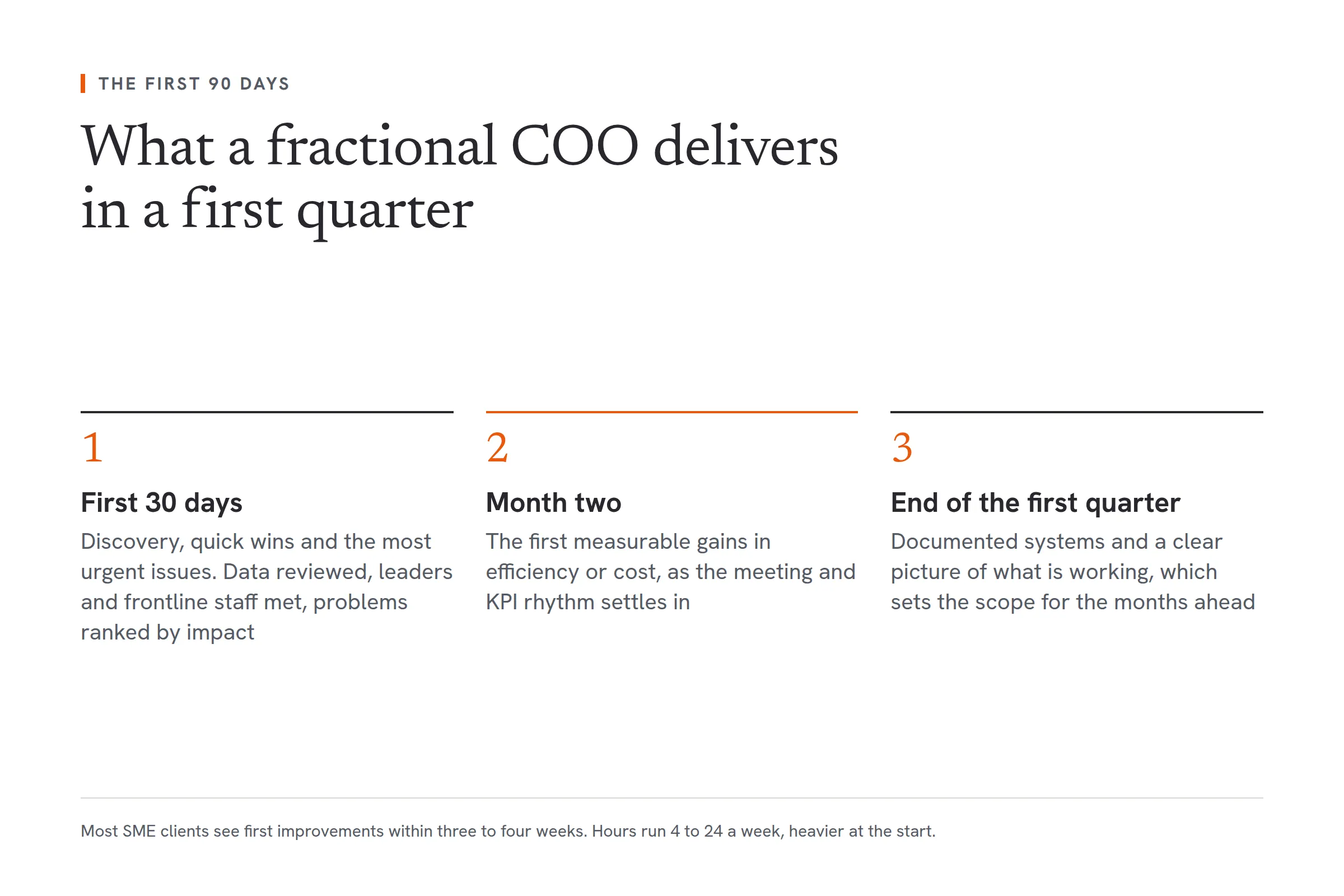
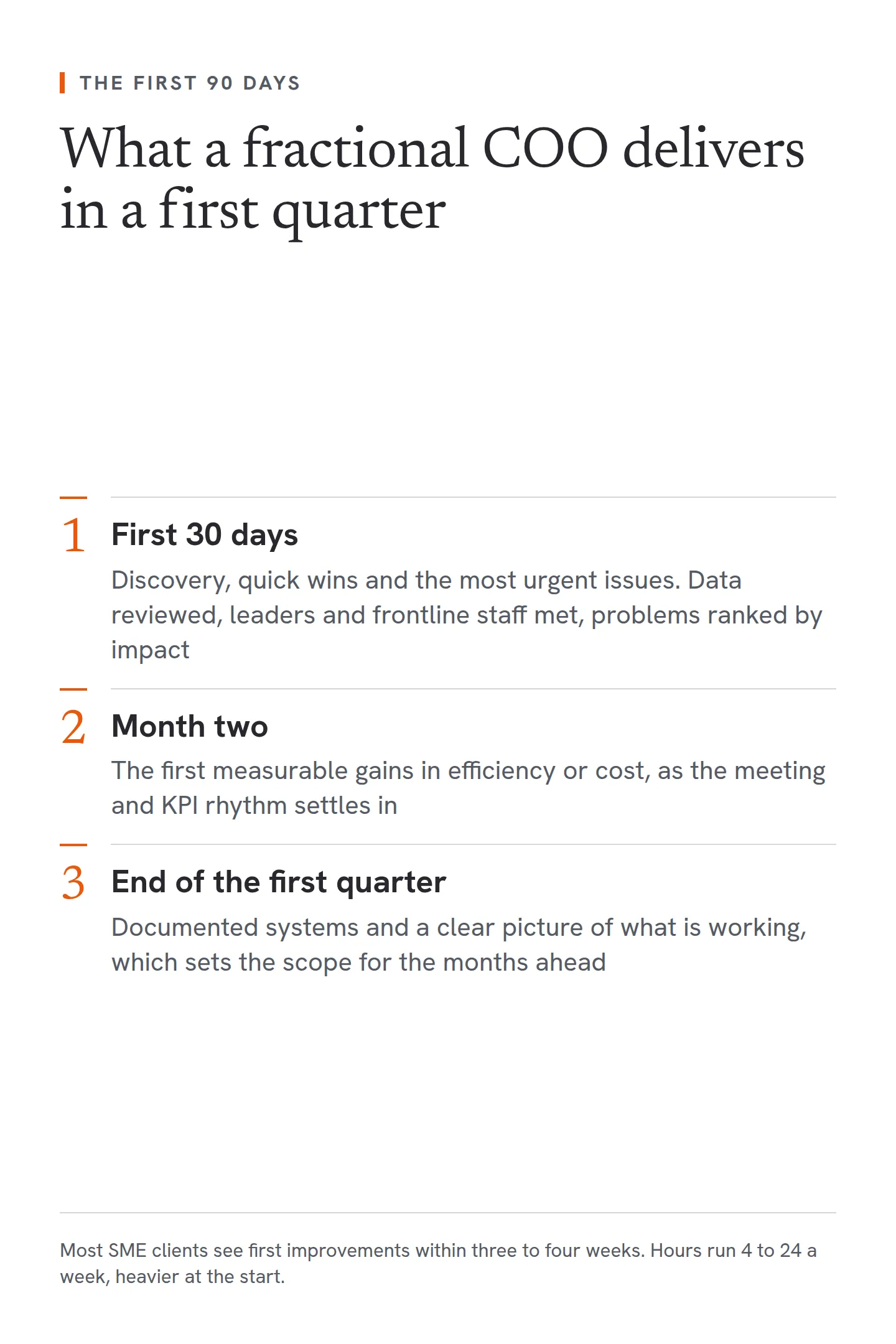
Most SME clients see first improvements within three to four weeks. The sequence is usually:
- First 30 days: discovery, quick wins and the most urgent operational issues. The fractional COO reviews the data, meets your leadership team and frontline staff, and ranks the problems by impact.
- Month two: the first measurable gains in efficiency or cost, as the rhythm of meetings, KPIs and accountability beds in.
- By the end of the first quarter: documented systems and a clear picture of what is working, which sets the scope for the months ahead.
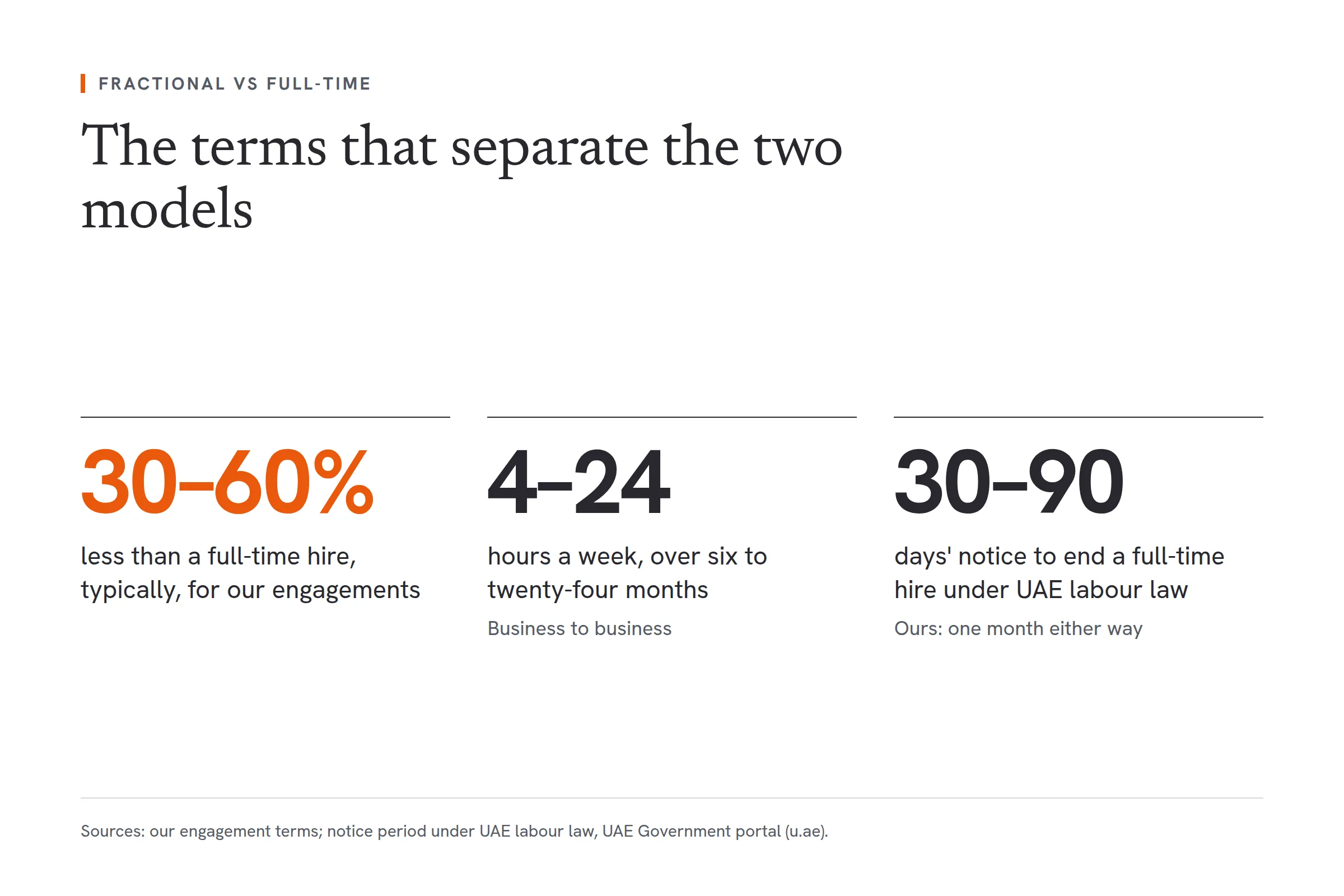
The hours follow the work. Engagements typically run 4 to 24 hours per week over six to twenty-four months, heavier while systems are being built and lighter once your team runs them.
The difference between fractional and full-time COOs
Hiring a full-time COO usually means:
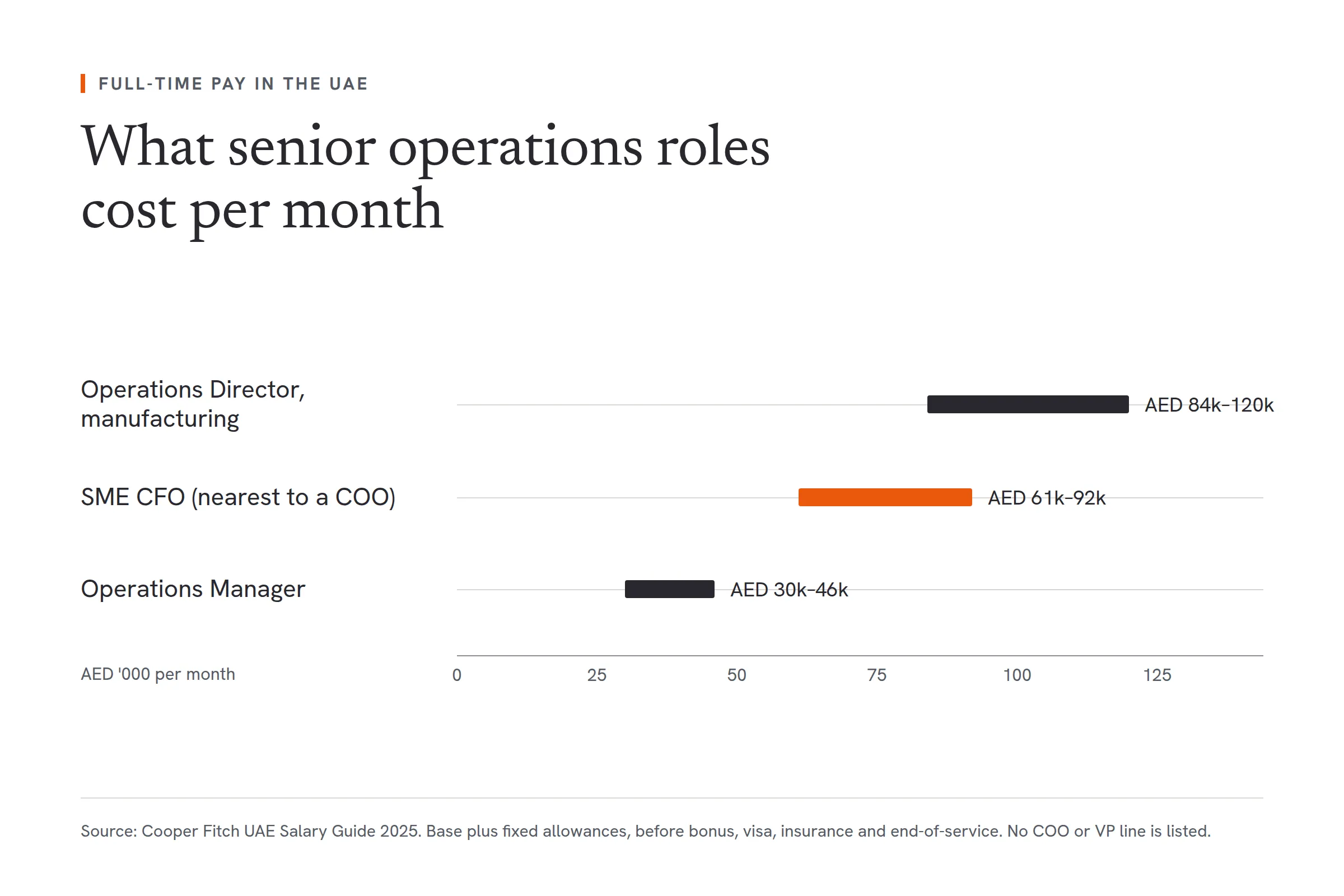
- A six-figure salary
- Benefits
- End-of-service gratuity: UAE law sets it at 21 days of basic wage for each of the first five years of service, then 30 days, capped at two years' wage
- Visa and insurance costs
- A long recruitment process with no guarantees
A fractional COO brings:
- Faster engagement: we deploy within weeks
- Our engagements typically run 30 to 60% less than a full-time hire
- Outcome-driven focus
- Flexibility to dial up or down as needed
- Lower commitment: engagements are business to business with one month's notice, so if it is not the right fit, you stop
Think of it as hiring a specialist for specific missions, not a full-blown army. Our fractional vs full-time COO guide walks through when each model makes sense.
The importance of fractional COOs in the future
Businesses are leaner, more complex and more dynamic than ever, and fixed-cost executive teams are harder to justify at every stage of growth.
The future belongs to fractional operators: experienced leaders who can slot into your business, build systems quickly and guide scale without draining your resources.
If you are done with juggling and ready for steady growth, a fractional COO could be the fastest way to get back to the work only you can do, and to build something sustainable. Take our fractional COO readiness assessment to see where you stand, or explore COO value creation in Dubai SMEs for the ROI case.
The future
The future is fractional. The tools are here. The talent is available. The only question is whether you lead the change or follow it.
Want to explore how a fractional executive could work in your business? Book a 30-minute call with Fractional Dubai.