Four terms get thrown around whenever a founder starts thinking about bringing senior experience in from outside: non-executive director, independent director, advisory board member and fractional executive. They are not the same thing, and choosing the wrong one is an expensive way to solve the wrong problem. This clears it up.
The confusion is understandable, because the options overlap at the edges and the market rarely explains the difference. But the distinction that matters is simple, and it comes down to one question: do you need someone to run part of your business, or to govern it?
The short answer
- A fractional executive runs a function. They are an embedded operator who executes: a part-time chief financial officer, chief operating officer or chief marketing officer who owns real work inside the business.
- A non-executive director governs the business. They hold a seat on the statutory board, bring independent judgement to the biggest decisions, and are accountable for how the company is run. They do not execute.
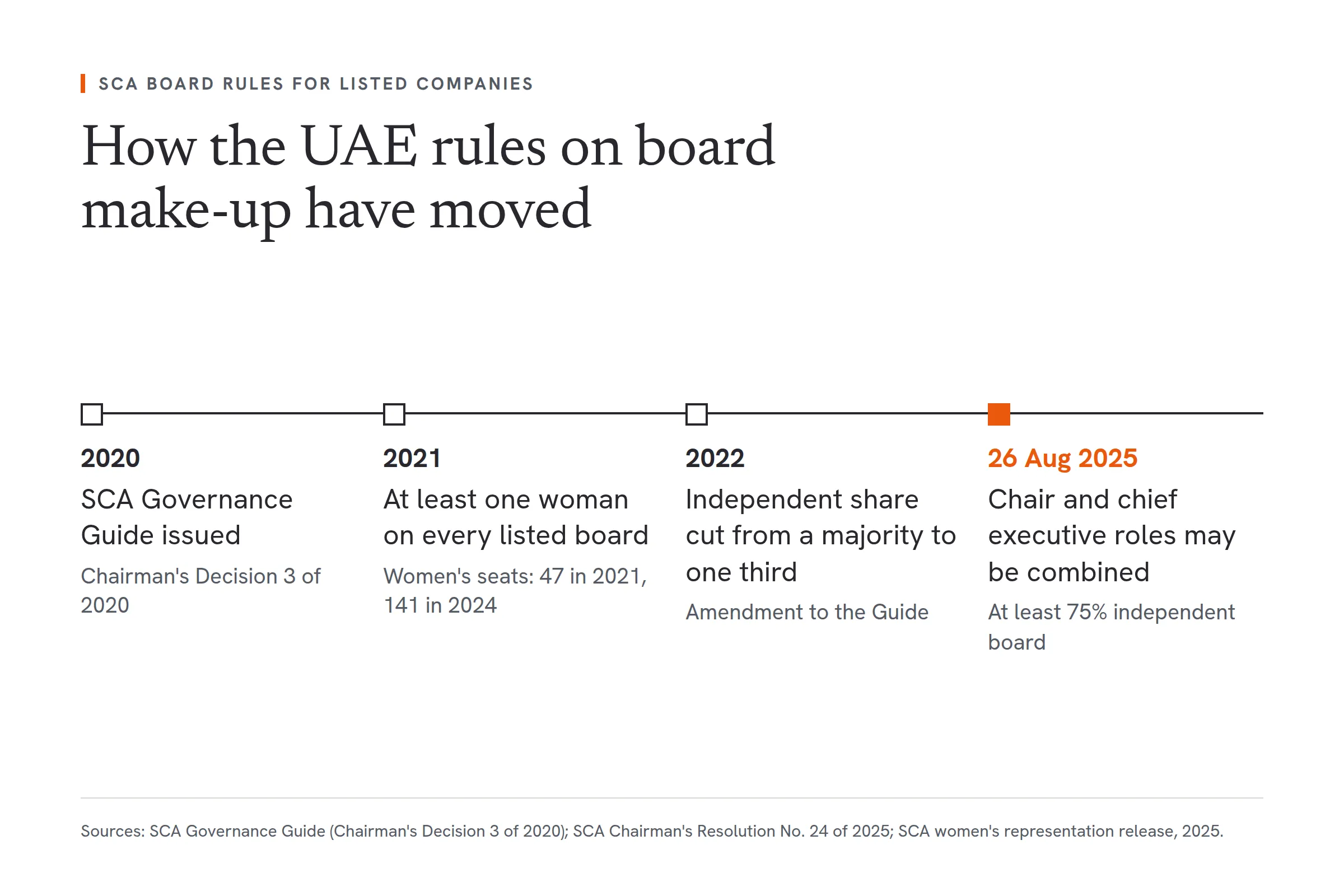
- An independent director is a non-executive director who also meets a stricter independence test, which is what investors and regulators look for. UAE listed companies must have at least one third of their board independent.
- An advisory board member advises the business. They sit on an informal panel, offer counsel, and carry no legal duty, no vote and no liability.
Execution sits on one side of the line. Governance and advice sit on the other. Get that clear and the rest follows.
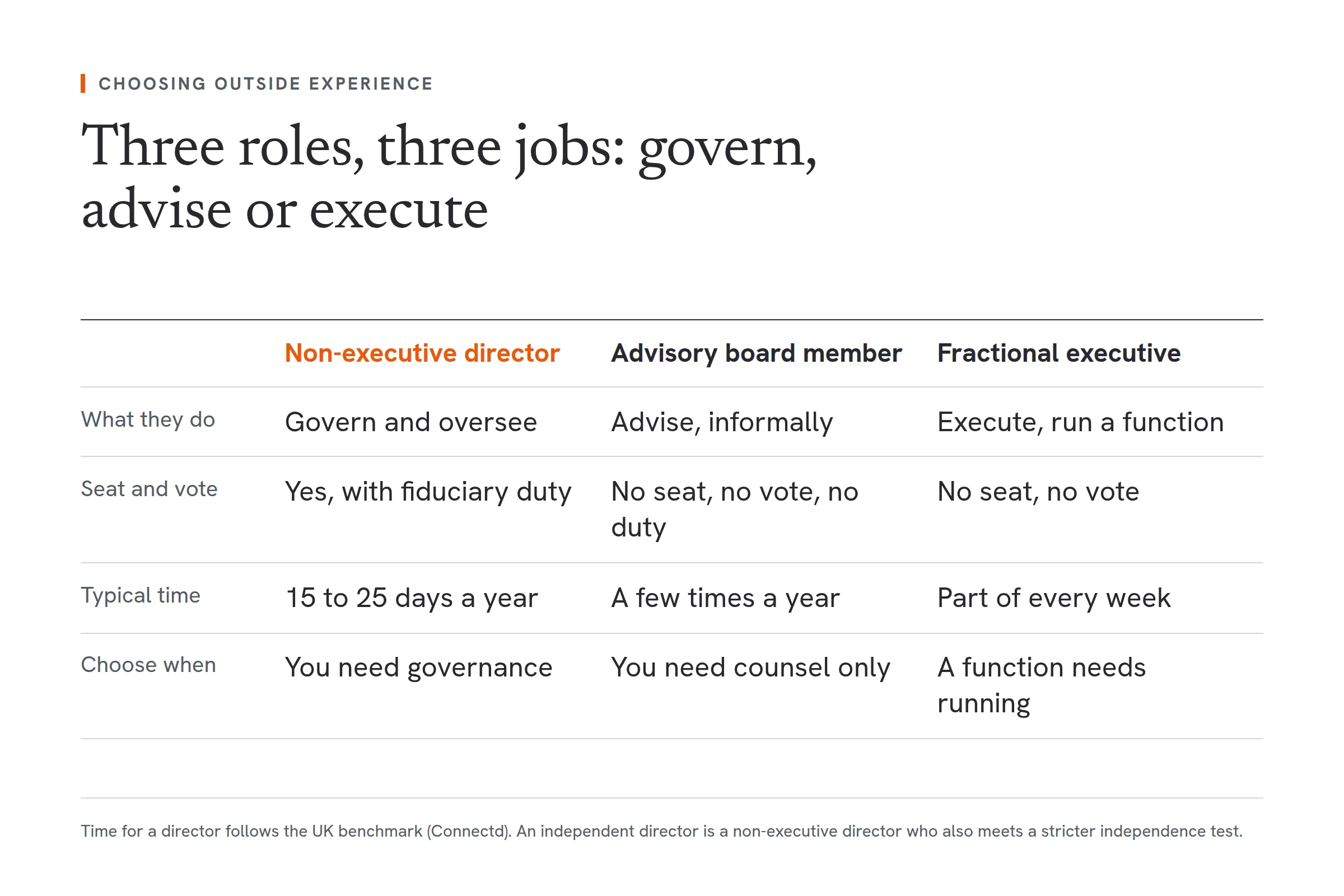
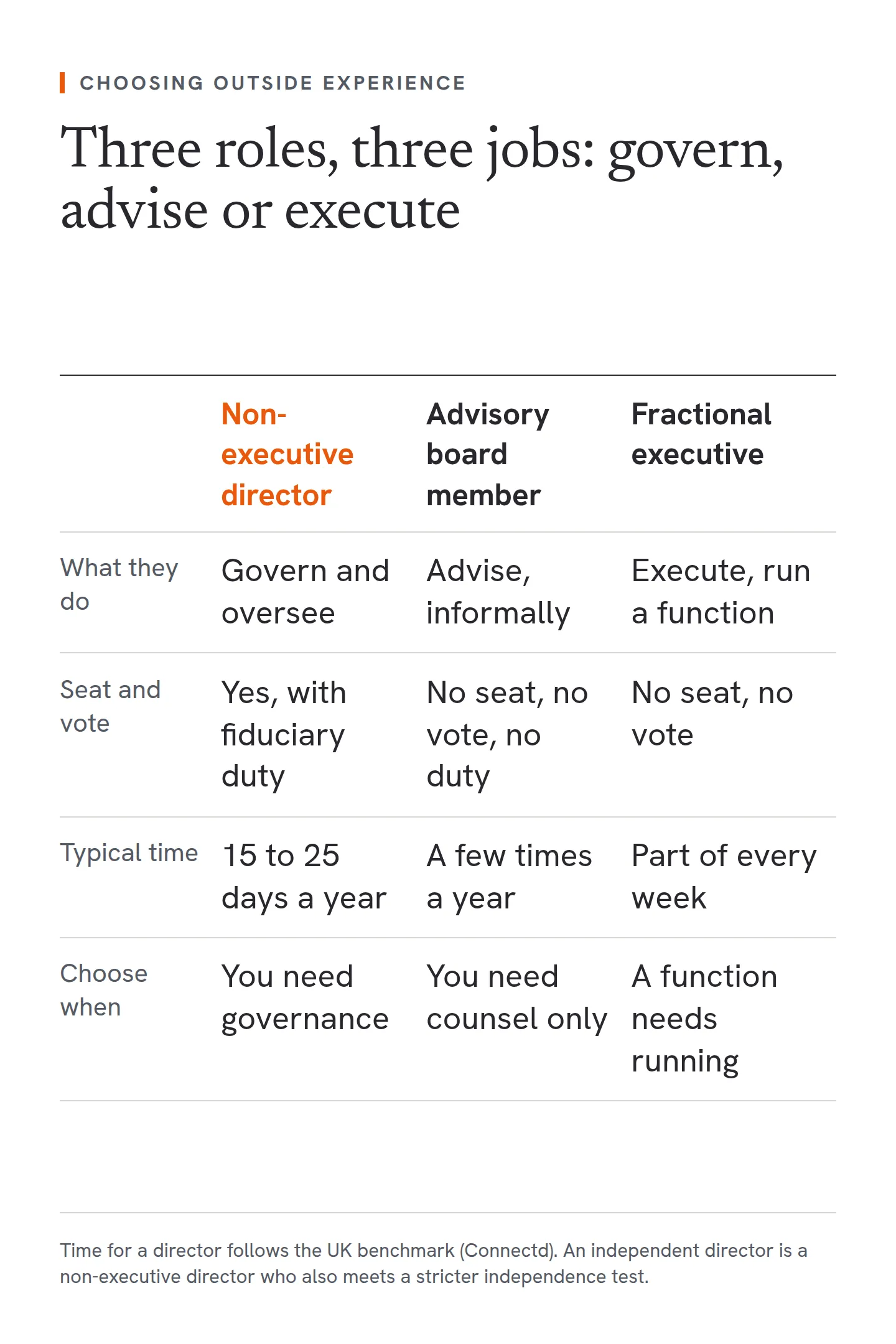
The comparison, at a glance
| Non-executive director | Independent director | Advisory board member | Fractional executive |
|---|---|---|---|---|
Seat on the statutory board? | Yes | Yes | No | No |
Fiduciary duty and vote? | Yes | Yes | No | No |
Independence required? | Not necessarily | Yes, by definition | Not relevant | No |
What they do | Govern and oversee | Govern, with independence | Advise, informally | Execute, run a function |
Typical commitment | 15 to 25 days a year | 15 to 25 days a year | A few times a year | Ongoing, part of the week |
Answerable to | Shareholders | Shareholders | The founder, informally | The chief executive or founder |
Choose when | You need governance | Investors or regulators need independence | You need counsel, not governance | A function needs running |
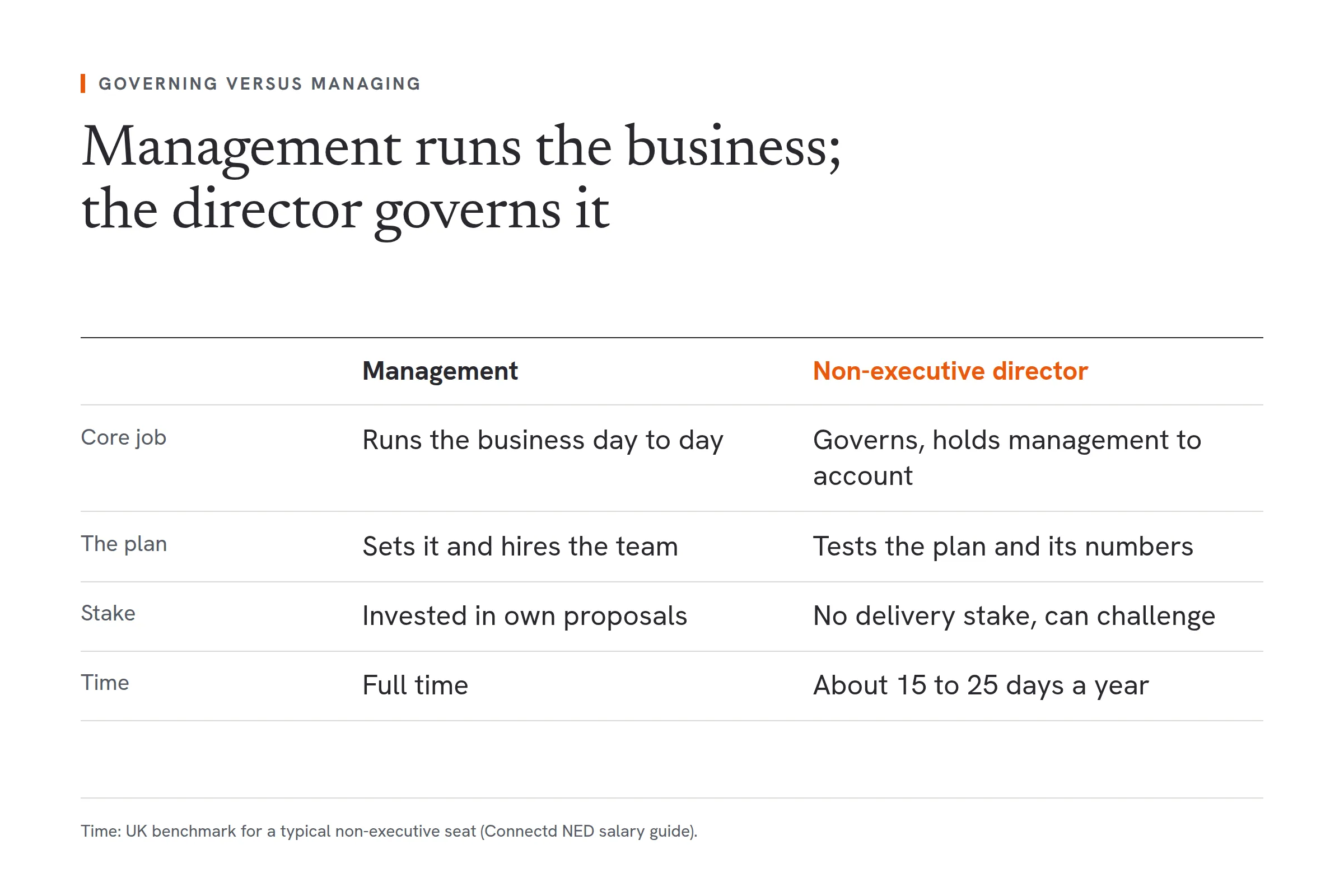
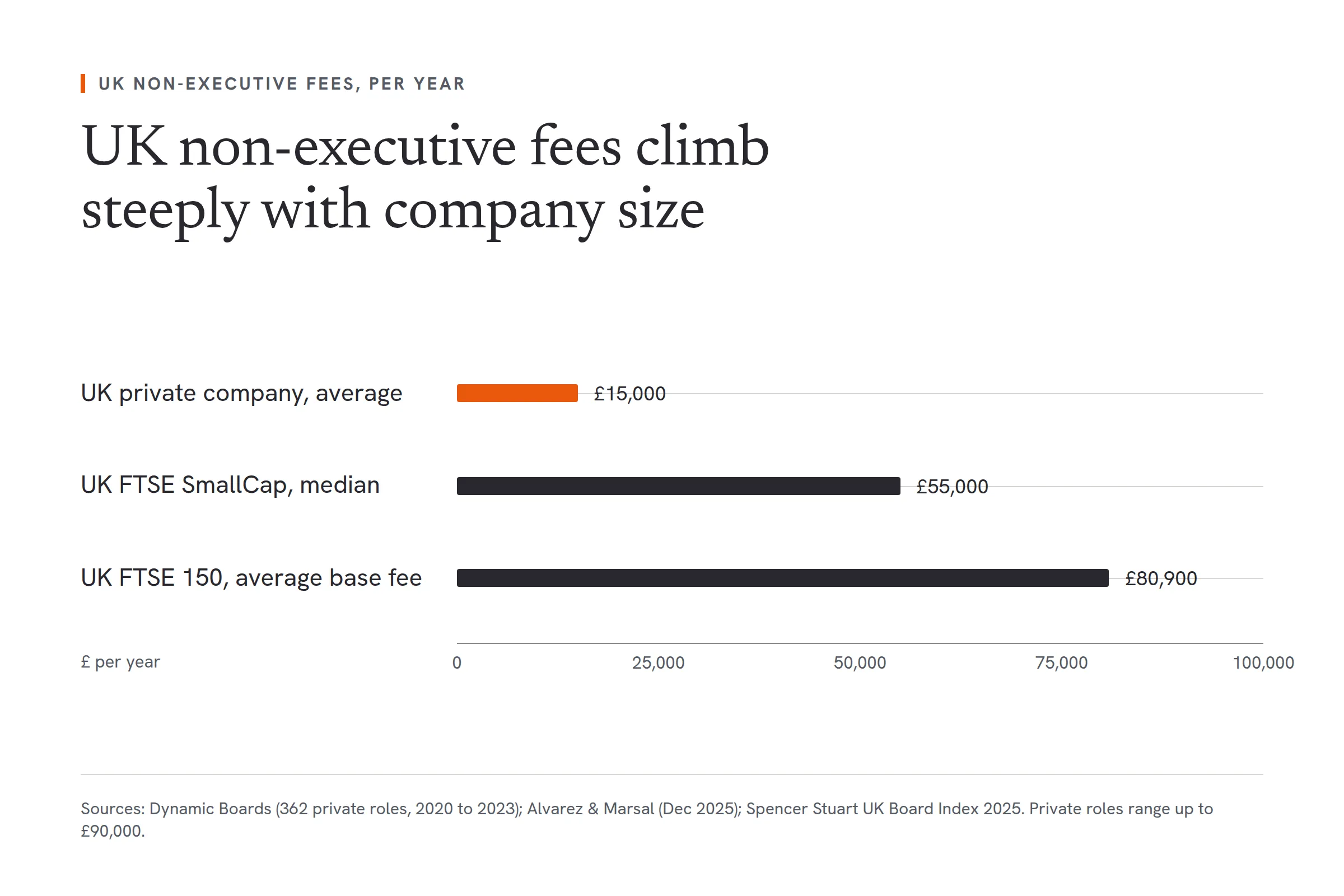
The time commitment for a non-executive seat follows the UK benchmark of roughly 15 to 25 days a year, covering board meetings, preparation and committee work. We break down what that costs in what a non-executive director costs.
Governance is not execution
The single most useful line to hold onto is the one between governing and executing, because it is where founders most often go wrong.
A fractional executive is one of ours in the business. They take a function that is under-led, own it, and deliver: they build the finance operation, fix the go-to-market, steady the operations. They are hands-on and accountable for outcomes. That is fractional leadership, not consultancy, and it is the core of what we do.
A non-executive director sits above the business, not in it. They do not run a function or own delivery. They challenge and support the executive team, bring independent judgement to the decisions that matter most, and give shareholders confidence in how the company is governed. Asking a non-executive director to "just get involved and fix operations" misunderstands the role, and quietly destroys the independence that made the seat valuable in the first place.
This is why, if you have a function that is genuinely not being run well, a board seat will not fix it. You need an operator. And if the business is well run but the biggest decisions are being made without independent challenge, a new operator will not fix that either. You need a director.
Non-executive director versus independent director
These two are the closest pair, and the difference is independence.
Every independent director is non-executive, meaning they take no part in management. But not every non-executive director is independent. Independence is a stricter test: no significant financial, employment, consulting or family ties to the company, its auditor or its major shareholders. The UAE's SCA Governance Guide, as issued in 2020, makes it concrete: a director is not independent if they worked for the company or its senior management in the previous two years, provide consultancy to it, hold 10% or more of its capital, or are selected for a fourth consecutive term. A founder's long-standing mentor might make an excellent non-executive director, but if they hold a large stake or advise the company for a fee, they are not independent.
The distinction matters most when someone outside the company is relying on the board. Investors and regulators want independent directors, because independence is what makes board oversight credible. For listed public joint stock companies, the SCA requires at least one third of the board to be independent. We cover that regime, including the 2025 rules on combined chair and chief executive roles, in board governance in the UAE.
Liability is the other dividing line
The legal exposure differs as much as the job. Under the UAE Commercial Companies Law (Federal Decree-Law 32 of 2021, Article 162), the board members of a joint stock company are liable to the company, its shareholders and third parties for fraud, abuse of power and breaches of the law or the company's statute. A director who objects to a decision can protect themselves only if the objection is recorded in the minutes. An advisory board member holds no board seat and carries none of that statutory liability, which is why the seat is lighter, but also why it carries no vote. It is also why a serious non-executive director will ask about directors' and officers' insurance before accepting a seat.
Advisory board versus a real board
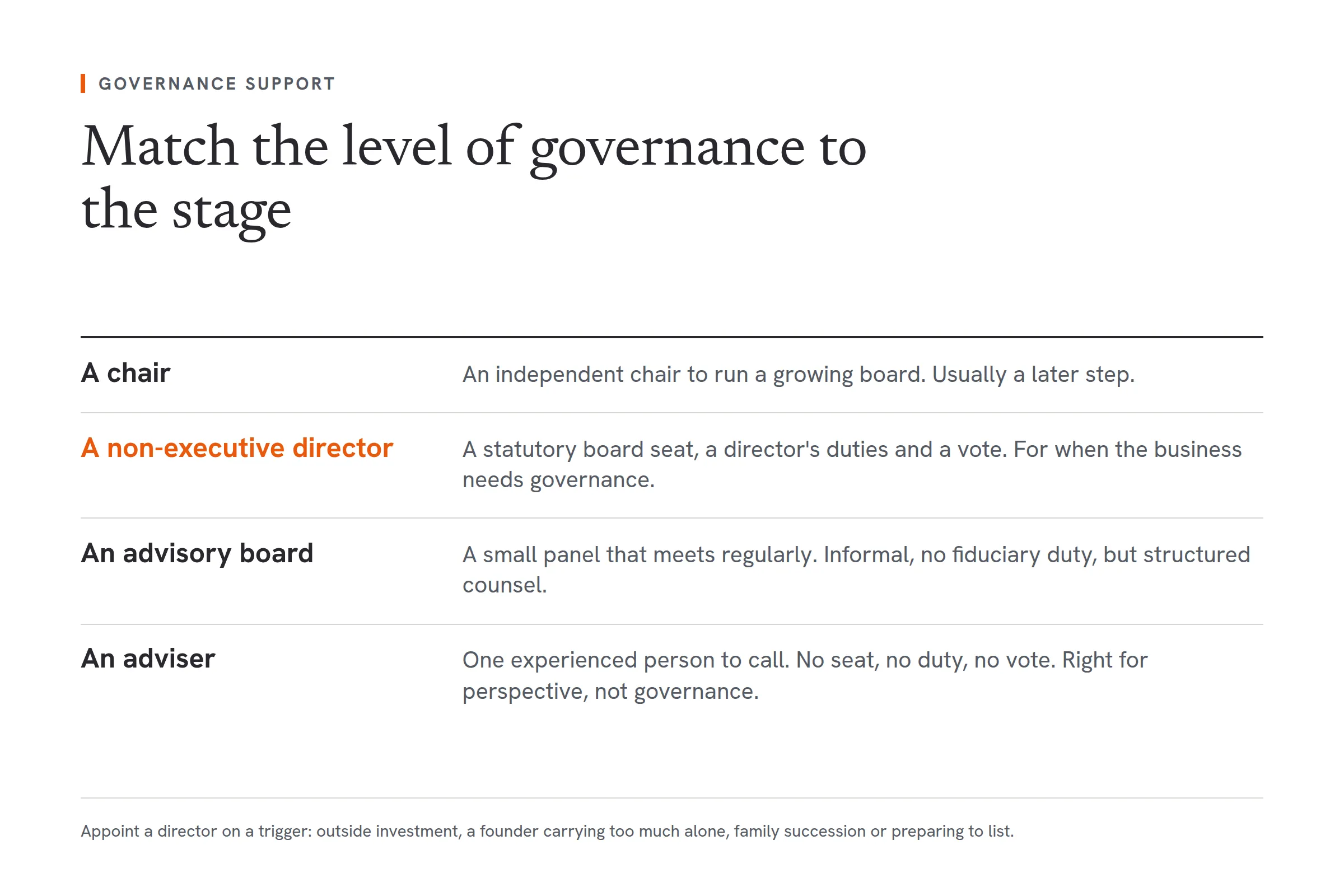
An advisory board is the lightest option, and often the right first one. It is an informal panel of experienced people who meet a few times a year to give the founder counsel. Its members have no fiduciary duty, no vote and no liability. The Advisory Board Centre draws the line the same way: unlike a board of directors, the members of an advisory board are not authorised to act or make binding decisions on behalf of the organisation and have no fiduciary responsibility.
For an earlier-stage company, that informality is a feature. You get experience in the room without the machinery of a statutory board. Startups and growth-stage businesses often begin here before investor pressure makes a statutory board necessary. The move to a non-executive director is the right one when advice is no longer enough and the business needs governance: real accountability, a vote, and the confidence that gives outside investors. Our guide on when to appoint your first non-executive director walks through that decision. If a function is under-led rather than under-governed, a fractional executive may be the better first move.
How to choose
The three options are not rivals. Plenty of companies run a fractional executive, a non-executive director and an advisory relationship at the same time, because they solve different problems. Start with the problem, not the title.
- A function is not being run well: appoint a fractional executive.
- You need independent challenge, governance and investor confidence: appoint a non-executive director, or an independent director if outsiders are relying on the board. Companies raising capital often reach this point before they need a full-time executive team.
- You want experienced counsel without the formality of a board: build an advisory board.
If you are not sure which line your problem sits on, tell us what you are working through. We will tell you honestly whether you need an operator in the business or a director on the board, and we match both.