Most founders ask about a non-executive director too late, and a few ask too early. The question is rarely "should we ever have a board?" and almost always "is now the right time, or would an adviser do?". This is a guide to answering that honestly.
There is no legal age at which a private company must appoint a non-executive director. Recruitment and governance specialists put it plainly: there is no legal requirement for a private company to appoint one. So the right time is defined by triggers, not by the calendar.
The short answer
Appoint your first non-executive director when a specific trigger arrives: outside investment, a founder who wants independent challenge, a family succession, or preparation for a listing or a regulated environment. Before a trigger, a lighter advisory arrangement usually gives you most of the benefit with none of the formality. The skill is matching the level of governance to the stage of the business, rather than reaching for a board because it feels like the grown-up thing to do.
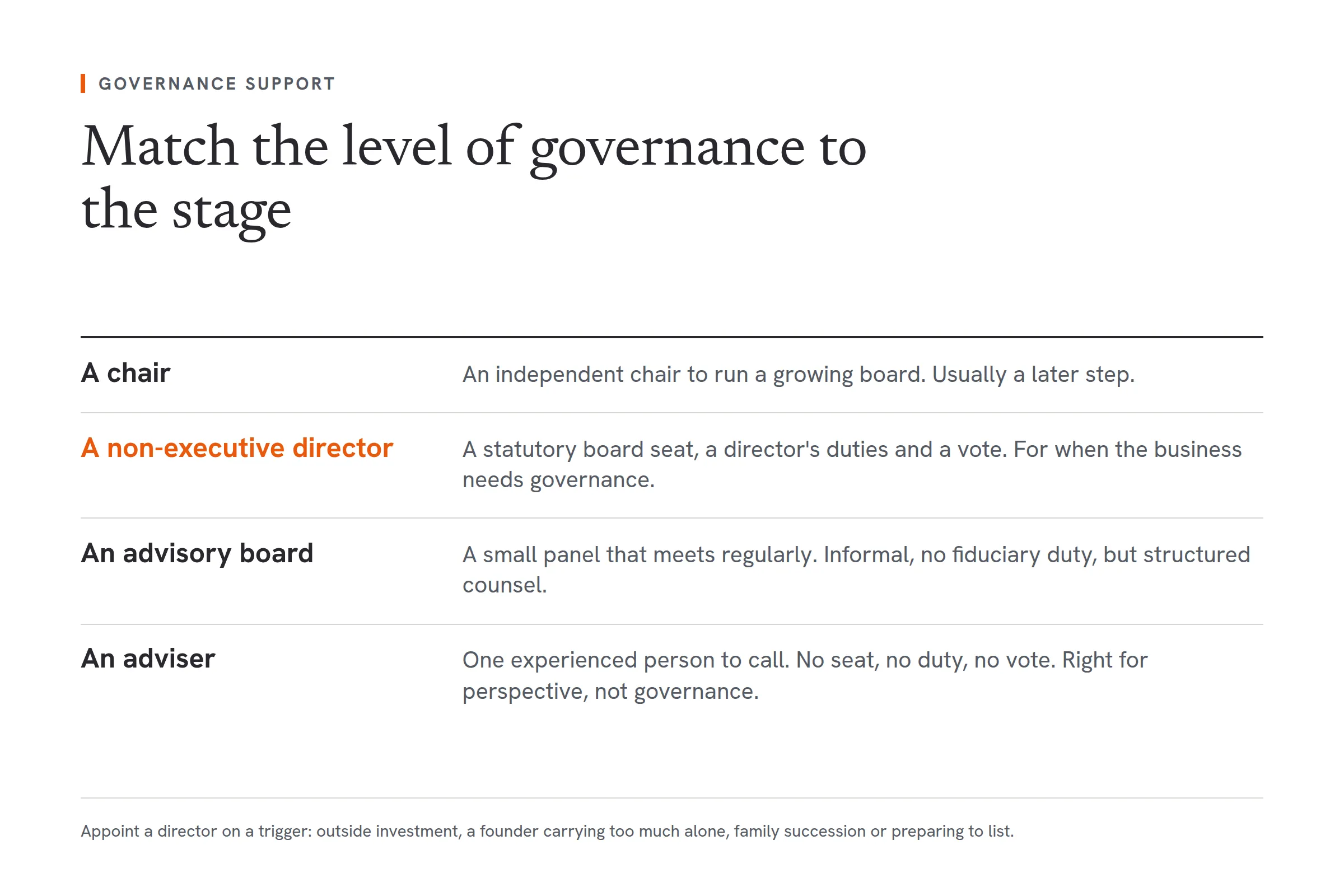
The staircase: adviser, advisory board, non-executive director, chair
It helps to think of governance support as a staircase rather than a switch. Each step adds formality, accountability and independence.
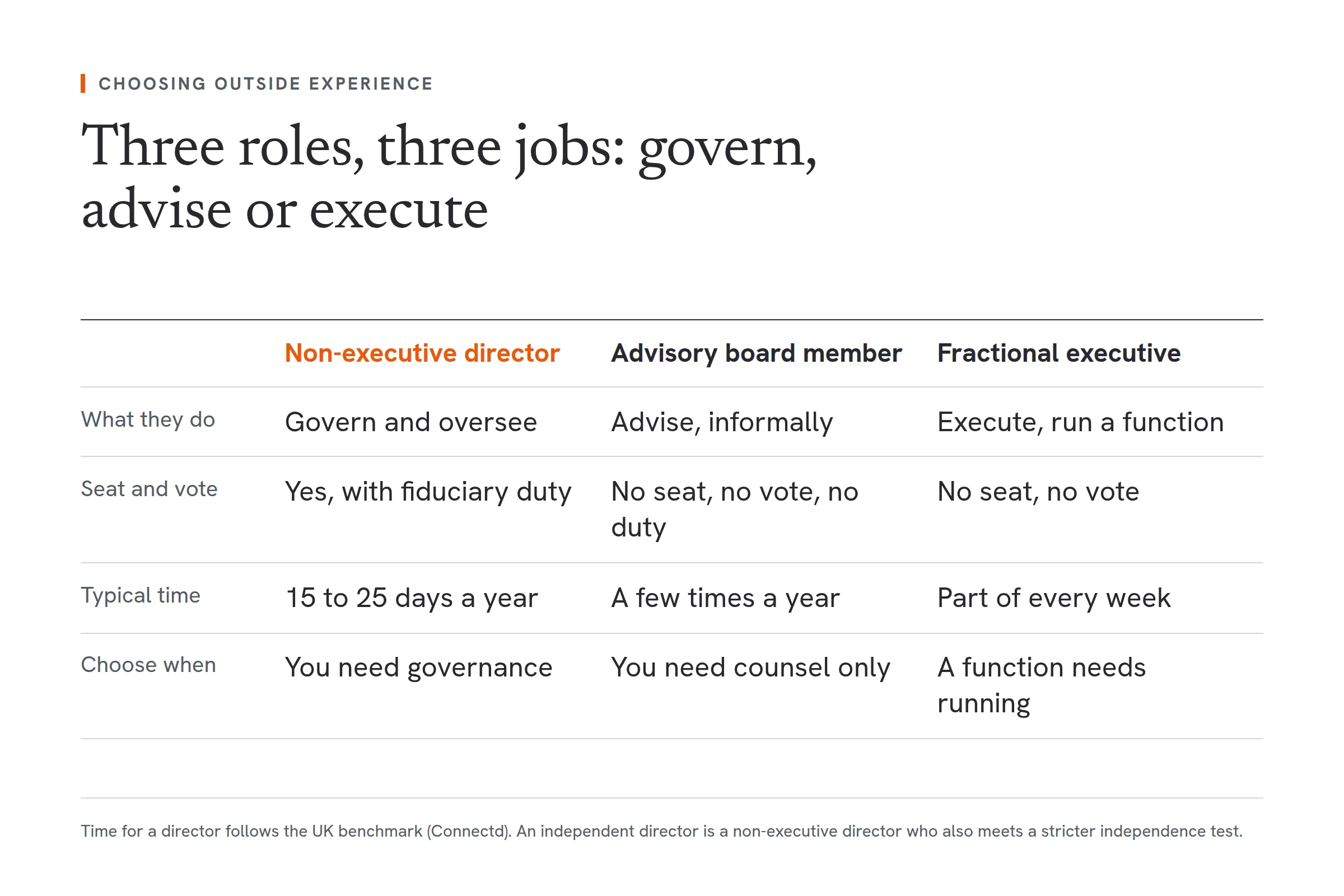
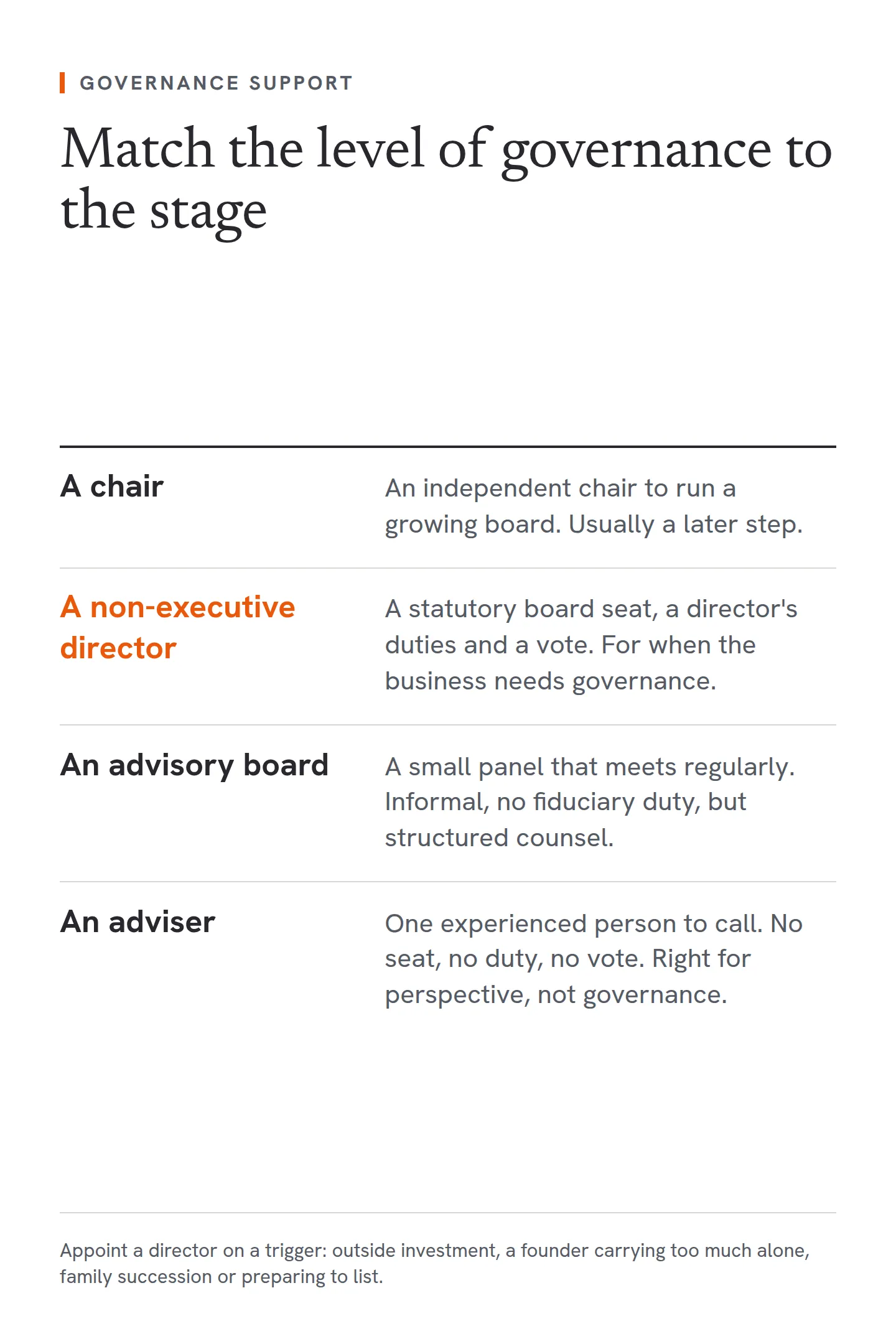
- An adviser. One experienced person you can call. No seat, no duty, no vote. The right first step for an early-stage company that needs perspective, not governance.
- An advisory board. A small panel of advisers who meet regularly. Still informal, still no fiduciary duty, but a structured source of counsel. A sensible move as the questions get bigger and more frequent.
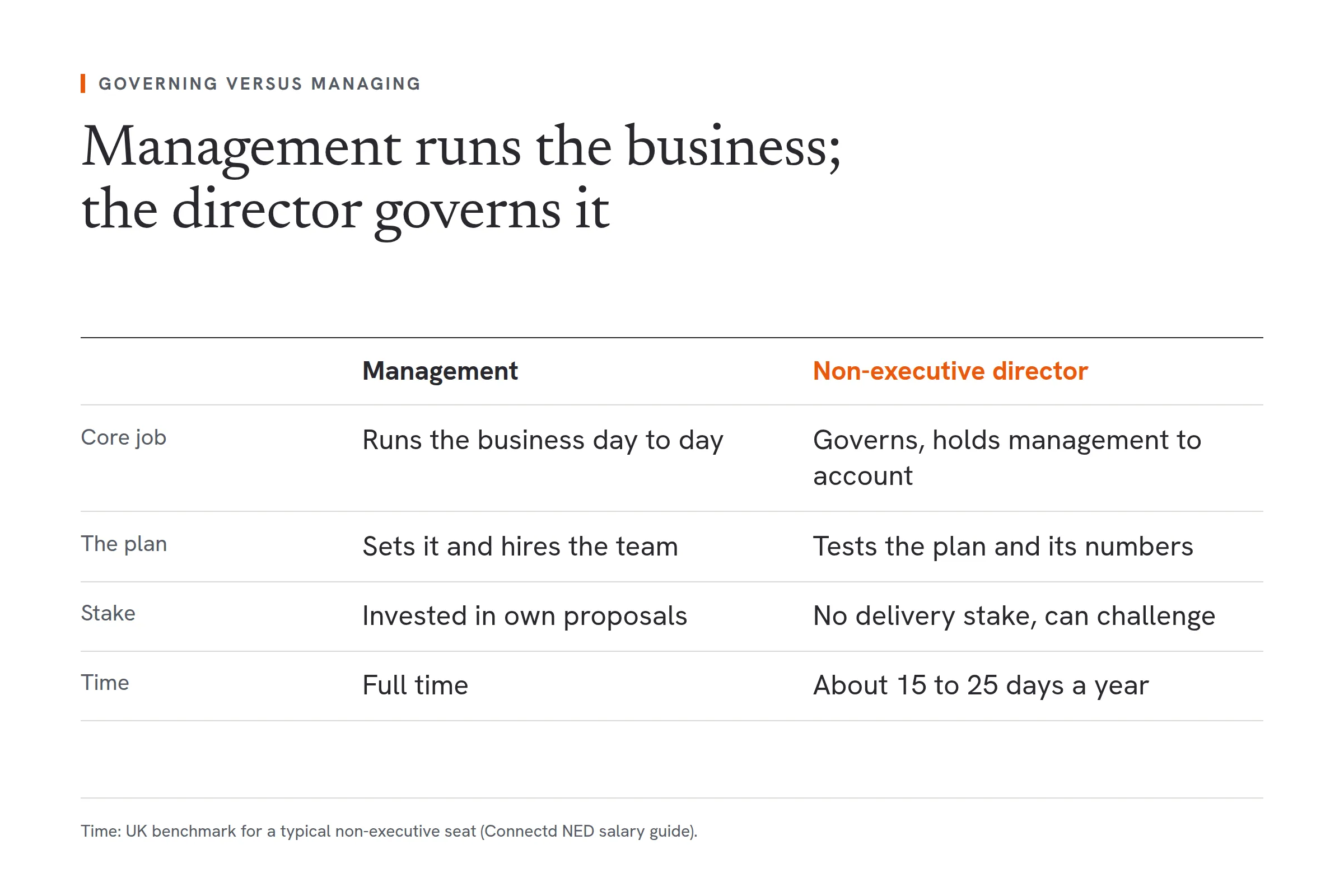
- A non-executive director. A seat on the statutory board, with a director's duties and a vote. The right step when the business needs governance, not only advice: an outside investor, a real board that makes decisions, accountability that bites.
- A chair. As the board grows, an independent chair to run it well. Usually a later step.
Most companies move up this staircase one step at a time. The mistake is skipping to a full board before there is anything for it to govern, or clinging to an informal adviser long after the decisions have outgrown one person's judgement.
The triggers that mean "now"
In practice, four moments turn "maybe one day" into "now".
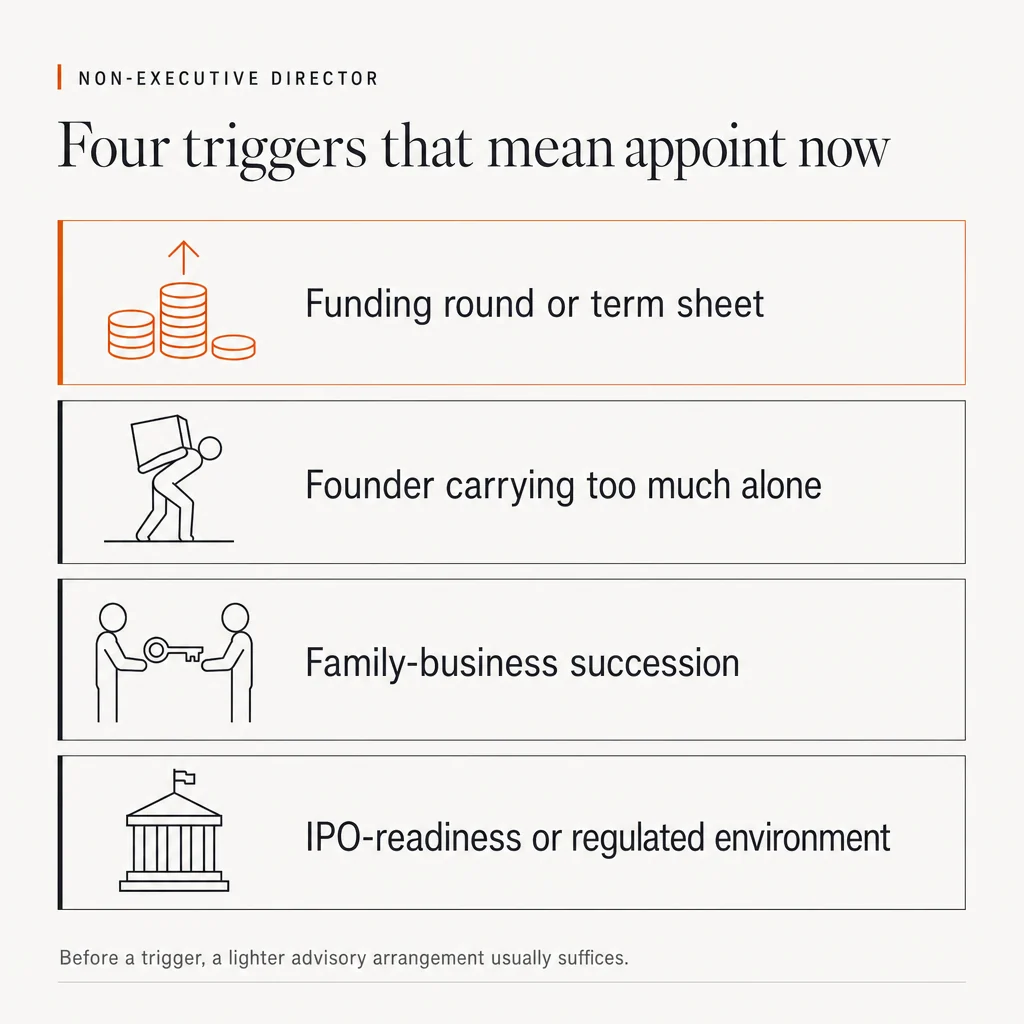
A funding round or a term sheet. This is the most common trigger of all. An investor putting real capital into your business will often want an independent seat on the board as a condition, someone who can give them confidence that their money is being well governed without the founder marking their own homework. If you are raising, assume the board question is coming and get ahead of it.
A founder carrying too much alone. Sometimes there is no external trigger, just a growing sense that the largest decisions are all landing on one desk with no independent challenge before they are taken. That is a real reason to appoint. A good non-executive director is the person who asks the awkward question in the room before the decision, not after.
Family-business succession. Many UAE businesses are moving from founder-led control towards more formal governance as the next generation and outside capital arrive. An independent director brings an objective view and helps take the emotion out of sensitive decisions. The law now gives family businesses more tools for succession: Federal Decree-Law 20 of 2025 lets mainland limited liability companies issue different share classes and build drag-along, tag-along and succession arrangements into their constitutional documents, and a stronger board is the natural companion to those changes.
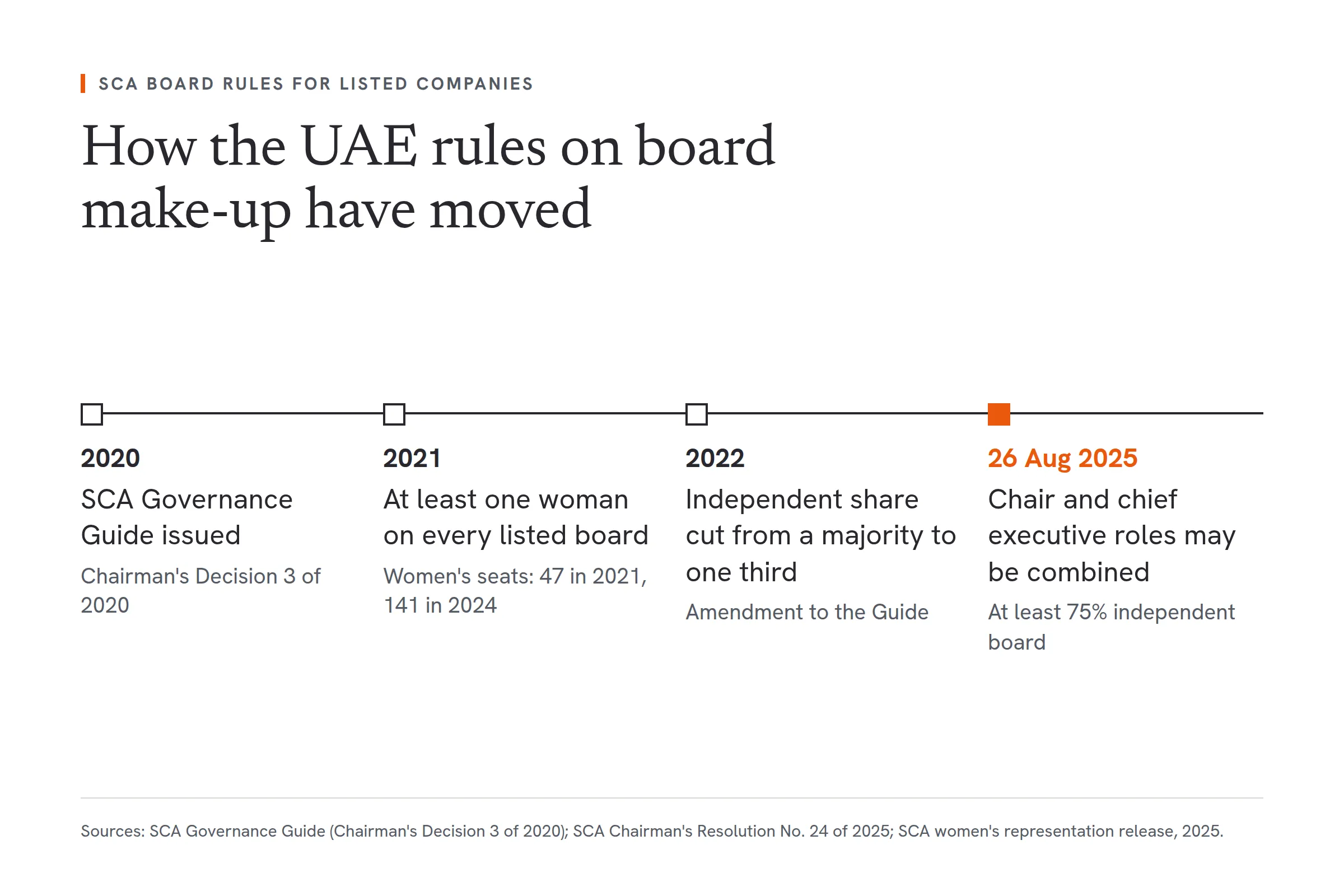
IPO-readiness or a regulated environment. If you are preparing to list, the composition of your board is itself scrutinised. Listed public joint stock companies in the UAE must have at least one third of the board independent and at least one woman on it, and since 2025 a company that wants to combine the chair and chief executive roles must have at least 75% independent directors under SCA Chairman's Resolution No. 24 of 2025. Dubai Financial Market's IPO Accelerator Programme is aimed at family-owned businesses preparing to list. Getting independent directors in place ahead of that scrutiny, rather than scrambling for them, is a governance decision with a deadline. The listing window itself has been uneven (the UAE raised about US$1.1 billion from three IPOs in 2025), but the board is the part you control.
When an adviser is genuinely enough
Just as important is knowing when not to appoint. If you need experience in the room but not governance, if there is no outside investor asking for a seat, and if the statutory duties of a directorship would be more formality than the business can use, then an adviser or an advisory board is the better answer. It is faster, lighter, and easily upgraded later. Reaching for a full non-executive director too early adds process without adding much protection.
The test is simple. Do you need someone to advise the business, or to help govern it and be accountable for that? If it is advice, start light. If it is governance, appoint a director.
Getting the first appointment right
Whichever step you are on, the quality of the individual matters more than the title. The best non-executive directors are operators who have actually run the kind of business you are building, who can challenge with credibility rather than theory, and who bring independence precisely because they are no longer executing. One well-matched appointment changes the quality of your decisions long before it changes anything else.
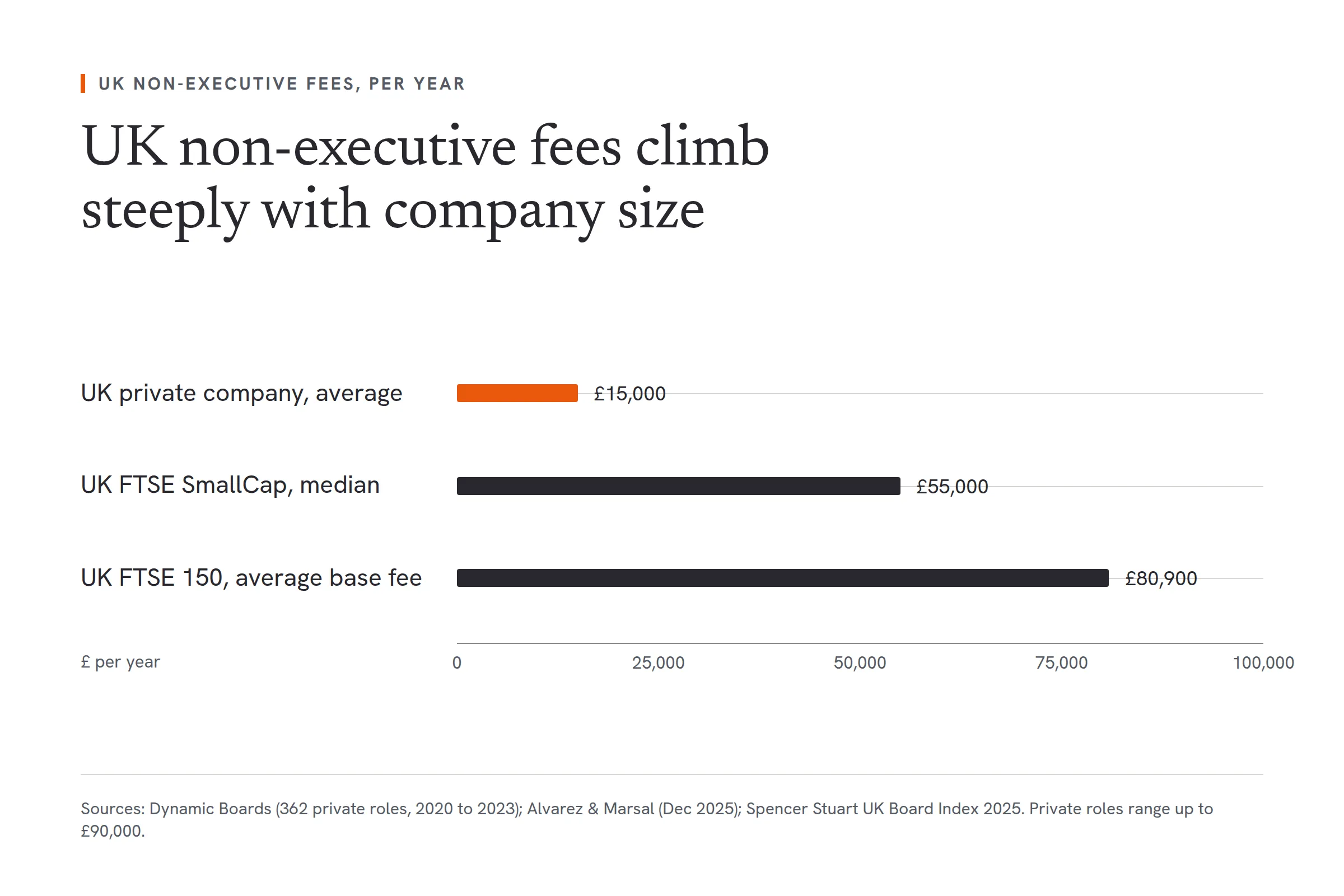
If you are weighing whether now is the moment, or whether an advisory seat is the smarter first move, tell us what you are working through and we will give you a straight answer. For the fuller picture of the role itself, read what a non-executive director actually does, and to see how the options compare, non-executive director vs advisory board vs fractional executive. What a non-executive director costs helps you budget once the timing is clear.