Many UAE businesses searching for a virtual COO actually need a fractional one. You already know the situation. Every supplier escalation lands on your phone. Delivery slips when you travel. Someone suggests a virtual COO, the way you once hired a virtual assistant, and the phrase sounds exactly right.
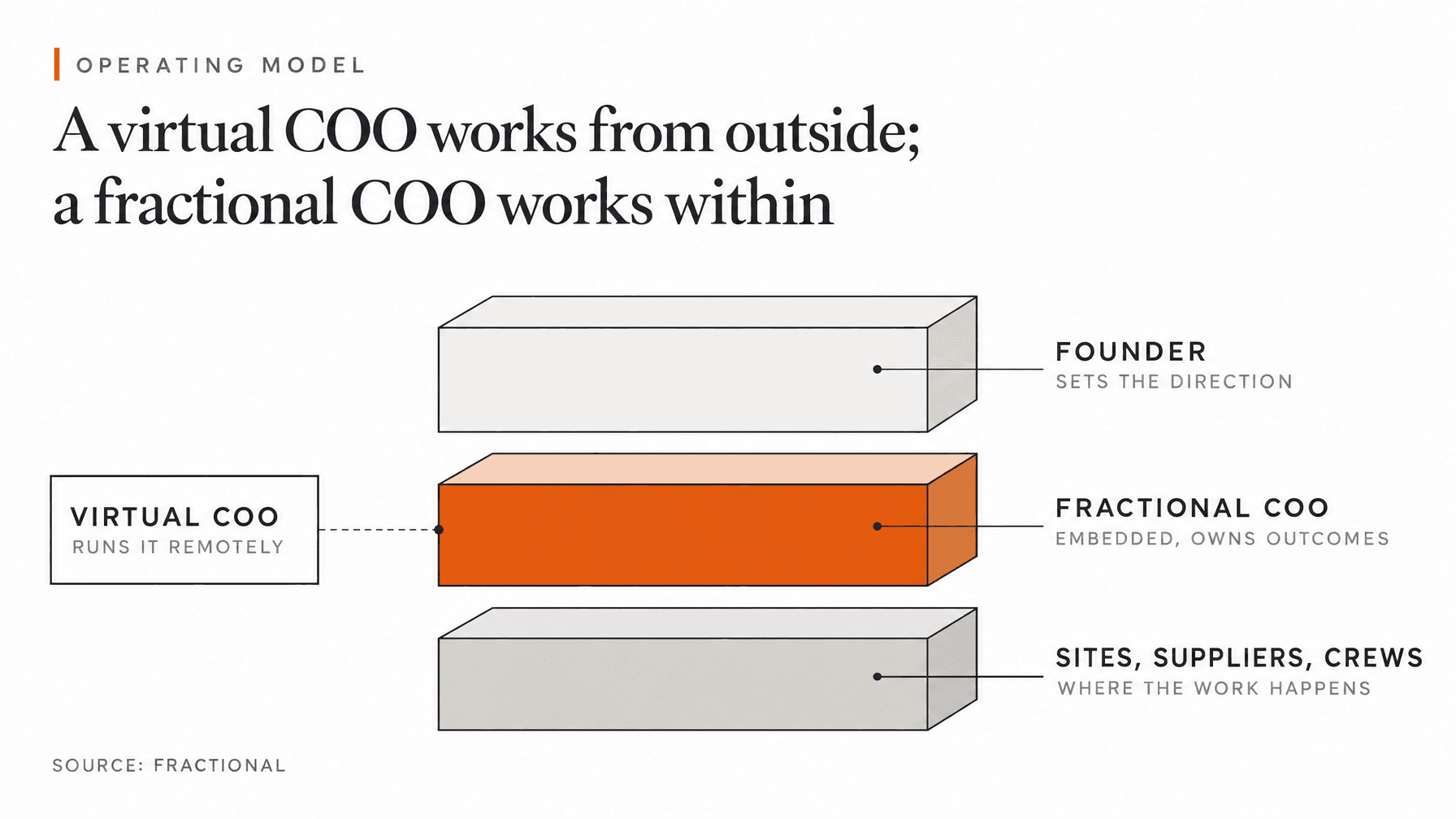
A virtual COO runs operations remotely. A fractional Chief Operating Officer (COO) embeds in your business part-time and owns the outcome. That gap sounds small. In Dubai, it isn't.
Sometimes a virtual COO is exactly right. Often it isn't. The difference sits in the hours and the accountability, and buying the wrong one is expensive.
What is a virtual COO?
A virtual COO is a Chief Operating Officer who runs operations remotely rather than from your office. The role can cover processes, KPIs, team coordination and delivery oversight. "Virtual" describes how the work is delivered, not a standard job category, so your agreement must define authority, availability and confidentiality clearly.
The label comes from the remote support market. Virtual assistants, virtual bookkeepers, packaged help sold by the hour or the month. A virtual COO is the senior end of that pattern: an experienced operator who joins your video calls, builds your dashboards and keeps your processes honest, all from somewhere else.
For a business that lives entirely on screens, that can work. If you run a software product or a remote agency, your operations already happen in shared documents and project boards. A skilled remote operator can genuinely tighten them.
Where the model starts to strain
Many operations here are physical. A warehouse in Al Quoz. Suppliers in Sharjah. A fit-out two weeks late.
Published UAE market material makes the same point: working arrangements depend on the role. Warehouse operations are given as an example where an executive may need to be physically present [1].
Hiring a virtual COO for a physical business is like hiring a personal trainer who only ever video-calls. Fine for writing the programme. Useless for your form on the heavy lift.
What is a digital COO?
"Digital COO" has no standard definition, and no verified UAE-wide one exists. In practice it usually means an operations leader focused on digital systems: workflow automation, dashboards, software integration and data.
It's sometimes a marketing label for a technology-enabled service. It's not a regulated title, and not necessarily an AI system.
Most buyers who type the phrase want the same thing: a COO who is comfortable with systems. That's a reasonable ask, and it doesn't require a new job title. One Dubai fractional COO offering builds technology integration and process automation into the scope [2].
Where AI enters the conversation, the honest version is navigating change with experienced leadership, not handing your operations to software and hoping.
Is a COO higher than a CEO?
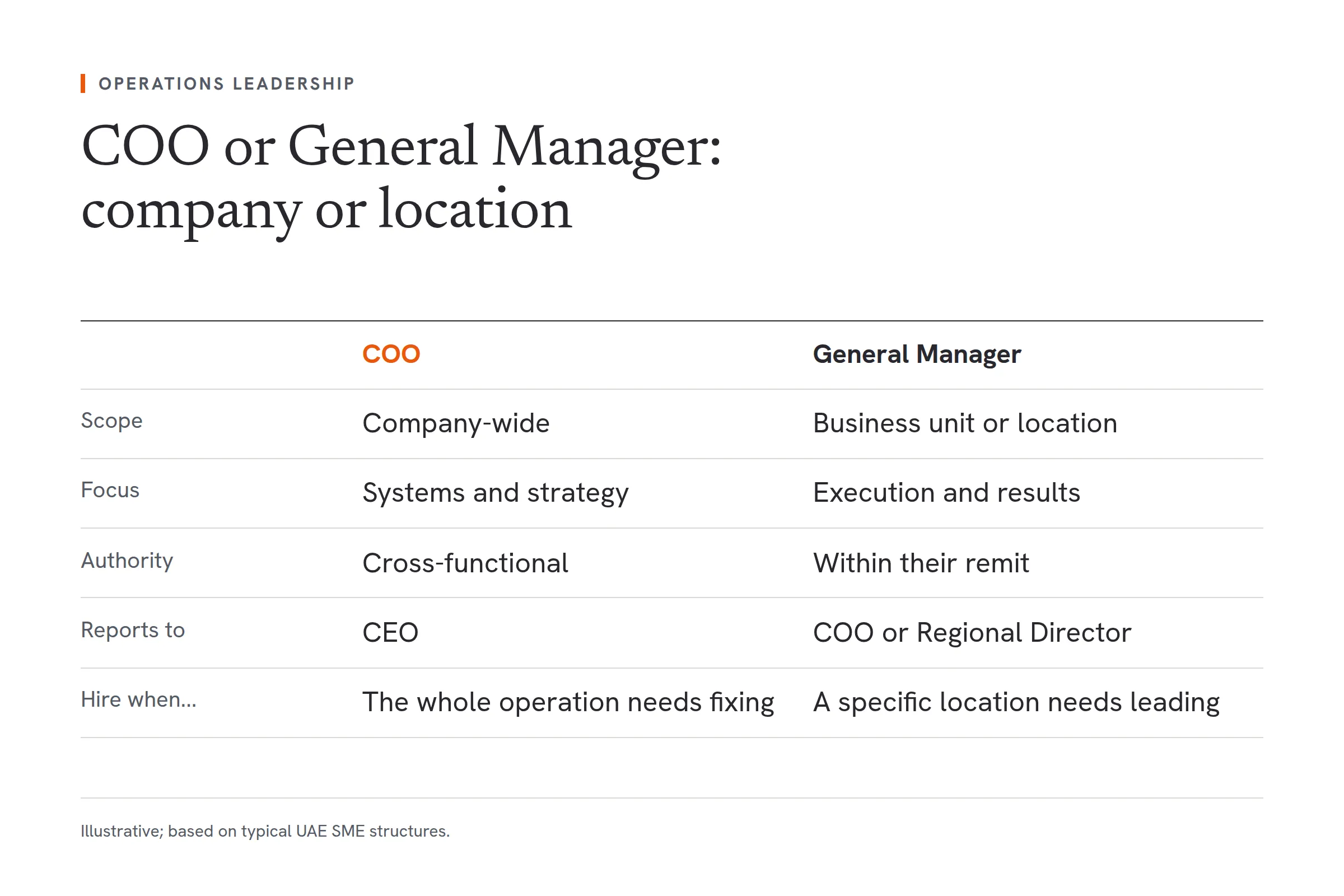
No. The Chief Executive Officer (CEO) is the company's top executive and answers to the board or owners. The COO reports to the CEO and runs operational execution.
A COO can hold wide authority over people, budgets and suppliers, but that authority is delegated. The exact hierarchy sits in your governance documents.
Founders ask this for a reason. Hiring your first COO feels like hiring your own boss. It's the opposite.
A good COO takes operations off your plate so you can do the job only you can do: winning the work, setting the direction, holding the key relationships.
A fractional COO reports to you. Dubai market material describes the role as owning delivery, processes, suppliers and the operating rhythm of the business [2].
You keep the company. You stop carrying the calendar.
What is the difference between a part-time COO and a fractional COO?
The terms overlap, but they stress different things. A part-time COO works reduced hours, usually as an employee of one company. A fractional COO is engaged for a defined share of capacity, embeds in the business and is accountable for agreed outcomes.
"Part-time" describes hours. "Fractional" describes structure.
Most buyers using either phrase want the same thing: senior operations leadership without a full-time hire. Plenty of founders type "part time COO" into a search bar meaning exactly what a fractional COO is.
The vocabulary differs. The need doesn't.
The structure differs in ways that matter. A part-time COO is normally on your payroll: a reduced-hours permanent hire, with the employment costs that come with one.
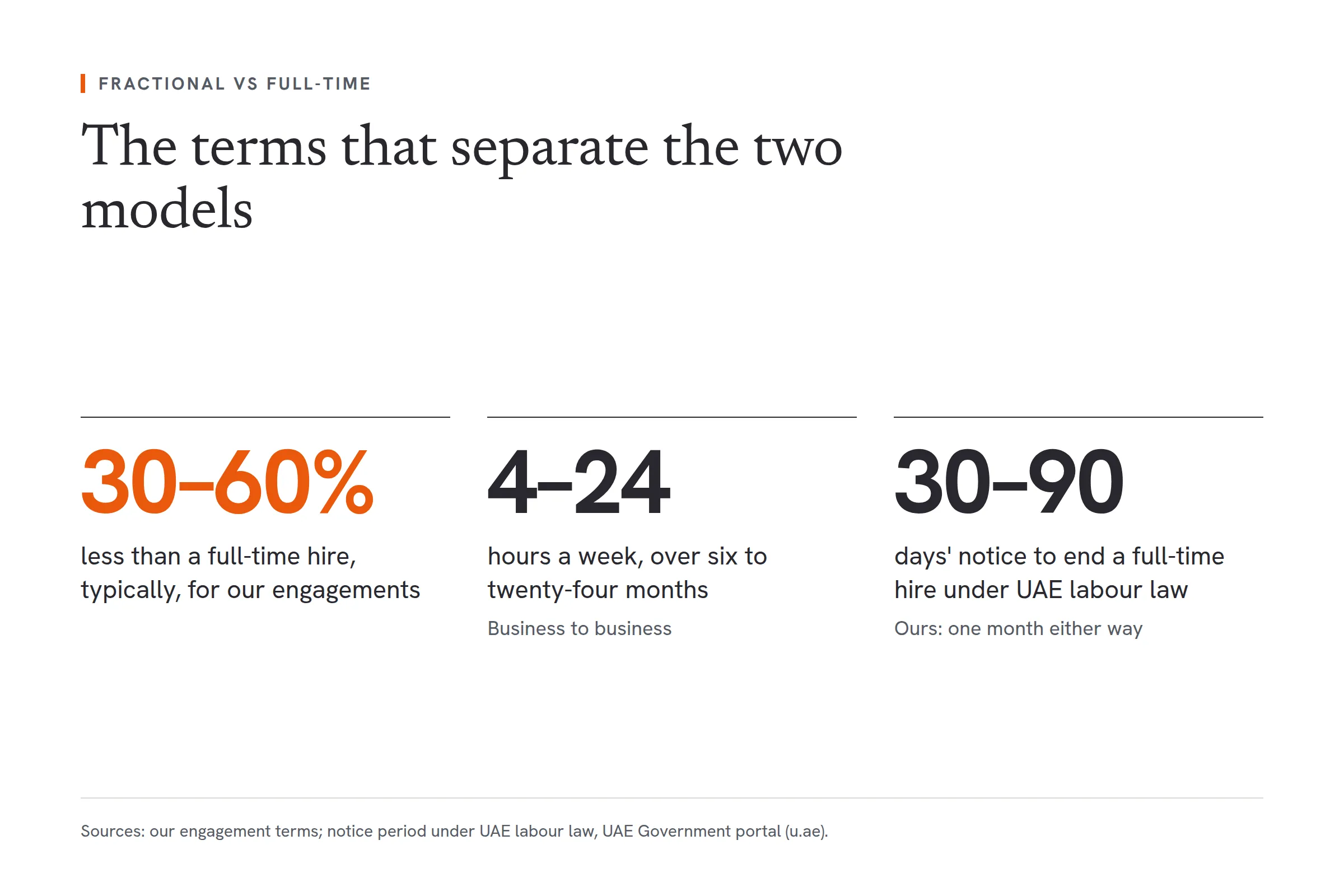
A fractional engagement is a business-to-business contract for services, so the client sponsors no employment visa and carries no end-of-service liability. Engagements run on rolling terms with one month's notice.
Market material describes fractional executives as part-time or retained C-suite operators who decide in their domain and stay accountable for outcomes, rather than simply advising [1].
Put plainly: a fractional executive is a C-suite professional who embeds directly into your business without the commitment of a full-time hire. They advise, they execute and they stay accountable to outcomes. Either way, the reporting line runs to you.
Where an interim COO fits
An interim COO is the third pattern: full-time, but temporary. You bring one in for a turnaround, a sudden senior exit, maternity cover or a crisis that needs senior attention every working day.
When the job ends, the engagement ends. If the real need is ongoing leadership a few days a week, interim is more than you need.
How many hours does a fractional COO work?
There's no universal number. Scope sets the hours, not the title.
One Dubai provider publishes a range of 4 to 24 hours per week, roughly half a day to three days [2][3]. Another UAE firm offers senior executives for one to four days per week [4]. Treat these as market examples, not a rule.
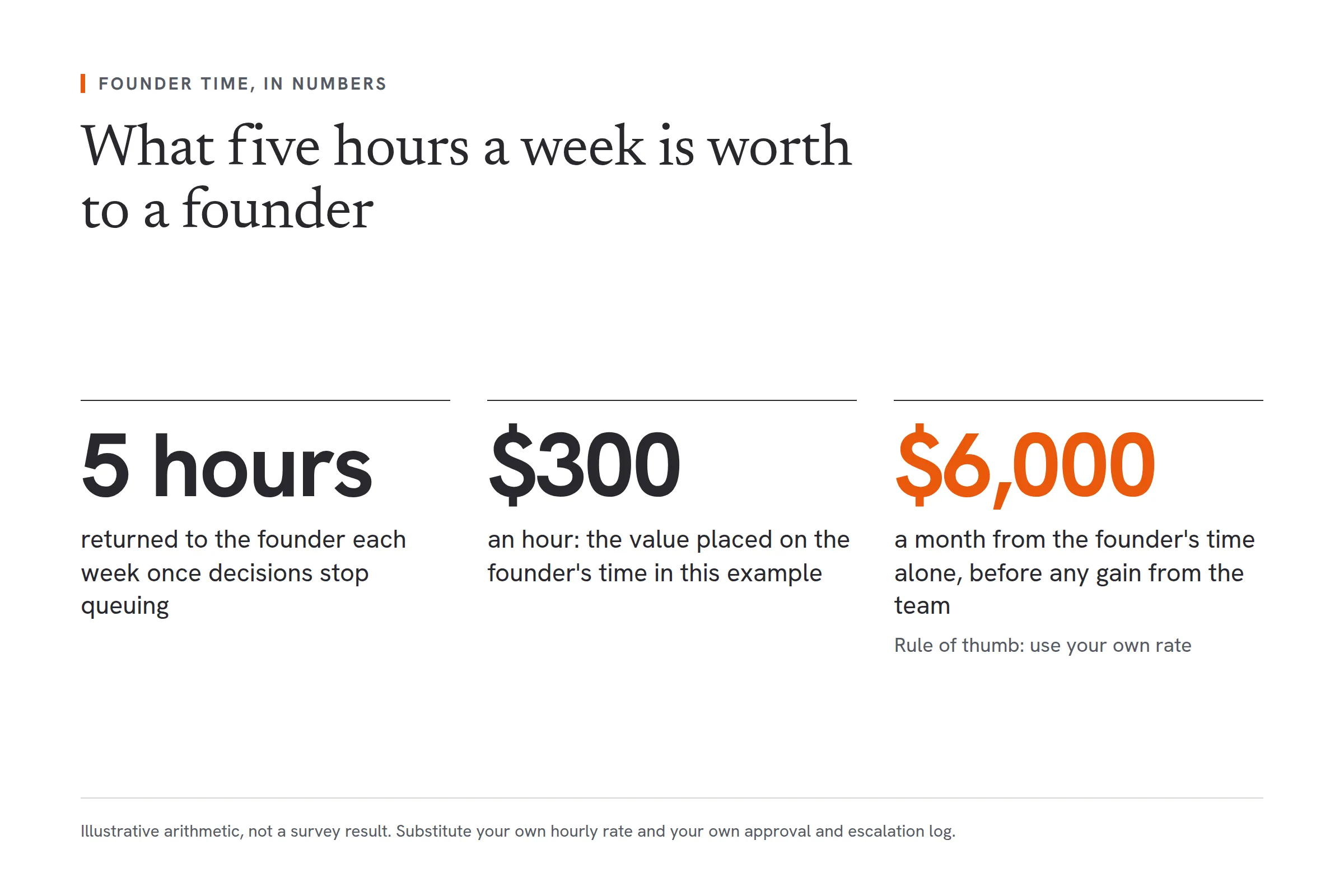
A light share suits a steady business that needs its rhythm kept: the weekly meeting chaired, the numbers reviewed, the decisions that currently queue for you. A heavier share suits a build.
A second site. A supplier reset. A system rollout that someone senior must own.
The right share comes from an honest audit of your week, not from a package menu. Our fractional COO service in Dubai scopes engagements this way: a curated COO, matched to your stage and accountable for a defined share of the week.
The shape can move. An engagement may start heavier while processes are rebuilt, then step down once the rhythm holds.
The four COO engagement models side by side
The labels blur, so lay them out flat.
| Virtual COO | Part-time COO | Fractional COO | Interim COO |
|---|---|---|---|---|
Where they work | Remote by definition | Typically your premises, reduced days | On site, hybrid or remote, depending on the role [1] | Typically on site, full-time |
Employment basis | External service | Usually your employee | Business-to-business engagement | Fixed term, usually employed |
What they own | Tasks and processes | A role description | Agreed operational outcomes | Stabilisation and handover |
Typical commitment | Varies by package | Set days per week | A defined share of the week; one Dubai range runs 4 to 24 hours [3] | Full-time, for a fixed period |
Right fit | Digital-only businesses, tight scopes | Steady firms wanting an employee | Growing SMEs needing ownership, not advice | Turnarounds, crises, sudden exits |
Same job family. Very different levels of presence and accountability.
Why the fractional model took hold
According to Axios, the number of LinkedIn profiles with "fractional" in the title rose from around 2,000 in 2022 to more than 142,000 by early 2025.
Smaller businesses still hit moments where senior operations judgement is the difference between scaling and stalling.
That's the gap we work in, drawing on our collective of nearly 500 curated executives.
What that seniority is worth in practice, in delays avoided and mistakes not made, is the subject of our piece on COO value creation in Dubai SMEs.
What Dubai businesses actually need
Run a simple test. List the operational problems that ate your last month. If all of them live in software, a virtual COO can be enough.
If any of them involve stock, sites, vehicles, clinics, kitchens or crews, you need presence. Think trade, logistics, food and beverage, healthcare services, construction support.
The friction is physical, so the leadership has to be physical too. Embedded, not dialled in.
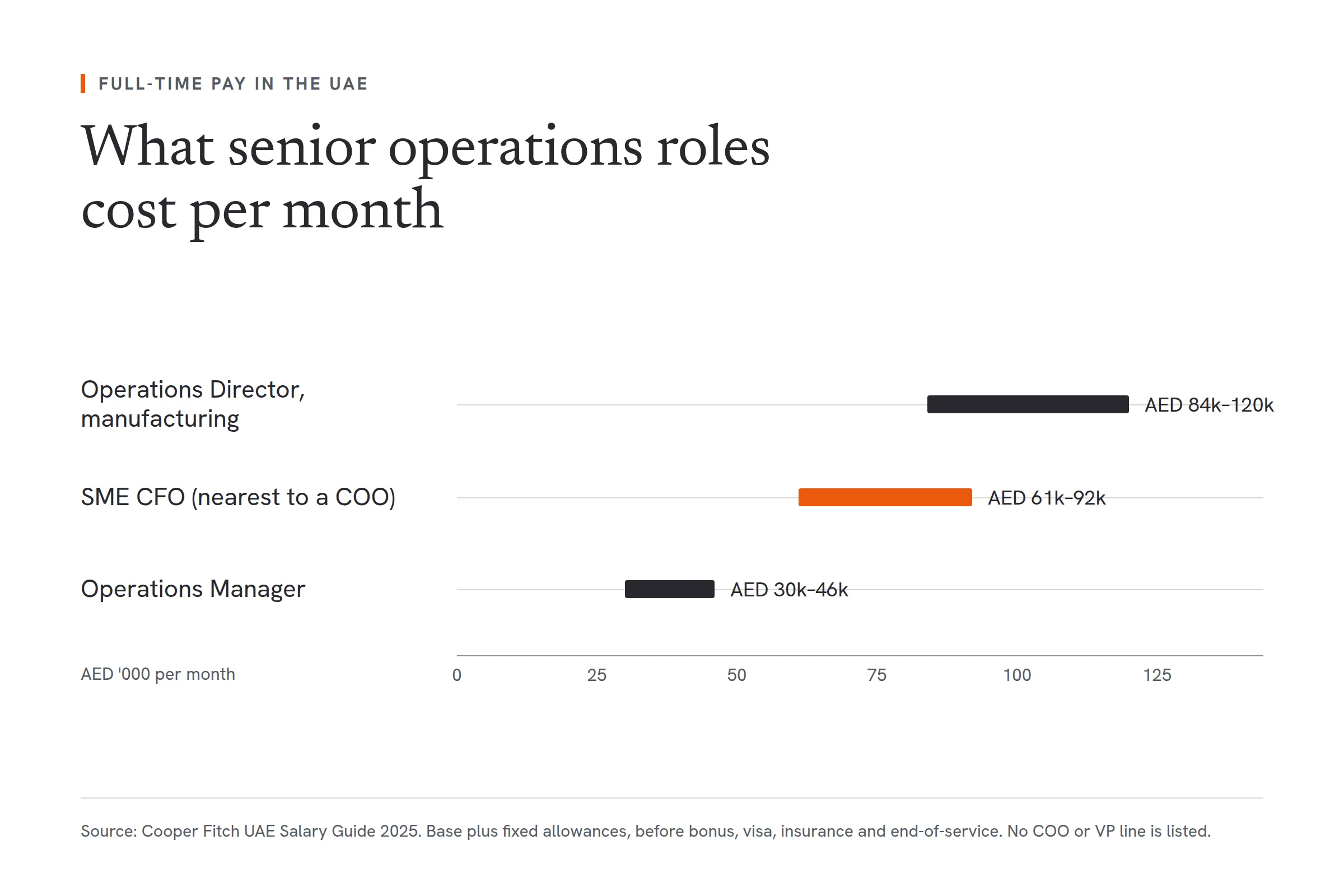
If the problem on your desk is cash flow, pricing or reporting rather than delivery, you're looking for a Chief Financial Officer (CFO), not an operations hire. Our comparison of virtual and fractional CFOs in the UAE covers that distinction properly.
If you've read this far, you know which group you're in. The constraint in the business is you. Not because you got it wrong. Because the business outgrew your calendar.
Screens carry advice well. They don't carry a warehouse. If you want an honest read on which model fits your operation, take the fractional COO readiness assessment.