"What will it cost me?" is usually the second question a founder asks about a non-executive director, right after "what would they actually do?". It is a fair question and a hard one to answer honestly, because the real answer is a range, not a number, and because the market you are reading about matters as much as the role.
Here is the sourced version, written for a business in the UAE but drawing on the UK, where the data is thickest.
The short answer
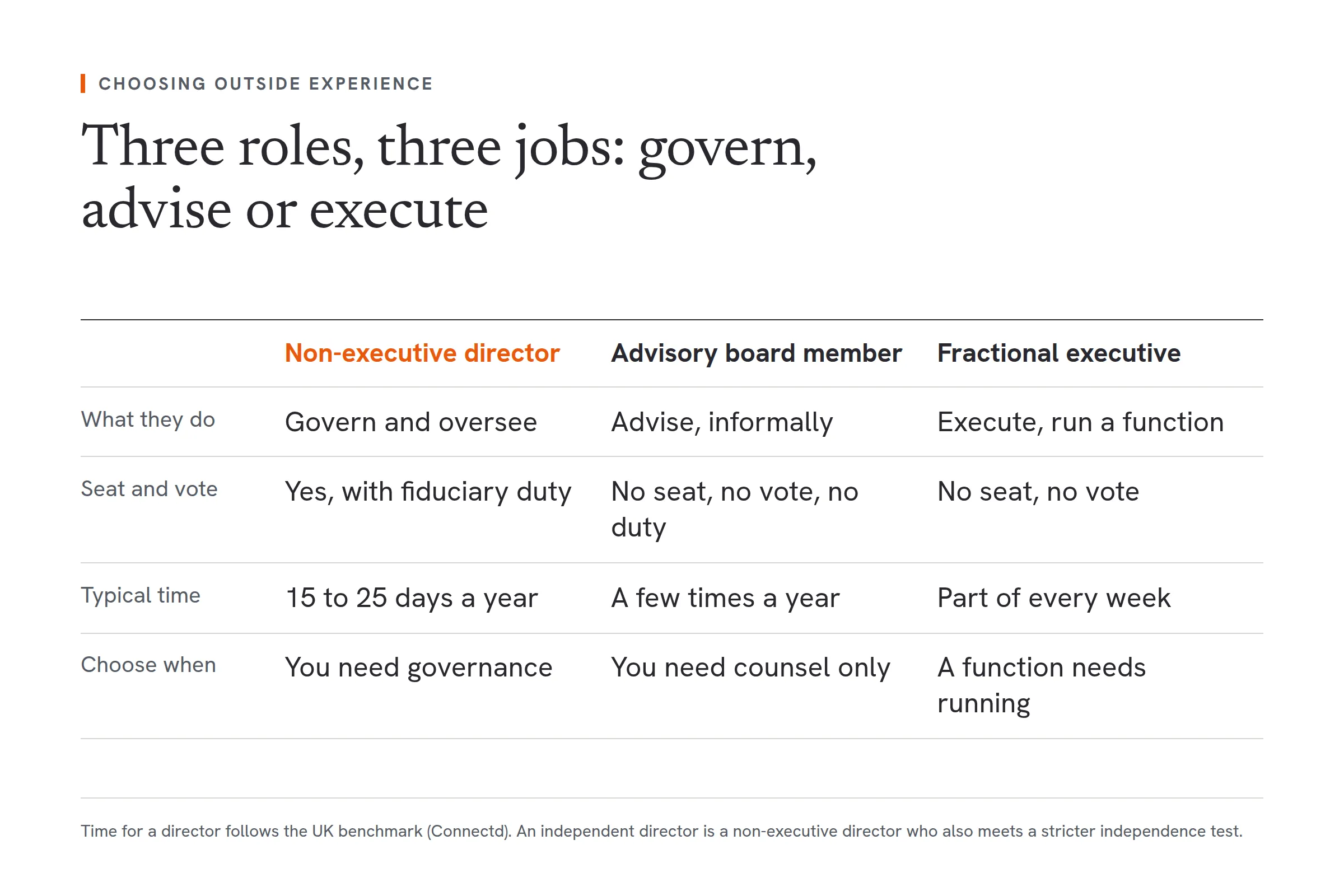
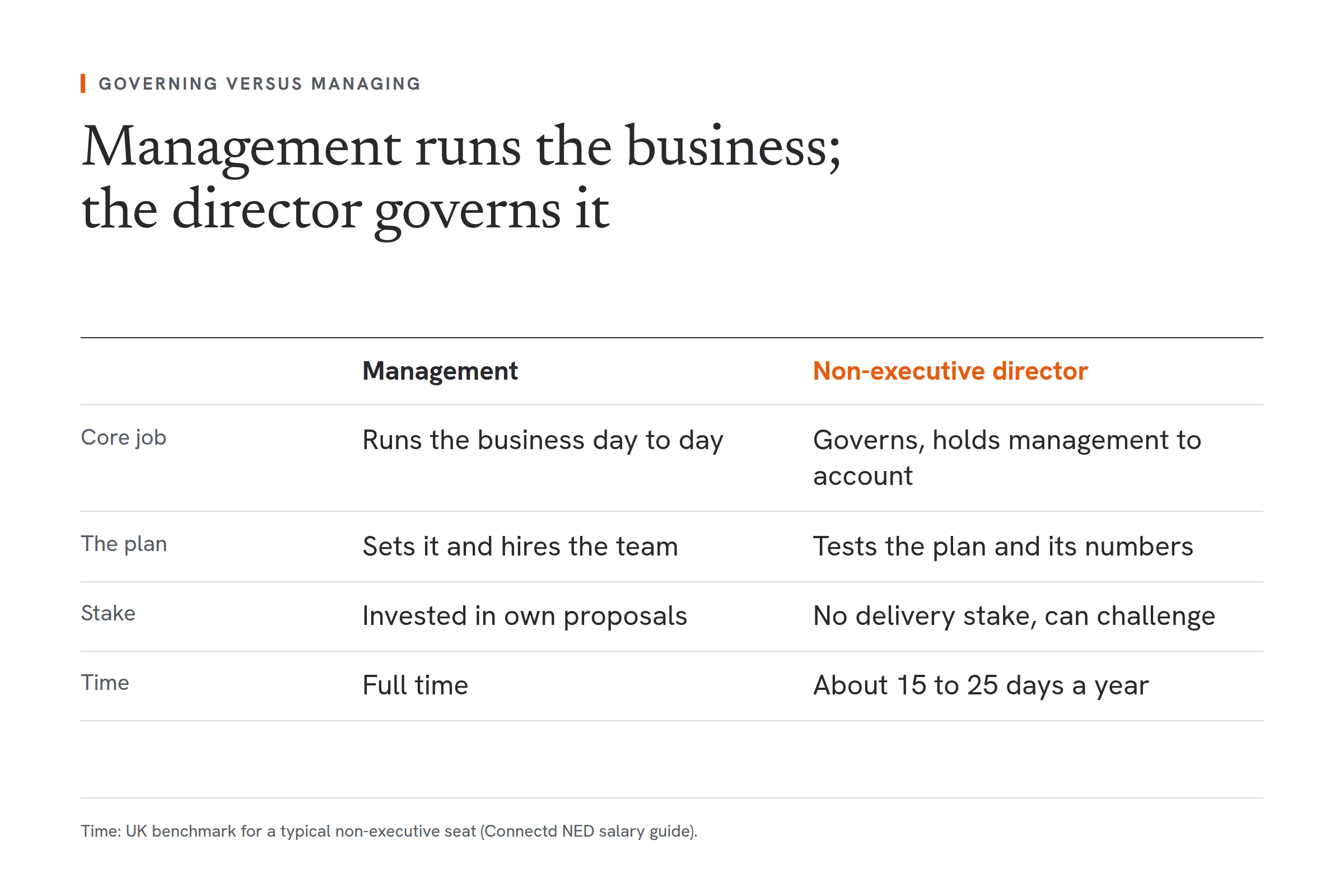
A non-executive director is paid a fee, not a salary. They are not an employee. They hold a board seat, govern rather than manage, and give the company a small number of days a year, so the cost is an annual fee sized to the responsibility, not a monthly payroll cost.
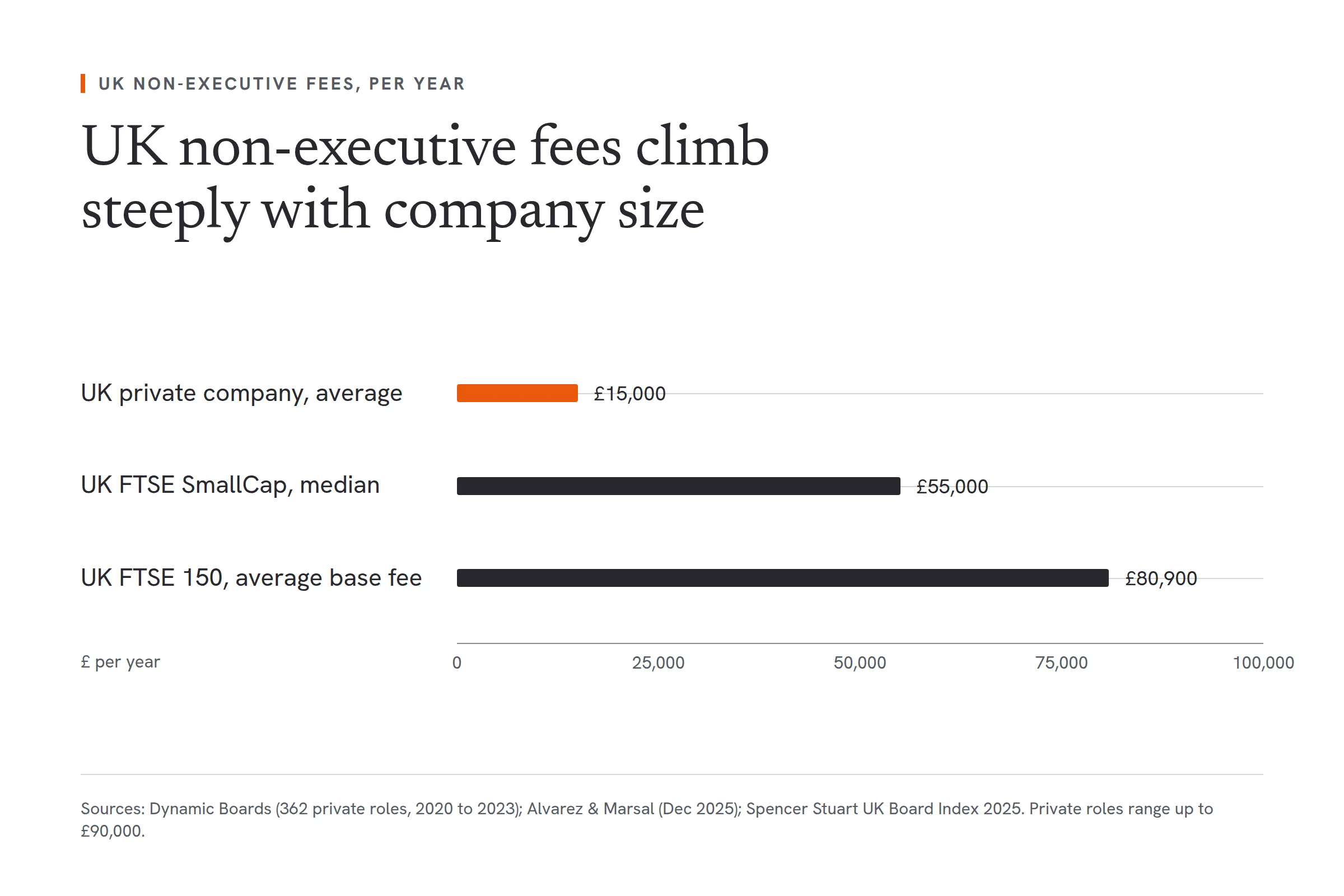
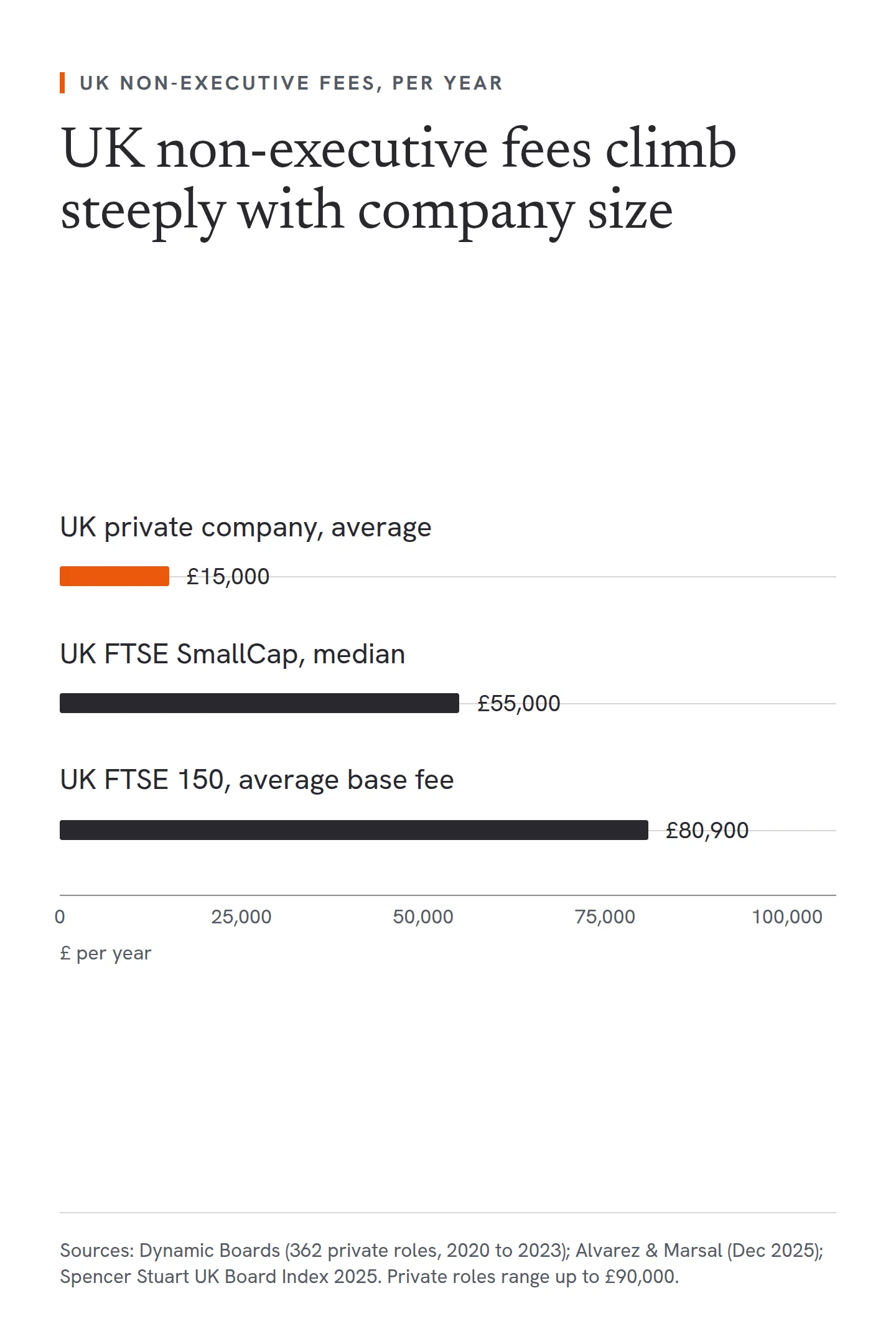
For a private small or mid-sized business, the most useful public benchmark comes from the UK. Board-recruitment platform Dynamic Boards tracked 362 private-sector roles advertised between May 2020 and November 2023 and found an average non-executive fee of about £15,000 a year, with a range stretching up to £90,000. Larger and listed roles run higher: the average base fee across the FTSE 150 is £80,888 (Spencer Stuart's 2025 UK Board Index), and Alvarez & Marsal's December 2025 report puts the FTSE SmallCap median at £55,000. Board-recruitment guide Connectd notes that start-ups and scale-ups typically pay in equity or a blend of equity and cash rather than a fixed fee.
The important point for a founder is that the cost tracks the size and complexity of the business, not the person. A seat on the board of a scaling private company is a different commitment, and a different fee, from a seat on a listed board.
Fee, not salary: why that matters
It is worth being precise about the language, because it changes how you budget.
A salary buys someone's full-time working week. A non-executive fee buys judgement applied to a handful of important moments across the year: the board meetings, the reading around them, and the director's availability to the chair and chief executive in between. The typical commitment is 15 to 25 days a year, or put another way, a day or two a month, with chairs commonly committing 30 to 50 days or more. You are not paying for hours. You are paying for the responsibility of the seat and the experience of the person in it.
That is also why non-executive directors are almost always paid a fixed annual fee rather than a day rate. A day rate implies you are buying time; a fee reflects that you are buying accountability. If you want an implied rate for comparison, simple arithmetic on a £15,000 fee over 15 to 25 days gives roughly £600 to £1,000 a day, but the annual figure is the one to plan around.
What the UAE picture looks like
The UAE has less public benchmark data than the UK, for a simple reason: the demand-side question is asked less often here, and much of the search traffic for "board of directors salary in UAE" is really about executive pay, not non-executive fees. That does not mean there is no framework. There are two anchors worth knowing.
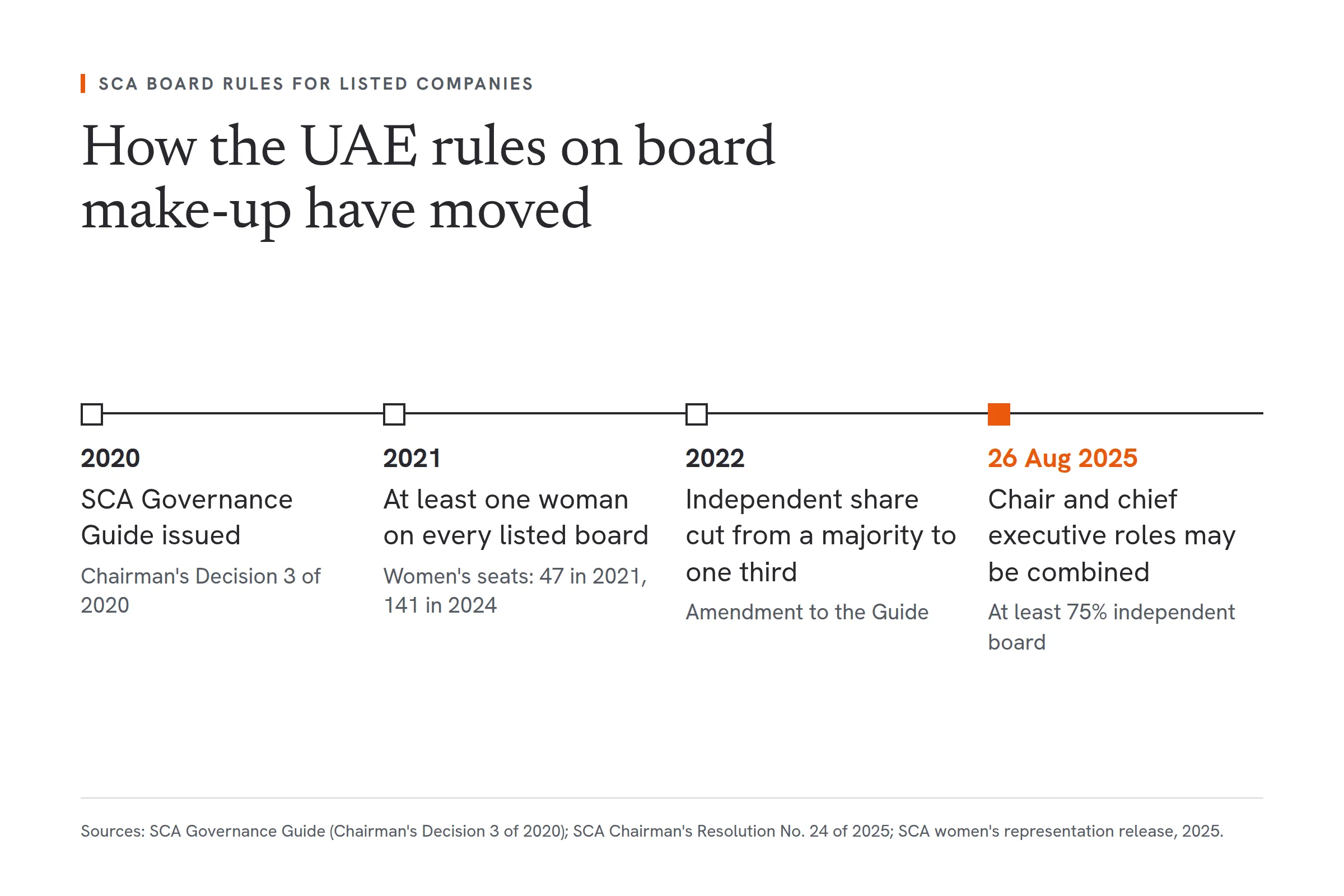
The first is a legal ceiling. Under Article 171 of the Commercial Companies Law (Federal Decree-Law 32 of 2021), a joint stock company's board remuneration may not exceed 10% of the net profit for the year after depreciation and reserves are deducted. Where the company makes no profit, or a member's profit share would be lower, the law allows a lump-sum fee of up to AED 200,000 per member at year end, with the general assembly's approval. So on a listed board, director pay is bounded by profitability, not set in the open market.
The second is that some listed companies publish their policies. Dubai Investments PJSC's board remuneration policy, for example, applies the same 10% of net profit ceiling and the AED 200,000 lump-sum alternative, and bars attendance allowances for board meetings while allowing committee fees. Mercer has published a UAE board remuneration whitepaper built on the 2023 governance filings of 50 listed UAE organisations, for those who want a fuller market picture.
For a private UAE SME or family business, none of the listed-company mechanics apply. The practical approach is to read across from the UK ranges, adjust for your sector and scale, and treat any single quoted number with suspicion.
The markets side by side
Because the data is uneven, a comparative view is the most honest way to size the cost. These are published benchmark figures for a comparable non-executive seat, not our fees.
Market and company type | Typical annual fee | Source |
|---|---|---|
UK private company | About £15,000 average, up to £90,000 | Dynamic Boards (362 roles, 2020 to 2023) |
UK FTSE SmallCap | About £55,000 median | Alvarez & Marsal (December 2025), via Board Appointments |
UK FTSE 150 | About £80,900 average base fee | Spencer Stuart UK Board Index 2025, via Board Appointments |
UAE listed company | Capped at 10% of net profit; lump sum of up to AED 200,000 per member where there is no profit | Commercial Companies Law, Article 171 |
UAE private company | Thin public data; set company by company | None published |
The pattern is clear: the UK is the reference market, and private-company fees sit far below listed-company fees. If you want the fuller detail on the UAE regulatory backdrop, our explainer on board governance in the UAE covers the listed-company rules in depth.
What actually moves the number
If you are trying to budget, four factors do most of the work.
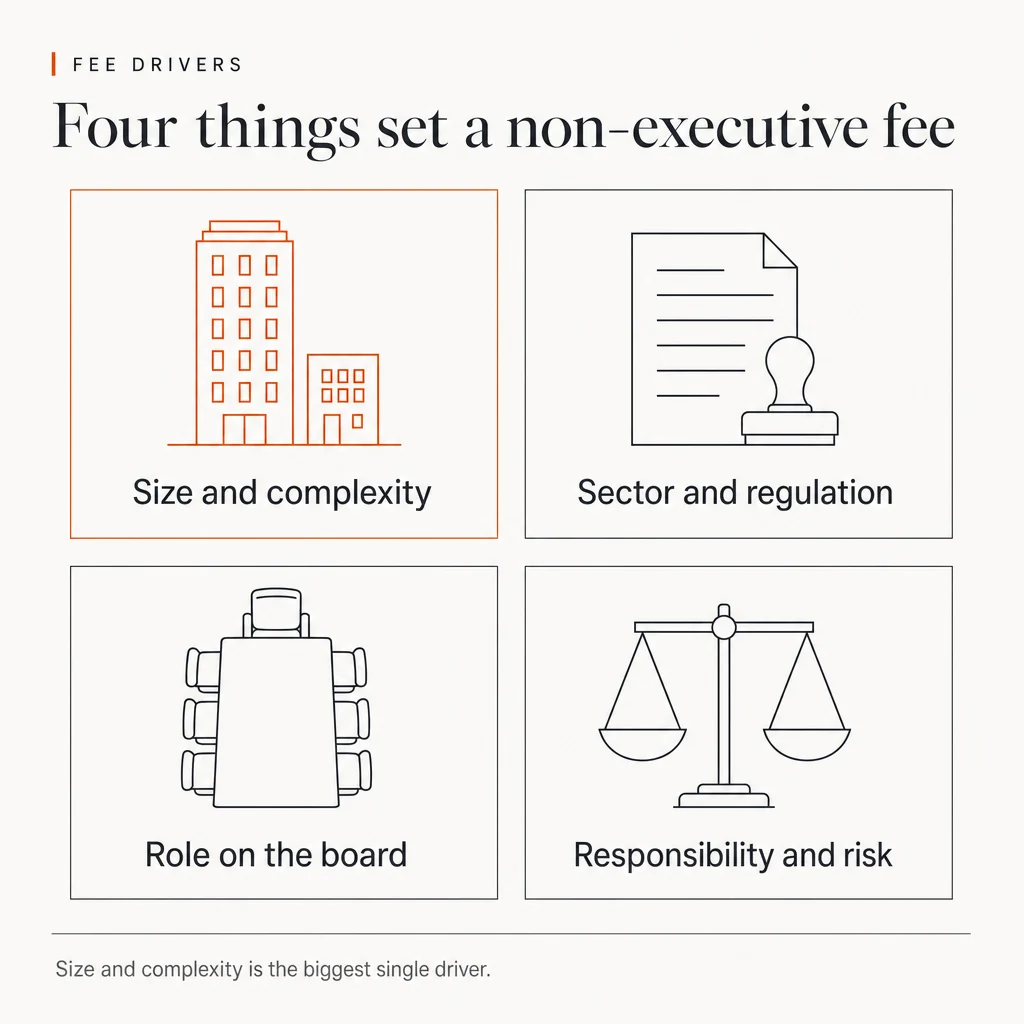
- Size and complexity. A larger, more complex or listed business pays more than an early-stage private one. This is the biggest single driver.
- Sector and regulation. A regulated financial-services entity, or one preparing for a listing, asks more of a director's time and expertise, and pays accordingly.
- Role on the board. Chairing the board, or a committee, carries an additional fee on top of the base seat. In the UK's FTSE 150, Connectd reports an average extra fee of about £27,600 for chairing the audit committee.
- Responsibility and risk. A director takes on genuine statutory duties and accountability: under Article 162 of the Commercial Companies Law, board members of a joint stock company are liable for fraud, abuse of power and breaches of the law or the company's statute. The fee reflects that this is a role with real weight, backed by proper directors' and officers' insurance.
One thing that should never be a cost
There is a line in this market worth stating plainly: the company appoints and pays the director. A credible non-executive director is engaged by the business and is never charged a fee to be placed on a board. Candidate-paid board "membership" platforms exist, and they are the model to be wary of. The company pays, the director never does.
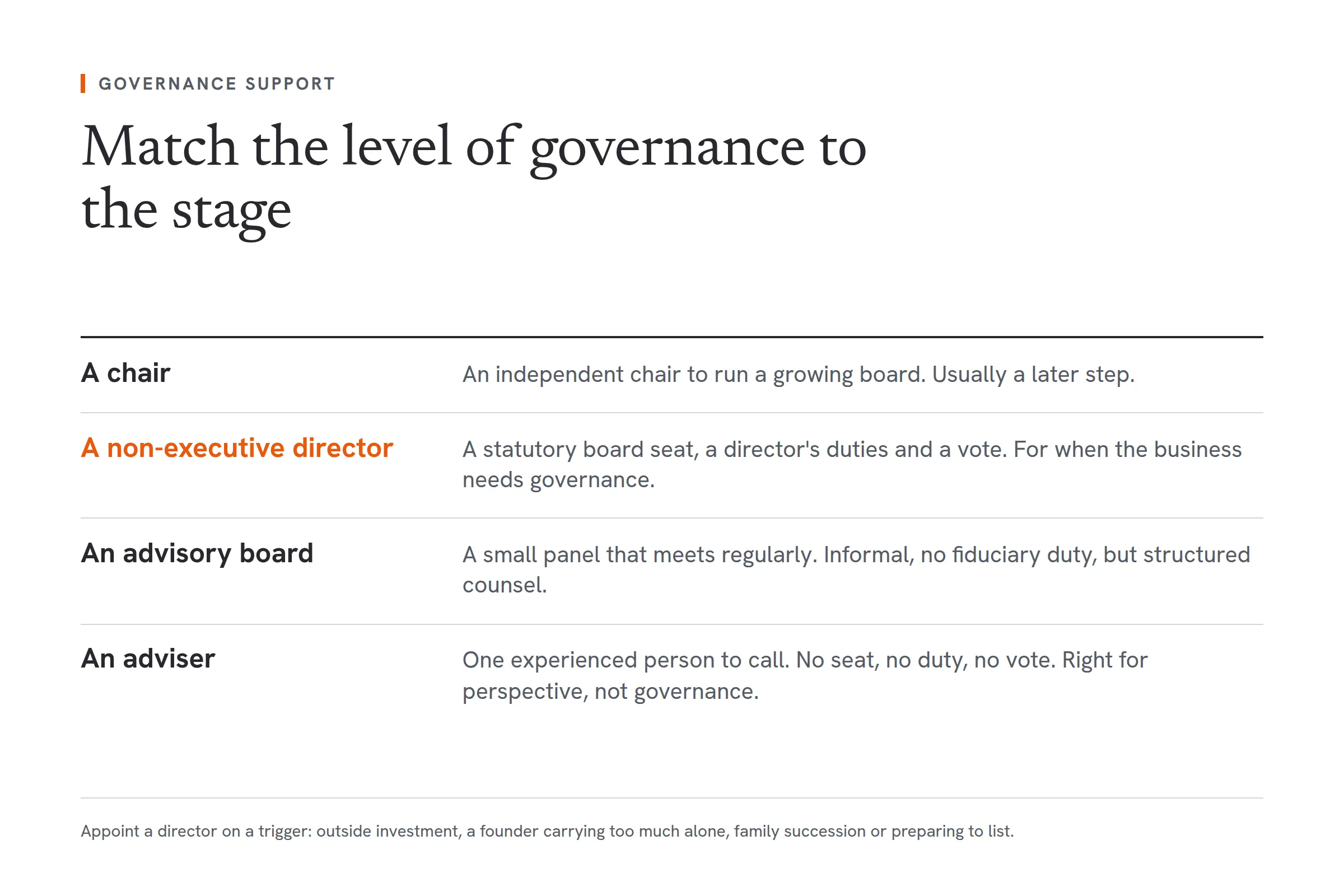
If you would like a straight, benchmarked view of what the right seat would cost for your stage and sector, rather than a headline number, tell us what you are working through and we will give you an honest range. For where the role fits before you get to cost, start with what a non-executive director actually does. When to appoint your first non-executive director covers the timing question, and our non-executive director service page explains how we match directors to boards.